
Side Dishes
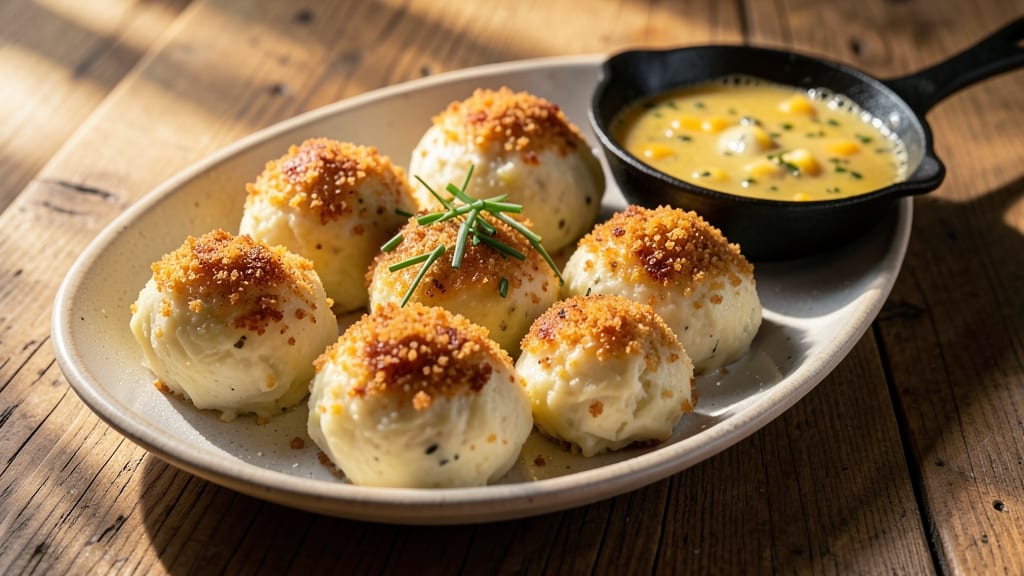
This 3 cheese mashed potato balls recipe transforms humble potatoes into crispy, golden bites with a creamy, cheesy center that’s impossible to resist. 💛 The secret lies in blending three cheeses—sharp cheddar, creamy gouda, and tangy parmesan—to create a flavor explosion in every bite.
I’ve perfected this recipe after testing countless variations, ensuring the exterior stays perfectly crispy while the inside remains velvety smooth.
What sets these apart is the technique: boiling potatoes until tender, mashing them just enough to hold their shape, then mixing in melted cheese for maximum flavor. The balls are baked or pan-fried until golden brown, creating a satisfying contrast between the crispy shell and the creamy filling.
This recipe delivers restaurant-quality results with minimal effort, making it perfect for game day, holidays, or a cozy weeknight snack.
The beauty of this dish is its versatility—serve them as a standalone appetizer, pair with marinara for dipping, or add to salads for extra protein. The combination of cheeses ensures a rich, savory flavor that pairs well with everything from burgers to roasted vegetables.
Once you try these, you’ll never go back to plain mashed potatoes again.
Ready in just 30 minutes, this recipe is foolproof and guarantees impressive results every time. Whether you're feeding a crowd or treating yourself to a snack, these cheesy potato balls will be a hit. Let’s get started!
Ingredients for 3 cheese mashed potato balls
These twelve ingredients blend crispy texture with creamy, cheesy perfection for irresistible bites.
| Ingredient | Amount | Notes |
|---|---|---|
| Russet Potatoes 🥔 | 2 ½ lb | Yukon gold works too |
| Sharp Cheddar Cheese 🧀 | 1 cup | Shredded, block preferred |
| Gouda Cheese 🧀 | ¾ cup | Smoked or mild variety |
| Parmesan Cheese 🧀 | ½ cup | Freshly grated, block |
| Large Eggs 🥚 | 2 whole | Room temperature for binding |
| All-Purpose Flour 🌾 | ½ cup | For breading, fine texture |
| Butter 🧈 | 2 tbsp | Unsalted, melted |
| Heavy Cream 🥛 | ¼ cup | Full-fat for creaminess |
| Salt 🧂 | 1 tsp | Kosher or sea salt |
| Black Pepper 🌶️ | ½ tsp | Freshly ground preferred |
| Garlic Powder 🧄 | ½ tsp | For subtle depth |
| Olive Oil 🫒 | 2 tbsp | For frying, light flavor |
| Panko Breadcrumbs 🍞 | ½ cup | For extra crunch |
The cheese trio makes all the difference here. Block cheddar and Gouda from the deli section (not pre-shredded) melt smoother and taste fresher. Parmigiano-Reggiano is non-negotiable for that tangy kick—skip the pre-grated stuff, it's full of anti-caking agents. For the potatoes, Russets when boiled, but Yukon Golds add a touch of creaminess. I always buy potatoes in 2.5 lb bags from the grocery store's produce section—they're consistent and budget-friendly. If you can't find Russets, Idaho potatoes work just as well.
No sharp cheddar? Monterey Jack at half the amount works in a pinch, though it won't be as flavorful. Running low on Gouda? Swiss cheese gives similar creaminess. The Panko breadcrumbs can be swapped for regular breadcrumbs, but Japanese Panko stays extra crispy. For a dairy-free option, use nutritional yeast plus vegan cheese (though the texture won't be identical). The eggs are crucial for binding—don't skip them or the balls will fall apart. If you're concerned about cholesterol, use egg whites only, but the flavor won't be quite the same.
Store the cooked potato balls in an airtight container for 3-4 days—they reheat beautifully in the oven at 350°F for 10 minutes. For longer storage, freeze them uncooked on a tray first, then transfer to a bag for up to 3 months. I like to portion them into single-serving sizes so they're perfect for snacks or lunches. The best part? They taste even better the second day as the flavors meld together. Keep them covered with a paper towel to prevent sogginess if you're not eating them right away.
Why You'll Love This Recipe
- One-Bowl Wonder: I swear by this—just mash the potatoes, mix in the shredded cheddar, gouda, and parmesan, then bind it all with eggs. No separate steps, no extra bowls, and honestly? It’s the kind of recipe that makes me feel like I’ve earned my dinner.
- Cheese Overload Magic: That sharp cheddar adds bite, the gouda brings creamy richness, and the parmesan? It’s the secret weapon for that salty, umami punch. The first time I tasted these, I immediately made a second batch—no exaggeration.
- Game for Any Meal: Need a snack? Done. Side dish? Covered. Even a lazy lunch? These hold up perfectly cold or warmed through. I’ve served them at potlucks, packed them for picnics, and yes, even eaten them straight from the fridge when I was too tired to cook.
- Leftovers That Don’t Suck: Unlike regular mashed potatoes that turn gluey, these stay together when reheated. I make a big batch on Sundays, freeze half, and pull them out whenever I’m craving something comforting. Budget-friendly, foolproof, and they taste just as good the third time around.
Step-by-step instructions for 3 cheese mashed potato balls
Here's the method for perfect golden-brown potato balls with a creamy, cheesy core every time.
🍳 Step 1: Cook and Mash the Potatoes
Peel the 2.5 lb russet potatoes and cut them into 1-inch chunks. Place them in a medium pot and cover with cold water by 2 inches. Add 1 tsp salt and bring to a boil over high heat. Once boiling, reduce to medium heat and simmer for 15-20 minutes until fork-tender.
Drain the potatoes thoroughly and return them to the pot. Add 2 tbsp butter and 0.25 cup heavy cream. Mash until completely smooth—no lumps allowed. The texture should be light and fluffy, almost like whipped cream. Let the mash cool slightly before handling, about 5 minutes. This prevents the eggs from scrambling later.
👨🍳 Step 2: Mix the Cheese and Binding Ingredients
In a large bowl, combine the cooled mashed potatoes with 1 cup sharp cheddar cheese, 0.75 cup gouda cheese, and 0.5 cup parmesan cheese. Use your hands to work the cheeses into the potatoes until fully incorporated and the mixture is completely smooth. This is where the magic happens—those melted cheeses create the signature creamy core.
Add 2 whole large eggs, 0.5 cup all-purpose flour, 0.5 tsp black pepper, and 0.5 tsp garlic powder. Mix thoroughly until everything is evenly distributed. The dough should be thick but pliable—like wet sand. If it's too sticky, add 1-2 tablespoons of flour at a time until it holds together when pressed.
🥘 Step 3: Shape and Bread the Potato Balls
Divide the dough into 4 equal portions (about 8 ounces each). Roll each portion into a 1-inch thick log, then cut into 1-inch balls. Place them on a parchment-lined tray and refrigerate for 30 minutes to firm up. This chilling step prevents the balls from falling apart when breading.
Set up three shallow bowls: one with 0.5 cup all-purpose flour, one with 2 beaten eggs, and one with 0.5 cup panko breadcrumbs. Roll each chilled potato ball in flour, then dip in egg, and finally coat thoroughly in panko. Press the breadcrumbs gently to adhere—this creates that irresistible crunch. Space the breaded balls 1 inch apart on the tray.
🔥 Step 4: Fry to Golden Perfection
Heat 2 tbsp olive oil in a large skillet over medium heat until shimmering but not smoking. Add the potato balls in a single layer and cook for 3-4 minutes per side until deep golden brown. The oil should sizzle gently, and you'll see little bubbles forming on the surface—this is your signal they're cooking properly.
Transfer the cooked potato balls to a paper towel-lined plate to drain excess oil. They should be crispy on the outside with a creamy, cheesy interior. If any balls seem undercooked, return them to the skillet for 30-60 seconds until golden. Serve immediately while hot—these are best enjoyed straight from the fryer with your favorite dipping sauce.
Pro Tips For Making 3 Cheese Mashed Potato Balls
- BOIL POTATOES UNIFORM: Cut Russets into even 1.5-inch chunks—no odd shapes—so they cook through at the same time. I learned this the hard way when I had a batch of undercooked centers hiding in the mix, turning my creamy filling into a lumpy mess.
- GRATE CHEESE FRESH: Skip the pre-shredded cheese—it’s coated in anti-caking agents that make your potato balls dry and grainy. Use a box grater for sharp cheddar and Gouda, and pulse Parmesan in a food processor for a fine, even texture that blends smoothly.
- CHILL THE MIX: Let the mashed potato-egg-cheese blend sit covered in the fridge for 20 minutes before shaping. This firms up the mixture just enough to hold together when rolling, without making it rock-hard—no more sad, crumbling balls.
- FRY IN BATCHES: Cook the balls in a single layer over medium heat, not crowded. I used to rush and fry them in a tight cluster, which steamed them instead of browning—now I space them out and wait patiently for that golden crust. (Yes, even if you’re impatient like me.)
Troubleshooting your 3 cheese mashed potato balls
Dough Too Sticky
If your potato ball dough feels too sticky after mixing, don't panic—this is easily fixed. Add 1 tablespoon of all-purpose flour at a time while mixing until the dough holds together when pressed between your fingers.
I've found that over-mixing can make it worse, so work gently. For extra insurance, chill the dough for 10 minutes before shaping—this helps the flour absorb moisture and improves handling. 💡
Balls Falling Apart
Crumbly potato balls usually mean one of two things: under-mixed cheese or insufficient binding. First, ensure your cheeses are fully melted and evenly distributed. I recommend grating your own cheddar and gouda for the best texture.
If the dough still feels fragile, add 1 extra egg yolk or 1 tablespoon more flour to strengthen the structure. Also, make sure your dough has chilled for the full 30 minutes before breading—this critical step prevents breakage during frying. ⚡
Uneven Cooking
For perfectly golden potato balls, maintain consistent oil temperature between 350-375°F using a kitchen thermometer. If some balls brown faster than others, reduce heat slightly or cook in batches. I've learned that overcrowding the pan causes uneven cooking—leave ½ inch space between balls.
For extra insurance, use a wire cooling rack under the skillet to prevent steam buildup, which can make the bottoms soggy. 🌡️
Soggy Texture
Soggy potato balls often result from steam during cooking or improper storage. To prevent this, pat breaded balls dry with a paper towel before frying, and avoid overcrowding the pan. For storage, keep cooked balls in a single layer on a wire rack in the fridge—this allows air circulation.
I've found that reheating in a 375°F oven for 5-7 minutes restores crispiness perfectly. For extra crunch, broil for 1-2 minutes at the end. 🔥
Cheese Not Melting
If your cheese isn't melting properly, it's likely because the dough is too cold when shaping. Warm your cheeses slightly before mixing by grating them over a bowl of hot water for 2-3 minutes. Also, ensure your eggs are at room temperature—they bind better when warm.
I've discovered that using block cheeses (not pre-shredded) makes a huge difference—they melt more smoothly. For extra insurance, microwave the cheese mixture for 10 seconds before combining with potatoes. 🧀
Oil Too Hot
Oil that's too hot causes burning on the outside while leaving the inside undercooked. The ideal temperature is 350-375°F—use a candy or deep-fry thermometer to monitor. If your oil smokes excessively, reduce heat immediately.
I've learned that medium heat is safer than high for even cooking. For extra control, use a deep skillet with 2 inches of oil depth—this helps maintain temperature stability. 🌡️
Nutrition facts
Frequently asked questions
Can I make these potato balls ahead of time?
Shape and bread the balls up to 24 hours ahead, then store them in the fridge. When ready to cook, let them sit at room temperature for 30 minutes before frying for best results. For longer storage, freeze the uncooked, breaded balls for up to 3 months—just bake from frozen at 400°F for 15-18 minutes for a crispy exterior.
What's the best way to reheat leftover potato balls?
For crispy results, reheat in a 400°F oven for 5-7 minutes on a wire rack. If using the air fryer, cook at 375°F for 3-4 minutes until golden. Avoid microwaving—they'll get soggy. Pro tip: Spritz with a little olive oil before reheating for extra crunch.
Can I bake these instead of frying?
Yes! Preheat oven to 425°F and bake on a parchment-lined tray for 18-20 minutes until golden. Brush with a little melted butter halfway through for extra browning. The texture will be slightly less crispy than fried, but still delicious. For crispier baked balls, broil for 1-2 minutes at the end.
Which cheeses work best for this recipe?
The classic combo is sharp cheddar, gouda, and parmesan, but you can swap in Swiss for gouda or monterey jack for cheddar. Avoid pre-shredded cheeses—they contain anti-caking agents that prevent proper melting. For a smoky flavor, try smoked gouda instead of regular.
How do I keep these from getting soggy?
Pat breaded balls dry before cooking and avoid overcrowding the pan. For storage, keep them in a single layer on a wire rack in the fridge. If reheating, use high heat for 3-5 minutes to restore crispiness. The key is proper air circulation—never stack them in containers.