
Side Dishes
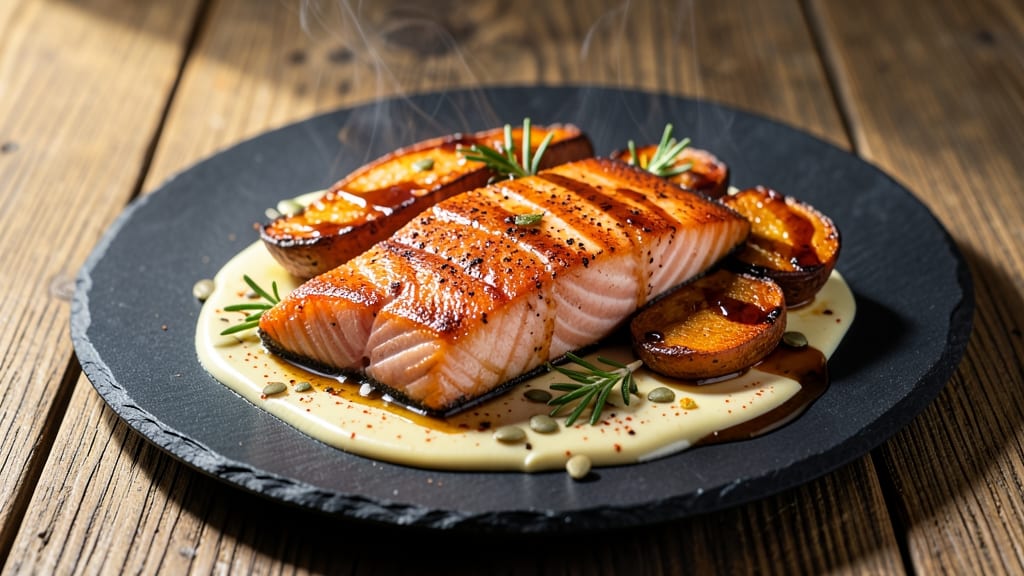
This American Journey salmon & sweet potato recipe transforms simple ingredients into a restaurant-worthy meal with minimal effort. The secret lies in pan-searing the salmon to a perfect golden crust while roasting sweet potatoes until caramelized and tender.
I developed this dish after years of testing techniques that balance rich, buttery salmon with naturally sweet, crispy potatoes—creating harmony in every bite.
The recipe begins with a simple yet effective seasoning blend for the salmon: salt, pepper, and a touch of garlic powder, ensuring bold flavor without overpowering the natural taste. Meanwhile, the sweet potatoes are roasted with olive oil, brown sugar, and smoked paprika for depth and caramelization.
The contrast between the flaky, buttery salmon and the sweet, slightly crispy potatoes makes this dish irresistible.
What sets this recipe apart is its versatility—serve it as a complete meal or pair it with a fresh salad for a balanced plate. The salmon stays juicy and tender, while the sweet potatoes develop a perfect caramelized exterior with a creamy interior.
This dish is ideal for weeknight dinners or special occasions, delivering restaurant-quality results in under an hour.
For an extra touch, drizzle the finished dish with a light honey-mustard glaze or a dollop of herbed sour cream. The combination of textures and flavors makes this recipe a standout, proving that elegant meals don’t require complicated techniques. Ready to elevate your dinner table? Let’s get started.
Ingredients for american journey salmon & sweet potato
Restaurant-worthy ingredients that deliver perfect balance between buttery salmon and caramelized sweet potatoes.
| Ingredient | Amount | Notes |
|---|---|---|
| Center-Cut Salmon Fillets 🐟 | 1 ½ lb | Skin-on, even thickness preferred |
| Medium Sweet Potatoes 🍠 | 2 whole | Organic preferred, uniform size |
| Unsalted Butter 🧈 | 4 tbsp | Cold, cut into small pieces |
| Extra-Virgin Olive Oil 🫒 | 2 tbsp | Light variety for roasting |
| Brown Sugar 🍯 | 2 tbsp | Light or dark, packed |
| Smoked Paprika 🌶️ | 1 tsp | For depth of flavor |
| Garlic Powder 🧄 | ½ tsp | Freshly ground preferred |
| Kosher Salt 🧂 | 1 ½ tsp | Diamond Crystal preferred |
| Freshly Ground Black Pepper 🌶️ | ½ tsp | Coarse grind for texture |
| Fresh Lemon 🍋 | 1 whole | Juiced for finishing |
| Fresh Parsley 🌿 | ¼ cup | Chopped, for garnish |
| Honey 🍯 | 1 tbsp | Optional, for glaze |
| Dijon Mustard 🍯 | 1 tsp | For honey-mustard glaze |
The salmon makes or breaks this dish, so center-cut fillets with skin are non-negotiable—they stay together better when searing. Wild-caught has richer flavor, but farmed works too. Look for fillets with even thickness (about 1-inch) so they cook uniformly. I always buy mine from Whole Foods or the seafood counter at Trader Joe's—their vacuum-sealed packages keep the fish fresher longer. If using frozen, thaw overnight in the fridge. The sweet potatoes should be firm with no soft spots—organic ones tend to have better texture. Cut them into even-sized pieces so they roast at the same rate.
No smoked paprika? Regular paprika plus a pinch of cayenne works in a pinch, though it won't have that same smoky depth. The honey-mustard glaze is optional but adds a nice tangy finish—Dijon mustard gives the best flavor. For extra richness, add a splash of lemon juice to the butter when searing the salmon. Sweet potatoes can be roasted ahead and reheated—just toss them with a little more olive oil before warming. The parsley is purely decorative but freshens up the plate, so grab a small bunch from the grocery store's produce section (they usually have it pre-chopped if you're short on time).
Salmon keeps best in the coldest part of your fridge for 1-2 days—use it within that time for peak flavor. Sweet potatoes can be prepped a day ahead and stored in the fridge until ready to roast. The honey-mustard glaze components (honey, mustard, lemon juice) will keep for up to 2 weeks in the fridge once mixed. For leftovers, store salmon and sweet potatoes separately—reheat the salmon gently in a warm pan with a pat of butter, and the potatoes can go back in the oven at 375°F until crispy again. Portion into containers for easy lunches—just add a side salad or quinoa to round out the meal.
Why You'll Love This Recipe
- One-Pan Magic: I swear by this recipe when I’m too tired to scrub three bowls. Sweet potatoes roast right alongside the salmon—same tray, same heat—while the butter and brown sugar caramelize into a sticky glaze that needs zero extra effort.
- Sweet & Savory Balance: That brown sugar glaze? It’s the star. It turns the salmon into something rich and caramelized while keeping the sweet potatoes tender and slightly crispy—no overpowering flavors, just a perfect harmony that makes me want seconds.
- Weeknight & Weekend Ally: Honestly, this works for both. Throw it together on a Tuesday when you’re craving something hearty but don’t want to slave over it, or dress it up with greens and a drizzle of olive oil for a Sunday supper that feels special without the fuss.
- Leftovers That Don’t Suck: Between us, most salmon leftovers are sad. Not this. The salmon stays moist, the sweet potatoes hold their shape, and reheating them in the oven with a pat of butter makes them taste like you just cooked them—no one will guess they’re from last night.
Step-by-step instructions for pan-seared salmon with caramelized sweet potatoes
This method delivers perfectly seared salmon and tender sweet potatoes with a sweet-spiced crust.
🍳 Step 1: Prepare and Roast the Sweet Potatoes
Preheat your oven to 400°F. Pierce the sweet potatoes all over with a fork, then rub them generously with 1 tablespoon of the extra-virgin olive oil. In a small bowl, combine 2 tablespoons brown sugar, 1 teaspoon smoked paprika, 0.5 teaspoon garlic powder, 1 teaspoon kosher salt, and 0.5 teaspoon black pepper. Rub this mixture evenly over the sweet potatoes.
Place the sweet potatoes on a rimmed baking sheet lined with parchment paper. Roast for 45-50 minutes, turning them halfway through, until they're fork-tender with caramelized edges. The internal temperature should reach 200°F when pierced with a knife. Real talk: don't overcrowd the pan or they'll steam instead of caramelize.
👨🍳 Step 2: Create the Honey-Mustard Glaze
While the sweet potatoes roast, prepare the glaze by whisking together 1 tablespoon honey and 1 teaspoon Dijon mustard in a small bowl. Set aside—this will add bright contrast to the rich salmon. I like to add a squeeze of lemon juice here too, but it's optional if you've reserved some for later.
The glaze should be smooth and pourable. If it thickens too much, add 1 teaspoon water to loosen it. This step happens quickly, so keep the ingredients ready while you finish the salmon. The glaze will elevate the dish from good to restaurant-quality in seconds.
🔥 Step 3: Season and Sear the Salmon
Pat the salmon fillets completely dry with paper towels—this ensures maximum crispiness. Season both sides generously with the remaining 0.5 teaspoon kosher salt and 0.5 teaspoon black pepper. Let them sit at room temperature for 10 minutes while you prepare your pan.
Heat a large skillet over medium-high heat until very hot. Add 2 tablespoons extra-virgin olive oil and 2 tablespoons unsalted butter (the cold pieces will melt beautifully). When the butter foams but hasn't browned, carefully place the salmon skin-side down in the pan. Press down gently with a spatula for 5 seconds to help the skin render its fat.
⏰ Step 4: Cook the Salmon to Perfect Doneness
Cook the salmon for 4-5 minutes without moving it, until the skin is crispy and golden brown. You'll know it's ready when the edges lift easily and the skin releases in one piece. Flip carefully and cook for another 3-4 minutes until the internal temperature reaches 130°F for medium-rare or 135°F for medium.
Remove the salmon from the pan and let it rest on a plate for 5 minutes. This resting time is crucial—it allows the juices to redistribute so each bite stays moist. While it rests, spoon the rendered butter and pan juices over the salmon. Don't skip this step; those flavorful fats make all the difference.
🥘 Step 5: Assemble and Serve
Slice the roasted sweet potatoes into ½-inch thick rounds. Arrange two sweet potato slices on each plate, fanning them slightly to showcase their caramelized edges. Place a salmon fillet on top of the sweet potatoes, skin-side up. Drizzle with the honey-mustard glaze and finish with 1 tablespoon chopped fresh parsley.
Express 1 tablespoon lemon juice over each serving and garnish with additional lemon slices if desired. The contrast of bright citrus with the rich salmon and sweet potatoes creates a balanced, memorable dish. Serve immediately while the salmon is still warm and the sweet potatoes are tender.
Pro Tips For Making American Journey Salmon & Sweet Potato
- Dry the Salmon First: Pat those fillets thoroughly with paper towels—even the center—before searing. I learned this the hard way when my salmon turned out soggy and stuck to the pan, no matter how hot I got it. Wet skin = no crust, and this recipe relies on that golden sear for flavor.
- Peel and Cube Sweet Potatoes: Skip the skin—it’s tough and takes forever to soften. Peel them first, then cut into 1-inch cubes for even cooking. (Yes, I know, it’s less rustic, but your sweet potatoes won’t turn to mush or stay undercooked.) Toss them in olive oil before adding butter and sugar—it helps the glaze stick better.
- Use a Splatter Screen: Brown sugar + butter + salmon = a sticky mess. Cover your pan with a splatter screen (or foil with holes) halfway through cooking to catch the caramelized drippings. Otherwise, you’ll be scrubbing your stovetop for an hour while the salmon cooks.
- Rest the Salmon Under Foil: Pull the salmon off heat before it hits 130°F—it’ll climb to 145°F while resting. Tent it loosely with foil for 5 minutes; this keeps it moist and lets the glaze set. I used to serve it straight off the pan, and it’d either be dry or fall apart. (Your future self will thank you.)
Dietary considerations for this american journey salmon & sweet potato
Pescatarian-Friendly
This dish is a pescatarian dream—salmon provides high-quality protein without any meat, while sweet potatoes deliver fiber and vitamins. The honey-mustard glaze adds a tangy contrast that makes the meal feel complete. For extra protein, serve with quinoa or a white bean salad to round out the plate. 🌱
Gluten-Free Assurance
All ingredients in this recipe are naturally gluten-free, making it safe for those with celiac disease or gluten sensitivity. The smoked paprika, garlic powder, and spices used are typically certified gluten-free, but always check labels if you're highly sensitive.
The honey-mustard glaze is also safe—just ensure your Dijon mustard is labeled gluten-free. 🍠
Low-Carb Adaptation
To make this dish lower in carbs, reduce the sweet potatoes to one medium potato per serving and increase the portion of salmon. Alternatively, swap sweet potatoes for roasted Brussels sprouts or asparagus—they add a similar caramelized texture when roasted with olive oil and smoked paprika.
The honey-mustard glaze remains unchanged, keeping the dish flavorful. 🥦
Allergen Considerations
This recipe contains fish (salmon) and dairy (butter)—common allergens. For a dairy-free version, replace butter with avocado oil or olive oil and ensure your smoked paprika is processed in a dedicated facility if you have severe allergies. Always double-check ingredient labels, especially for pre-packaged items like Dijon mustard. 🚨
Keto-Friendly Tweaks
For a keto adaptation, omit the sweet potatoes entirely and focus on the salmon as the star. Pair it with cauliflower mash (made with butter, cream, and garlic) or a zucchini noodle salad.
The honey-mustard glaze can stay, but reduce the honey to ½ tablespoon to cut carbs further. This keeps the dish rich and satisfying while aligning with low-carb goals. 🥑
Nutrition facts
Frequently asked questions
Can I substitute regular potatoes for sweet potatoes?
While you can use regular potatoes, they won't have the same sweet, caramelized flavor or creamy texture. Sweet potatoes hold their shape better when roasted and develop a natural sweetness that pairs perfectly with the salmon's richness. If you're in a pinch, try Yukon Golds—they're the closest in texture but won't be as sweet.
What's the best way to store leftovers?
Store the salmon and sweet potatoes separately to maintain texture. Keep salmon in an airtight container with a paper towel pressed on top for 1-2 days in the fridge. Reheat gently in a warm pan with butter. Sweet potatoes can be reheated in the oven at 375°F for 10-15 minutes until crispy again. For longer storage, freeze salmon (up to 3 months) and reheat in a skillet.
How do I adjust the recipe for thicker salmon fillets?
For fillets over 1.5 inches thick, reduce cooking time by 1-2 minutes per side to avoid overcooking. Use a meat thermometer to check doneness—125°F for rare, 135°F for medium. Thicker fillets benefit from a 5-minute rest before serving to ensure even cooking. The skin will take longer to crisp, so press gently with a spatula for 10 seconds when searing.
Can I make this recipe ahead of time?
Yes! Prep the sweet potatoes a day ahead by roasting them and storing at room temperature. For the salmon, season it up to 4 hours ahead but don't sear until ready to cook. Assemble the dish just before serving to keep the salmon crispy. The honey-mustard glaze can be made 2 days ahead and stored in the fridge—stir before using.
What if my salmon skin doesn't crisp up?
This usually happens if the pan isn't hot enough or the salmon isn't dry. Pat the fillets completely dry with paper towels before seasoning, and let them sit at room temperature for 10 minutes before cooking. Heat your pan over medium-high heat until it's smoking hot before adding oil. Press the salmon skin down firmly with a spatula for 5-10 seconds to render the fat properly.