
Side Dishes
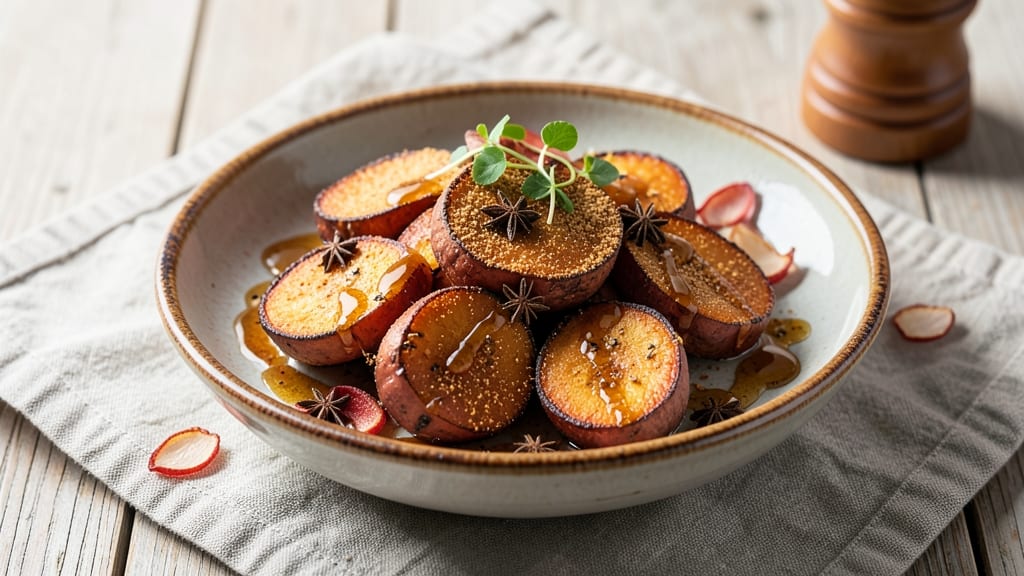
This Asian-style sweet potato recipe transforms humble sweet potatoes into a fragrant, five-spice roasted side dish with caramelized edges and tender centers.
The secret lies in the aromatic blend of cinnamon, star anise, and cloves that infuses the potatoes with warmth and depth—perfect for complementing stir-fries, grilled meats, or even as a standalone dish.
I developed this recipe after discovering how a simple spice rub could elevate a basic vegetable into something restaurant-worthy.
The technique is straightforward yet transformative: thinly sliced sweet potatoes roast until crispy on the edges while staying tender inside, absorbing the rich, caramelized glaze. This method ensures every bite delivers a balance of sweetness and savory umami, with a hint of spice that lingers.
The five-spice blend isn’t just for flavor—it’s a nod to traditional Asian cooking techniques that turn simple ingredients into something extraordinary.
What you’ll end up with is a dish that’s visually stunning—golden, glistening slices with a glossy caramelized coating—and irresistibly crunchy when bitten into.
The aroma alone will have everyone at the table reaching for seconds, and the adaptability means it works as a side for weeknight dinners or as a centerpiece for special occasions. This recipe proves that Asian-inspired flavors don’t require complicated techniques, just a little patience and the right spice blend.
Serve alongside grilled chicken, steamed rice, or even as a topping for noodle bowls. The possibilities are endless, but the preparation is simple—just 30 minutes of active time and 20 minutes of roasting. Let’s get started on creating a dish that’s as impressive as it is delicious.
Ingredients for asian style sweet potato
Transform ordinary sweet potatoes into a fragrant, five-spice roasted masterpiece with these carefully selected ingredients.
| Ingredient | Amount | Notes |
|---|---|---|
| Japanese Sweet Potatoes 🍠 | 2 lbs | Medium-sized, peeled and sliced into 1/4-inch rounds |
| Light Brown Sugar 🍚 | ¼ cup | Packed, for caramelization |
| Rice Vinegar 🍶 | 2 tbsp | Seasoned preferred for subtle sweetness |
| Sesame Oil 🫒 | 1 tbsp | Toasted, for aroma |
| Ground Cinnamon 🌿 | 1 tsp | Freshly ground for warmth |
| Ground Star Anise 🌶️ | ½ tsp | Or 1 whole star anise, crushed |
| Ground Cloves 🌶️ | ¼ tsp | Freshly ground for depth |
| Ground Fennel Seeds 🌿 | ¼ tsp | Or 1 tsp dried fennel fronds |
| Ground Szechuan Peppercorns 🌶️ | ¼ tsp | For subtle tingling heat |
| Kosher Salt 🧂 | 1 ½ tsp | Diamond Crystal preferred |
| Black Pepper 🌶️ | ½ tsp | Freshly cracked for brightness |
| Vegetable Oil 🫒 | 2 tbsp | High smoke point for roasting |
| Toasted Sesame Seeds 🌾 | 1 tbsp | For garnish and crunch |
| Fresh Cilantro 🌿 | ¼ cup | Chopped, for brightness |
The sweet potatoes are the foundation, so Japanese varieties are ideal—they’re sweeter and creamier than regular sweet potatoes. Look for firm, unblemished tubers at Whole Foods or Asian markets, where you’ll also find the five-spice blend pre-mixed if you prefer convenience. Freshly ground spices make all the difference here—Penzeys Spices or the bulk bins at Trader Joe's are my go-to sources. The sesame oil should be toasted, not the flavored kind from the bottle—it’s worth the extra $2 for the authentic aroma. If you can’t find Szechuan peppercorns, omit them entirely; the dish still shines without them.
No rice vinegar? Apple cider vinegar works in a pinch, though it lacks that delicate sweetness. Freshly ground spices are non-negotiable for this recipe—if you’re using whole spices, toast and grind them fresh in a coffee grinder. The brown sugar can be swapped for maple syrup or coconut sugar for a more refined sweetness, though the caramelization won’t be as pronounced. For the sesame seeds, toast them in a dry pan for 30 seconds until fragrant—this amplifies their nutty flavor dramatically. The cilantro is optional but adds a bright finish; if you dislike it, substitute with mint or basil.
Prepped sweet potatoes keep for 2 days in the fridge, covered with a damp towel to prevent drying. The spice blend, however, stays potent for up to 6 months in an airtight container. For make-ahead convenience, roast the potatoes 1 day ahead and reheat at 375°F for 10 minutes—they’ll crisp up beautifully. Store leftovers in a single layer on a baking sheet to maintain that coveted crunch. This dish reheats best when spread thinly on parchment paper under the broiler for 3-5 minutes.
Why You'll Love This Recipe
- One-Pan Magic: I swear by this recipe—just toss those Japanese sweet potatoes in a sheet pan with a drizzle of sesame oil, a sprinkle of cinnamon, and a pinch of salt. No chopping, no mess, and the oven does all the work while I sip my coffee.
- Sweet-Savory Balance: That caramelized brown sugar crust? Chef’s kiss. But it’s the tangy rice vinegar glaze that makes it sing—bright, sticky, and just sweet enough to keep me coming back for seconds.
- Lunchbox Hero: Between us, this is my go-to for packed lunches. Roast a big batch on Sunday, slice them up, and they stay tender for days. Kids (and adults) love the way the cinnamon and sesame oil make them taste like dessert.
- Budget Buster: Japanese sweet potatoes are cheaper than regular ones, and this recipe stretches them far. A single pan of these feeds my family for three meals—plus, the brown sugar and vinegar are pantry staples I already had. Win.
Step-by-step instructions for Asian-style five-spice roasted sweet potatoes
Transform humble sweet potatoes into a fragrant, caramelized masterpiece with this aromatic spice blend.
Prepare the Sweet Potatoes for Even Cooking
Peel the 2 lbs Japanese sweet potatoes using a mandoline or sharp knife to achieve uniform ¼-inch rounds. I find this thickness ensures perfect caramelization without burning. Soak the slices in cold water for 10 minutes to remove excess starch, then drain thoroughly and pat completely dry with paper towels.
The starch removal prevents the sweet potatoes from sticking during roasting and promotes that desirable crispy exterior. Arrange the slices in a single layer on a baking sheet lined with parchment paper, leaving ½-inch between each piece. This spacing allows hot air to circulate evenly for consistent browning.
Create the Signature Spice Rub
In a small bowl, combine the 0.25 cup light brown sugar, 1.5 tsp kosher salt, 0.5 tsp black pepper, 1 tsp ground cinnamon, 0.5 tsp ground star anise, 0.25 tsp ground cloves, 0.25 tsp ground fennel seeds, and 0.25 tsp ground Szechuan peppercorns. Mix thoroughly until the spices are evenly distributed throughout the sugar.
This complex spice blend creates the signature aroma and subtle heat that defines this dish. The brown sugar provides both sweetness and caramelization, while the Szechuan peppercorns add that distinctive tingling sensation. Rub this mixture evenly over both sides of all sweet potato slices, pressing gently to ensure adherence.
Roast Until Caramelized and Crisp
Preheat your oven to 425°F. Heat the 2 tbsp vegetable oil in a small saucepan over medium heat until shimmering, then carefully brush it over the seasoned sweet potatoes using a pastry brush. Transfer the baking sheet to the preheated oven and roast for 25 minutes, then reduce heat to 375°F and continue roasting for an additional 20-25 minutes.
You'll know they're perfectly done when the edges are deep golden brown with caramelized spots and the sweet potatoes are tender when pierced with a fork. The high initial temperature creates the crispy exterior, while the lower temperature finish ensures even cooking through. Rotate the baking sheet halfway through cooking for even browning.
Finish with Aromatic Touches
Remove the sweet potatoes from the oven and immediately drizzle with the 2 tbsp rice vinegar and 1 tbsp sesame oil. Toss gently to coat, then sprinkle with the 1 tbsp toasted sesame seeds and 0.25 cup chopped fresh cilantro. Let sit for 5 minutes before serving to allow the flavors to meld.
The vinegar brightens the caramelized sweetness while the sesame oil adds nutty depth. The sesame seeds provide texture contrast, and the cilantro introduces freshness that cuts through the richness. Serve immediately while still warm for that perfect balance of crispy edges and tender centers.
Pro Tips For Making Asian Style Sweet Potato
- CUT THEM THIN, COOK THEM FAST: Japanese sweet potatoes stay dense when sliced too thick—aim for ¼-inch slices (about 6mm) so they cook through in 8-10 minutes in a hot pan. I learned this the hard way after serving mushy, undercooked slices at a dinner party. Once they hit the pan, keep the heat medium-high and resist the urge to stir constantly—let them caramelize in patches first.
- USE RICE VINEGAR LAST: Add the rice vinegar only in the final 30 seconds of cooking—it evaporates fast and burns easily. I used to splash it in too early, and the sweetness would turn sharp. If you’re worried about flavor loss, toss the cooked sweet potatoes with a tiny drizzle of vinegar off the heat instead.
- TOAST THE CINNAMON FIRST: Ground cinnamon loses its warmth when heated directly, but a quick 30-second dry toast in the pan before adding the sweet potatoes brings out its aroma. My grandmother swore by this—sounds weird, but it makes a real difference in balancing the sugar’s sweetness.
- SWAP BROWN SUGAR FOR MIRIN: Light brown sugar can clump and burn if not dissolved properly. Instead, use 2 tablespoons mirin (or 1 tbsp honey + 1 tbsp water) to glaze the sweet potatoes while they cook—it caramelizes faster and adds a subtle tang. If you must use sugar, mix it with a splash of water first to prevent scorching.
Flavor customization for this recipe
Sweet Heat Level
Adjust the heat to your preference by modifying the Szechuan peppercorns—start with ¼ tsp for subtle tingling or increase to ½ tsp for a bold kick. For a milder option, swap them with ½ tsp ground coriander while keeping the other spices intact.
I find ½ tsp delivers just the right balance of warmth without overpowering the sweetness. 🌶️
Savory Umami Twist
Enhance the depth of flavor by adding 1 tbsp soy sauce or 1 tsp miso paste to the spice rub. This works especially well if serving with grilled meats or noodle dishes.
For extra umami, sprinkle ½ tsp furikake (Japanese seasoning) over the finished sweet potatoes before serving. The contrast of sweet and savory is what makes this dish so addictive.
Caramelized Glaze Variations
Swap the brown sugar for maple syrup or coconut sugar to create a more refined glaze, or use ½ cup honey> for a floral sweetness. For a sticky-sweet finish, brush the roasted potatoes with 2 tbsp hoisin sauce> during the last 5 minutes> of roasting.
This adds a rich, slightly tangy depth that pairs perfectly with the crispy edges.
Herb & Citrus Brightness
Infuse freshness by adding 1 tbsp grated ginger> to the spice rub or tossing the finished potatoes with 1 tsp lime zest>. For a tropical twist, garnish with ¼ cup shredded coconut> and a sprinkle of toasted coconut flakes>.
The acidity from lime or citrus brightens the caramelized sweetness, while the herbs add a vibrant finish. ✨
Spiced Yogurt Dip
Serve with a cooling dip made from ½ cup Greek yogurt>, 1 tbsp chopped mint>, ½ tsp ground cumin>, and a pinch of salt.
This balances the heat and richness beautifully. For a vegan option, use coconut yogurt instead. The contrast of creamy and crispy makes every bite unforgettable.
Sweet & Smoky Fusion
Add ½ tsp smoked paprika> or ¼ tsp liquid smoke> to the spice rub for a smoky depth. This works especially well if you're serving these with barbecued meats or grilled vegetables.
The smokiness complements the sweetness while adding a layer of complexity that elevates the dish to new heights. 🔥
Nutrition facts
Frequently asked questions
Can I use regular sweet potatoes instead of Japanese sweet potatoes?
Yes, but expect a slightly different texture and flavor. Japanese sweet potatoes (like satsuma-imo) are creamier and sweeter, while regular sweet potatoes have a denser, earthier taste. For best results, choose orange-fleshed sweet potatoes and roast them 5-10 minutes longer to achieve the same tenderness. The caramelization will still work, but the final dish may be slightly less delicate.
What's the best way to store leftover roasted sweet potatoes?
Store them in a single layer on a parchment-lined tray to maintain crispiness. Reheat at 375°F for 10 minutes or under the broiler for 3-5 minutes until warmed through. For longer storage (up to 1 week), keep them in an airtight container at room temperature. Freezing isn't recommended as it dulls the crispy texture.
Can I make this recipe in an air fryer?
Arrange the sweet potato slices in a single layer in the air fryer basket, leaving ½-inch between pieces. Cook at 380°F for 12-15 minutes, shaking the basket every 5 minutes for even browning. The air fryer method works especially well for smaller batches and delivers a similar crispy texture with less oil.
Why did my sweet potatoes turn out mushy instead of crispy?
This usually happens when slices are too thick (> ¼-inch) or not dried thoroughly before roasting. For perfect crispiness, ensure slices are ¼-inch thick, pat completely dry, and leave ½-inch space between pieces. Also, don't overcrowd the baking sheet—roast in batches if needed. The oven temperature should stay consistent at 425°F for the first 25 minutes.
What are some traditional Asian dishes these sweet potatoes pair with?
These roasted sweet potatoes complement a variety of Asian dishes beautifully. Serve alongside Japanese teriyaki chicken, Korean bulgogi beef, or Thai green curry. They also work as a side for steamed rice, ramen noodles, or even as a topping for pho or bibimbap. The caramelized sweetness balances rich, savory, or spicy flavors perfectly.