Side Dishes
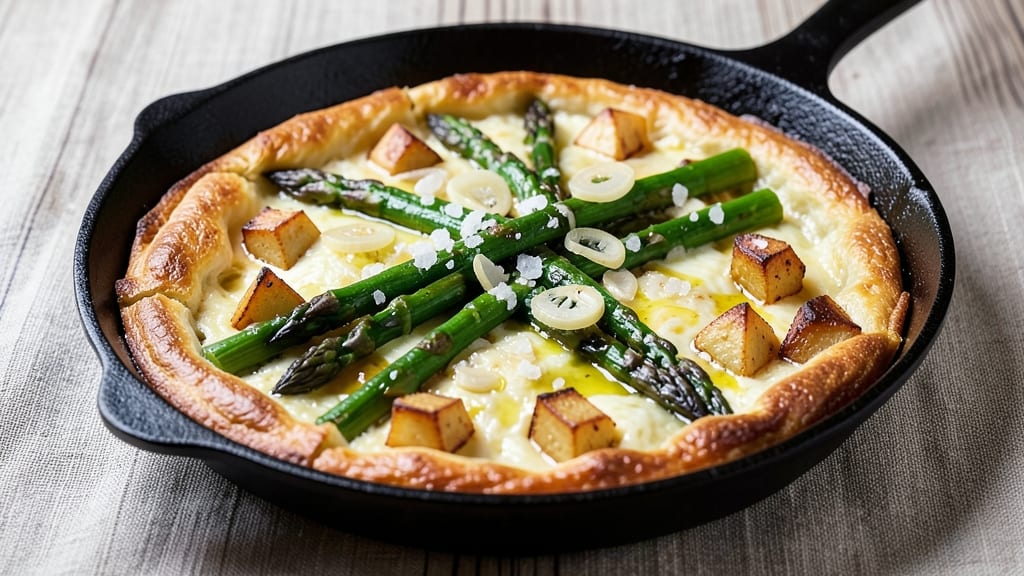
This asparagus and potato frittata delivers the perfect balance of crispy golden edges and fluffy, tender centers in every bite.
I developed this recipe after realizing how versatile simple ingredients could be when combined with the right technique—sautéed vegetables, whisked eggs, and a high-heat finish that transforms ordinary breakfast into something extraordinary.
The secret lies in pre-cooking the vegetables just until tender, then baking the egg mixture until the top sets into a golden, slightly crispy crust while keeping the inside luxuriously soft.
The beauty of this frittata is its simplicity—no fancy equipment, just a skillet and basic pantry staples. You'll start by sautéing asparagus and potatoes until they're perfectly tender, then whisk together eggs with seasonings before pouring over the vegetables.
A quick bake in the oven creates that signature crispy top while maintaining fluffy centers, making it ideal for breakfast, brunch, or even a light dinner. The combination of earthy asparagus and creamy potatoes creates a satisfying texture that holds together beautifully.
What makes this recipe truly special is its versatility—add a sprinkle of cheese for extra richness, fold in fresh herbs for brightness, or keep it simple with just salt and pepper.
The result is a dish that's hearty enough to stand alone but light enough to pair with salads or fresh bread. Each forkful delivers a mix of crispy, creamy, and tender textures that make it impossible to stop eating.
Perfect for meal prep or last-minute breakfasts, this frittata comes together in under 30 minutes and reheats beautifully. Whether you're feeding a crowd or treating yourself to a satisfying solo meal, this recipe delivers restaurant-quality results with minimal effort. Let's get started!
Ingredients for asparagus and potato frittata
Simple ingredients transform into a restaurant-quality frittata with crispy edges and fluffy centers.
| Ingredient | Amount | Notes |
|---|---|---|
| Large Eggs 🥚 | 6 whole | Room temperature for even cooking |
| Asparagus Spears 🌿 | 1 lb | Trimmed, tough ends removed |
| Yellow Potatoes 🥔 | 1 ½ lb | Yukon Gold preferred, diced small |
| Extra-Virgin Olive Oil 🫒 | ½ cup | High-quality, fruity variety |
| Shallots 🧅 | 2 whole | Minced, or substitute 3 tbsp onion |
| Garlic Cloves 🧄 | 3 cloves | Minced, fresh preferred |
| Diamond Crystal Kosher Salt 🧂 | 1 ½ tsp | Adjust to taste |
| Freshly Ground Black Pepper 🌶️ | ½ tsp | Coarsely cracked |
| Fresh Thyme Leaves 🌿 | 1 tbsp | Or 1 tsp dried thyme |
| Grated Parmesan Cheese 🧀 | ¼ cup | Freshly grated from block |
| Fresh Chives 🌿 | 2 tbsp | Chopped, for garnish |
The asparagus and potatoes are the foundation of this frittata, so choose fresh, firm asparagus with tightly closed tips and Yukon Gold potatoes for their creamy texture. Whole Foods or local farmers markets often carry the highest-quality produce. For the eggs, room temperature is key to prevent curdling during baking. The Parmigiano-Reggiano should be freshly grated—pre-grated cheese contains anti-caking agents that prevent proper melting. If you prefer a milder flavor, substitute Pecorino Romano at a 1:1 ratio. The shallots add subtle sweetness, but red onion works in a pinch if you're short on time.
Need substitutions? Swap the asparagus for zucchini or bell peppers if you prefer a milder vegetable. The potatoes can be replaced with sweet potatoes for a slightly sweet twist, though they'll require longer cooking time. Fresh thyme is ideal, but dried thyme at one-third the amount maintains the earthy notes. For extra richness, fold in 1/4 cup crumbled feta before baking. The olive oil should be extra-virgin—anything less will compromise the dish's depth of flavor. If you're making this ahead, pre-cook the vegetables and store them separately until ready to assemble.
Pre-cooked vegetables keep for 3 days in the fridge, covered tightly. The egg mixture should be used within 2 hours of whisking to maintain optimal texture. For meal prep, bake the frittata in a 9-inch cast-iron skillet—it reheats beautifully, with the crispy top softening slightly while the centers stay tender. Store leftovers in an airtight container for up to 4 days, or freeze for 2 months. To reheat, warm in a 350°F oven for 10-15 minutes until heated through, or cover with a damp paper towel and microwave for 1 minute to restore crispiness.
Why You'll Love This Recipe
- One-Pan Magic: I swear by this recipe when I’m too tired to scrub a million dishes—just chop the potatoes into even chunks, toss them in olive oil with a pinch of salt, and let them roast while you prep the rest. The asparagus and shallots join them later, and suddenly, you’ve got a golden, crispy base without a single extra pan.
- Crispy-Creamy Balance: That first bite where the edge is slightly crispy but the inside is still silky? It’s the potatoes roasted until tender but not mushy, then topped with fluffy eggs that set just right. The asparagus adds a bright, fresh pop, and the shallots? They caramelize into sweet little pockets of flavor that make this dish ridiculously good.
- Meal Prep MVP: Between us, this is my go-to for busy mornings. Make a big batch on Sunday, slice it up, and reheat portions all week—it holds together like a champ. Honestly, even my kid who hates vegetables sneaks bites of this. (Yes, even on a Tuesday night.)
- Budget-Friendly Luxury: Eggs, potatoes, and asparagus are all pantry staples or seasonal finds that won’t break the bank. You’re getting a hearty, protein-packed meal that feels fancy without the restaurant price tag. Plus, leftovers taste just as good cold the next day—perfect for lunches or a quick snack.
Step-by-step instructions for asparagus and potato frittata
Master the art of this rustic frittata with a perfectly crispy top and tender, fluffy interior.
Prep and Par-cook the Vegetables
Preheat your oven to 400°F and line a baking sheet with parchment paper. Peel and dice the 1.5 lb yellow potatoes into ½-inch cubes—smaller pieces cook more evenly. Toss them with 2 tablespoons of the extra-virgin olive oil, ½ teaspoon of the diamond crystal kosher salt, and ¼ teaspoon of the freshly ground black pepper. Spread the potatoes on the baking sheet in a single layer and roast for 20-25 minutes until golden and tender when pierced with a fork.
While the potatoes roast, trim the tough ends from the 1 lb asparagus spears and cut them into 1-inch pieces. In a large skillet, heat 1 tablespoon of the remaining extra-virgin olive oil over medium heat. Add the minced 2 whole shallots and cook for 3-4 minutes until soft and translucent. Add the minced 3 cloves garlic and 1 tablespoon fresh thyme leaves, cooking for another 30 seconds until fragrant. Transfer the shallot mixture to a bowl and set aside.
Whisk the Egg Mixture
In a large bowl, whisk together the 6 whole large eggs until the yolks and whites are fully combined and the mixture is uniform. Add the 0.25 cup grated parmesan cheese, remaining 1 teaspoon diamond crystal kosher salt, and remaining ¼ teaspoon freshly ground black pepper, whisking until fully incorporated. The mixture should be smooth and pale yellow—this ensures an even texture in the frittata.
Gently fold in the roasted potatoes, asparagus, and shallot mixture using a spatula. Avoid overmixing—just combine until everything is evenly distributed. The goal is to keep the eggs as aerated as possible for a light, fluffy texture. Let the mixture rest for 5 minutes while you prepare your oven.
Cook the Frittata in the Oven
Heat a 10-inch oven-safe skillet over medium heat and add the remaining 1 tablespoon extra-virgin olive oil. Pour the egg mixture into the skillet, spreading it evenly with the back of a spoon. Cook undisturbed for 5-6 minutes until the edges begin to set and the bottom looks lightly golden. This initial cooking creates a firm base for the crispy top.
Transfer the skillet to the preheated 400°F oven and bake for 15-18 minutes. The frittata is done when the top is deep golden brown and slightly puffed, with a firm texture when gently shaken. The center should still be slightly custardy—it will continue cooking as it rests. Avoid overbaking, or the top will become dry instead of crispy.
Finish and Serve
Remove the frittata from the oven and let it rest for 2-3 minutes before serving. This resting period allows the internal heat to distribute, ensuring the center is fully set without overcooking. Use a spatula to loosen the edges if needed, then slide the frittata onto a serving plate.
Garnish immediately with the 2 tablespoons chopped fresh chives for a pop of color and freshness. Serve warm, cutting into wedges for easy sharing. The contrast of the crispy top, fluffy interior, and tender vegetables makes every bite satisfying. For extra richness, drizzle with a bit of high-quality olive oil or serve with a side of crusty bread to soak up any stray juices.
Pro Tips For Making Asparagus And Potato Frittata
- Prep Potatoes First: I learned this the hard way—roasting the potatoes ahead of time saves your frittata from turning into a soggy mess. Par-cook them in olive oil until tender (about 15-20 minutes at 400°F), then let them cool completely before folding into the eggs. This guarantees they stay creamy, not mushy, even when the frittata sets.
- Trim Asparagus Properly: Skip the lazy snap-and-pray method—use a sharp knife to trim the asparagus spears at a 45-degree angle, cutting just below the woody ends. This makes them look intentional (not sad) and ensures even cooking. Overcrowding the pan later will still happen, but at least they’ll be pretty while they char.
- Use Medium-Low Heat: After pouring the egg mixture, resist the urge to blast the frittata with high heat—it’ll brown the top too fast and leave the center rubbery. Start with medium-low, then drop to low once the edges set. I was skeptical until I tried it: the eggs cook through evenly, and the crust stays golden without burning.
- Salt the Eggs: Sounds weird, but it works: add a pinch of salt (about ½ teaspoon) directly to the beaten eggs before mixing in other ingredients. This ensures even seasoning throughout, not just on the surface. I skip this when I’m lazy, but the dish is noticeably better when I don’t—especially with the salty potatoes and asparagus.
Make-ahead tips for this dish
Pre-Cook Vegetables
Pre-cook the asparagus and potatoes separately to ensure they're perfectly tender before assembling the frittata. Roast the 1.5 lb potatoes at 400°F for 20-25 minutes until golden, then sauté the 1 lb asparagus in 1 tbsp olive oil for 3-4 minutes until bright green.
Store both in an airtight container in the fridge for up to 3 days—this makes assembly quick when you're ready to bake. 🥔
Egg Mixture Prep
Whisk the 6 eggs with 0.25 cup Parmesan, 1.5 tsp salt, and 0.5 tsp pepper up to 2 hours ahead. Cover and refrigerate in an airtight container, but bring to room temperature before using.
The mixture will thicken slightly in the fridge—just whisk again briefly before folding in your pre-cooked veggies. This step saves 15 minutes on busy mornings. 🥚
Assemble Ahead
Combine the egg mixture with pre-cooked vegetables in the skillet up to 1 hour before baking. Cover and refrigerate, but let it sit at room temperature for 10 minutes before transferring to the oven.
This ensures even cooking when you bake it later. I often do this when hosting—just pop it in the oven while I finish other dishes. 💡
Bake and Store
Bake the assembled frittata as directed, then let it cool completely before storing. It reheats beautifully from the fridge—warm in a 350°F oven for 10-15 minutes or microwave for 1-2 minutes covered with a damp paper towel.
For freezing, wrap tightly in plastic wrap and foil, then store for up to 2 months. Thaw overnight in the fridge before reheating. 🧊
Reheat for Crispy Top
The key to restoring crispiness is a quick stovetop finish. After microwaving, transfer the frittata to a skillet over medium heat for 2-3 minutes until the top is golden again.
For oven reheating, cover loosely with foil and bake at 375°F for 8-10 minutes, then uncover for the final 2 minutes to crisp the top. This method works best for meal prep leftovers. ✨
Portion for Meal Prep
Slice the fully cooled frittata into 8 wedges and store in individual glass containers for easy grab-and-go breakfasts. Each portion reheats perfectly and keeps well for 4 days in the fridge.
For lunchboxes, wrap wedges in parchment paper and pack with a side of hummus or sliced fruit. The crispy top holds up surprisingly well during transport. 🍽️
Nutrition facts
Frequently asked questions
Can I make this frittata without potatoes?
Swap the potatoes for 1 lb zucchini or 1 lb bell peppers for a lighter texture. If you prefer more heartiness, try 1 lb roasted cauliflower or 1 lb sweet potatoes (adjust baking time to 25-30 minutes since they take longer to cook). The key is pre-roasting or sautéing the vegetables until tender before folding into the egg mixture.
Why did my frittata turn out rubbery instead of fluffy?
Overmixing the egg mixture or baking at too high a temperature can cause rubberiness. Keep whisking gentle to maintain air bubbles, and bake at 400°F—any hotter risks drying out the center. Also, avoid opening the oven door early, which lets heat escape and causes uneven cooking. The center should be slightly custardy when done.
How do I make this frittata ahead for meal prep?
Assemble the frittata up to 1 day ahead and refrigerate uncovered. When ready to bake, let it sit at room temperature for 10 minutes before transferring to the oven. For freezing, bake first, then cool completely, wrap tightly, and freeze for up to 2 months. Reheat oven-warm at 350°F for 10-15 minutes or microwave for 1 minute covered with a damp towel.
Can I add cheese besides Parmesan?
Yes! For extra creaminess, try ½ cup feta or ½ cup goat cheese crumbled into the egg mixture. For a sharper flavor, add ½ cup sharp cheddar or ½ cup Gruyère. Just fold in the cheese after whisking the eggs but before adding the vegetables. Avoid adding cheese directly to the skillet—it can burn before the eggs set.
What's the best skillet for this recipe?
A 10-inch cast-iron skillet is ideal because it retains heat evenly and creates that perfect crispy top. If you don’t have cast iron, a heavy stainless steel or well-seasoned carbon steel skillet works too. Avoid nonstick—it won’t get crispy enough. For oven safety, ensure your skillet is ovenproof (most cast iron and stainless steel are).