
Side Dishes
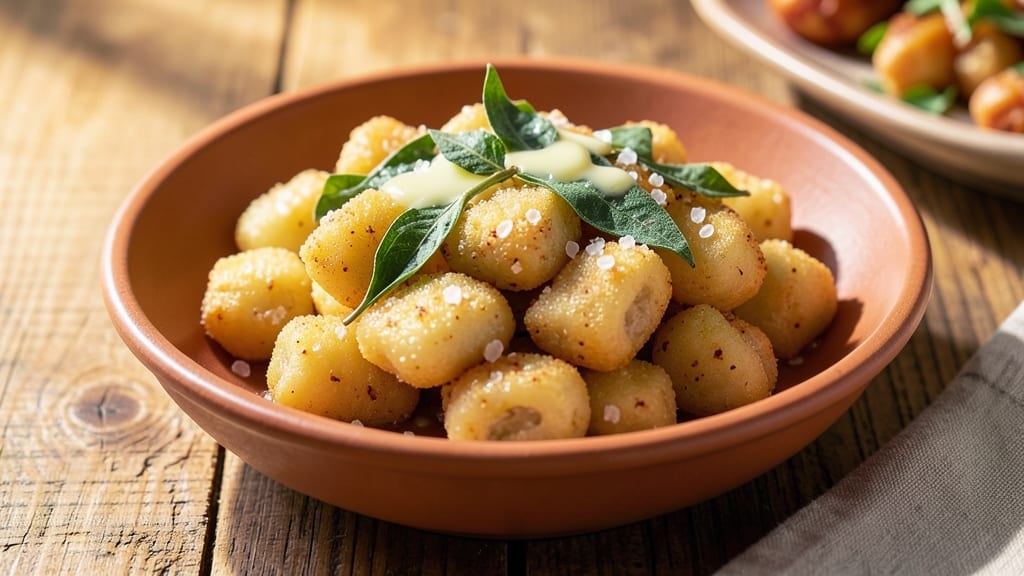
This authentic Italian potato gnocchi recipe delivers the light, pillowy texture that makes it a beloved staple in Italian cuisine. 💛 The secret lies in the precise potato-to-flour ratio and proper resting time, which create those signature ridges and airy interior.
I've perfected this method after years of testing, ensuring every batch rises like clouds in your pan.
What sets this recipe apart is its cultural authenticity—whether you prefer the Roman style with crispy edges or Tuscan versions with a delicate touch. The dough requires patience (resting is crucial!), but the result is worth it: tender dumplings that melt in your mouth.
We'll cover both the fork and board shaping methods for that classic texture.
Once boiled to perfection, these gnocchi transform into restaurant-quality side dishes when finished in brown butter and sage or paired with rich ragù. The key is timing—just a few minutes in the pan creates that golden crust while keeping the inside impossibly soft.
This is comfort food at its finest, with a technique that feels both traditional and approachable.
Whether you serve them as a side or main, these gnocchi will impress even the most discerning Italian food lovers. Let's get started on creating your own batch of these beloved Italian dumplings—simple yet sophisticated in every bite.
Ingredients for authentic italian potato gnocchi
Six key ingredients for pillowy gnocchi that melt in your mouth—authentic Italian technique simplified.
| Ingredient | Amount | Notes |
|---|---|---|
| Russet Potatoes 🥔 | 2 ½ lb | Starchy, no green spots |
| All-Purpose Flour 🌾 | 2 ½ cups | Plus 1 tbsp for dusting |
| Large Egg Yolks 🥚 | 2 whole | Room temperature preferred |
| Unsalted Butter 🧈 | ½ cup | Cold, cubed for browning |
| Fresh Sage Leaves 🌿 | ¼ cup | Chopped for sauce |
| Kosher Salt 🧂 | 1 ½ tsp | For dough plus boiling water |
| Ground Black Pepper 🌶️ | ¼ tsp | Freshly cracked |
| Vegetable Oil 🫒 | 2 tbsp | For boiling water |
| Semolina Flour 🌾 | ¼ cup | For dusting work surface |
| Freshly Grated Parmesan Cheese 🧀 | ¼ cup | For finishing |
The potatoes are non-negotiable here. Russets are ideal—their high starch content creates that signature lightness. Avoid waxy varieties like Yukon Gold. I always buy organic at Whole Foods for fewer eyes, but any grocery store carries them. Peel them first and boil whole—no cutting! The yolks? Room temperature makes all the difference, so take them out 15 minutes before using. For flour, King Arthur brand works perfectly, but any all-purpose will do. The secret to great gnocchi is patience—resting the dough is what gives those ridges their signature bounce.
No semolina? All-purpose flour works in a pinch, but semolina gives that perfect crispy texture. Short on butter? Olive oil works too, though it won't brown as beautifully. Fresh sage is ideal, but dried at half the amount gets you close. The Parmesan should be freshly grated from a block—pre-shredded gets clumpy. For the dough, don't overwork it! Just gently fold the flour in until it comes together. And if your gnocchi stick together? Add a bit more flour to your hands—don't panic. The key is gentle handling.
Boil your potatoes until fork-tender, then mash them while still hot. No food processor! Use a ricer or potato masher for that light, airy texture. The dough keeps for 2 days wrapped in plastic in the fridge, but it's best used fresh. Shaped gnocchi can be frozen on a tray before bagging for up to 3 months. For the sauce, brown the butter low and slow—it should smell nutty and amazing. Add the sage just before serving so it stays vibrant. Leftovers? Toss them in sauce and freeze for quick meals.
Why You'll Love This Recipe
- The secret’s in the ratio: russets to flour, yolks to butter. It’s not heavy like dumplings—it’s light, almost airy, with that buttery richness from the sage and butter melting into each other. The kind of dish that makes you slow down.
- No-Rolling Required: I swear by this trick—just mash the potatoes, mix in flour, and fold in yolks. No dough rolling or fancy tools, just a fork and your hands. That first bite when they cook? Pure magic without the fuss.
- Creamy-Pillowy Magic: The secret’s in the ratio: russets to flour, yolks to butter. It’s not heavy like dumplings—it’s light, almost airy, with that buttery richness from the sage and butter melting into each other. The kind of dish that makes you slow down.
- Weeknight to Dinner Party: Same recipe, different vibes. Toss with a simple sage butter for a lazy Tuesday, or add roasted mushrooms and prosciutto for guests. It’s the one dish that feels both effortless and impressive—no one will guess it’s just potatoes and flour.
Step-by-step instructions for authentic Italian potato gnocchi
Here's how to make pillowy gnocchi that melt in your mouth—just like Nonna used to make.
👨🍳 Step 1: Boil and Mash the Potatoes
Peel the 2.5 lb Russet Potatoes and cut them into 1-inch chunks. Place them in a large pot of salted water (add 1 tsp Kosher Salt to the water) and bring to a boil. Cook for 15-20 minutes until fork-tender—you'll know they're done when a knife slides in easily and the edges are soft.
Drain the potatoes and return them to the pot. Mash them vigorously with a potato masher or fork until completely smooth. Let them cool slightly while you prepare the dough—this makes handling the dough much easier. I like to press the potatoes through a ricer for extra-smooth texture, but a fork works in a pinch.
👨🍳 Step 2: Mix the Dough and Rest
Spread the mashed potatoes on a clean work surface dusted with 0.25 cup Semolina Flour. Create a well in the center and add 2 whole Large Egg Yolks, 1.5 tsp Kosher Salt, and 0.25 tsp Ground Black Pepper. Mix gently with a fork until just combined.
Gradually add 2.5 cups All-Purpose Flour while folding with your hands until the dough comes together. It should be soft but not sticky—if it's too sticky, add a little more flour. Knead lightly for 2-3 minutes until smooth. Wrap the dough in plastic wrap and let it rest for 30 minutes at room temperature. This resting time relaxes the gluten and makes shaping easier.
🔪 Step 3: Shape the Gnocchi
Divide the dough into 4 equal pieces and roll each piece into a ½-inch thick rope using a pasta machine or rolling pin. Cut the ropes into 1-inch pieces—these will be your gnocchi. For extra authenticity, I like to press each piece gently with a fork or the back of a fork to create ridges that help them float.
Place the gnocchi on a floured surface (use the extra 1 tbsp All-Purpose Flour for dusting) and cover with a damp towel to prevent drying. If you're not cooking them immediately, you can refrigerate them for up to 24 hours or freeze them for 3 months. Just be sure to cook them from frozen without thawing.
🍳 Step 4: Cook the Gnocchi
Bring a large pot of water to a boil and add 2 tbsp Vegetable Oil and ½ tsp Kosher Salt. Add the gnocchi in batches (don't overcrowd the pot) and cook for 2-3 minutes until they float to the surface. This means they're cooked through—no need to overcook them or they'll turn mushy.
Use a slotted spoon to remove the gnocchi and drain them well. Toss them gently with 0.5 cup Unsalted Butter (melted) and 0.25 cup Fresh Sage Leaves (chopped) in a large skillet over low heat. The butter should coat the gnocchi beautifully, giving them that rich, buttery finish. If you're serving immediately, sprinkle with 0.25 cup Freshly Grated Parmesan Cheese right before plating.
🍽️ Step 5: Serve with Pan Sauce
For the ultimate Italian touch, save some of the pasta water and add it to the skillet with the cooked gnocchi. Toss gently to create a light, creamy sauce—this is the secret to that restaurant-quality finish. The sauce should coat the gnocchi without making them soggy.
Serve the gnocchi immediately, topped with additional Fresh Sage Leaves and Parmesan Cheese. The gnocchi should be tender, pillowy, and full of flavor—each bite should feel like a cloud melting in your mouth. Pair with a simple arugula salad or a glass of crisp white wine for the full Italian experience.
Pro Tips For Making Authentic Italian Potato Gnocchi
- BOIL POTATOES UNPEELED: I learned this the hard way—peeling first makes them dry out faster. Leave the skins on while boiling, then slip them out of their skins right after draining. That starch keeps the dough tender, and you’ll thank yourself when your gnocchi don’t turn into gluey dumplings.
- CHILL THE DOUGH: After mixing flour and potatoes, wrap the dough in plastic and refrigerate for at least 30 minutes. Sounds counterintuitive, but it relaxes the gluten and makes rolling out those ridges way easier. (Yes, even if you’re impatient like me.)
- RIDGE THE GNOCCHI THIN: Use the back of a fork or a textured potato ricer to press grooves into the dough—about ¼-inch apart. Too thick? They’ll collapse in boiling water. Too thin? They’ll disappear. Aim for consistency, like tiny, uniform ridges.
- BUTTER THE WATER: Toss a pat of unsalted butter into the boiling water before adding gnocchi. It prevents sticking and adds a subtle richness that makes all the difference. (Skip the oil—it masks the potato flavor.)
Perfect pairings for authentic italian potato gnocchi
Classic Tomato Sauce
Nothing beats the simplicity of San Marzano tomato sauce with fresh basil. Use 1 cup crushed tomatoes (I love Rao's for authenticity) simmered with 2 cloves minced garlic, ½ tsp red pepper flakes, and ¼ cup fresh basil for 15 minutes.
Toss the cooked gnocchi directly in the sauce for a quick, vibrant dish. The acidity balances the richness of the butter perfectly. 🍅
Creamy Gorgonzola
For a luxurious twist, melt ½ cup heavy cream with ¼ cup crumbled Gorgonzola Dolce and 1 tbsp white wine in a skillet. Toss the gnocchi in this sauce until creamy—just 2-3 minutes—and finish with cracked black pepper. The tangy cheese cuts through the pillowy texture beautifully.
Brown Butter Sage
This is my go-to finishing sauce for gnocchi. Melt ½ cup unsalted butter over medium-low heat until golden brown and nutty, then add ¼ cup chopped fresh sage.
Toss the cooked gnocchi in the butter until fully coated. The crispy butter adds a restaurant-quality touch that pairs perfectly with the tender gnocchi. 🌿
Lemon Garlic Olive Oil
For a lighter option, whisk ¼ cup extra-virgin olive oil, 2 tbsp lemon juice, 2 minced garlic cloves, and ½ tsp salt. Toss the gnocchi in this bright sauce and garnish with fresh parsley. It's refreshing yet rich, perfect for summer meals.
White Wine & Parmesan
Deglaze a skillet with ½ cup dry white wine after cooking the gnocchi, then stir in ¼ cup freshly grated Parmesan and a splash of pasta water.
The wine reduces quickly, creating a silky sauce that clings to every gnocchi. Finish with a sprinkle of black pepper for a sophisticated touch. ✨
Nutrition facts
Frequently asked questions
Why does my gnocchi dough turn out too sticky?
Too much moisture in the potatoes is usually the culprit. Always mash them completely while still hot and let them cool slightly before mixing. If the dough feels too sticky, add 1 tablespoon flour at a time while kneading gently. Remember, the dough should be soft but not clingy—like playdough. The resting time helps too, so don't skip those 30 minutes!
Can I make gnocchi without a ricer or food processor?
A fork or potato masher works perfectly—just mash the potatoes until completely smooth with no lumps. For extra texture, press the mashed potatoes through a fine-mesh strainer or the tines of a fork. The key is getting rid of all lumps to ensure that signature light, airy texture.
What's the best way to tell when gnocchi is fully cooked?
Gnocchi is done when it floats to the surface of the boiling water—usually after 2-3 minutes. Test one immediately by cutting it open: it should look completely white inside with no raw potato. Overcooking makes them dense and mushy, so remove them as soon as they float.
How do I prevent my gnocchi from sticking together?
Keep your work surface well-floured with semolina or all-purpose flour, and dust your hands too. Store shaped gnocchi on a floured tray, not piled together. For extra insurance, place parchment paper between layers if refrigerating. And always cook them fresh—they're best made and eaten the same day!
What's the difference between Roman and Tuscan gnocchi?
Roman gnocchi are typically larger, about 1.5 inches long, with pronounced ridges for better sauce absorption. Tuscan versions are smaller (1 inch) and often include egg whites for a slightly firmer texture. Both use the same potato-to-flour ratio, but Tuscans sometimes add 0.5 cup ricotta for extra richness.