
Breakfast & Brunch
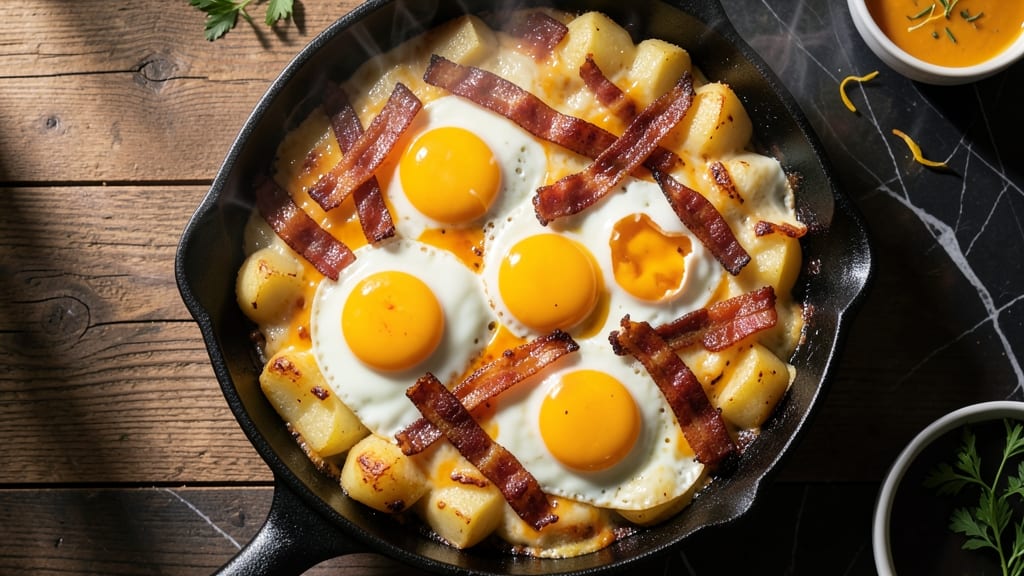
This bacon egg cheese potato casserole recipe transforms simple ingredients into a hearty, crispy-topped breakfast masterpiece that's perfect for brunch crowds or lazy weekend mornings. The secret lies in the layers: tender potatoes, crispy bacon, melty cheese, and fluffy eggs all baked together until golden and bubbling.
I've perfected this one-pan dish over years of weekend cooking, and it never fails to disappear faster than you can say "second helping."
The beauty of this casserole is its flexibility—swap cheddar for gouda, add spinach for extra greens, or keep it classic with just the basics. What makes it truly special is the crispy top that forms while the layers underneath stay creamy and satisfying.
The bacon adds smoky depth, the cheese creates rich pockets, and the eggs bind everything together into one delicious, handheld meal. It's the kind of dish that makes breakfast feel like a celebration.
Ready in about 45 minutes with minimal prep, this casserole delivers restaurant-quality results without the fuss. The potatoes soften perfectly while the top develops that coveted golden crust, and the cheese pulls into stretchy, melty strands with every bite.
It's hearty enough to be a main dish but simple enough to make on a weeknight. Serve with a side salad or crusty bread to soak up every last bit of that flavorful sauce.
Whether you're feeding a family, hosting brunch, or just craving a satisfying breakfast, this bacon egg cheese potato casserole delivers. The layers of flavor and texture make it impossible to resist, and the one-pan method means easy cleanup. Let's get baking!
Ingredients for bacon egg cheese potato casserole
Six simple ingredients create this crispy-topped, melty breakfast casserole everyone will love.
| Ingredient | Amount | Notes |
|---|---|---|
| Russet Potatoes 🥔 | 3 lb | Thinly sliced, peeled preferred |
| Bacon 🥓 | 1 ½ lb | Thick-cut, chopped into small pieces |
| Large Eggs 🥚 | 6 whole | Room temperature for even baking |
| Sharp Cheddar Cheese 🧀 | 2 cups | Shredded, block preferred |
| Heavy Cream 🥛 | 1 cup | Full-fat for richness |
| Whole Milk 🥛 | ½ cup | Warm slightly for best mixing |
| All-Purpose Flour 🌾 | ¼ cup | For crispy topping |
| Baking Powder 🧂 | 1 tsp | For extra lift |
| Salt 🧂 | 1 tsp | Kosher or sea salt |
| Black Pepper 🌶️ | ½ tsp | Freshly ground preferred |
| Garlic Powder 🧄 | 1 tsp | For depth of flavor |
| Onion Powder 🧅 | 1 tsp | For subtle sweetness |
| Butter 🧈 | ½ cup | Melted, unsalted preferred |
The potatoes are the foundation—Russet potatoes hold up best to slicing and baking. Grab a bag from Trader Joe's or Kroger for convenience, or peel and slice your own for extra crispiness. The bacon should be thick-cut (the good stuff, not the flimsy pre-cooked kind)—Oscar Mayer or Costco brands are my go-tos. Chop it small so it cooks through but still stays visible in the casserole. For the cheese, sharp cheddar melts best, but Monterey Jack or pepper jack add fun variations. I always buy a block and shred it myself—pre-shredded gets clumpy and lacks flavor.
No thick-cut bacon? Regular bacon chopped extra small works in a pinch, but it'll be softer. Short on eggs? Add an extra 0.5 cup of milk to keep things creamy. The heavy cream can be swapped for half-and-half if you're watching fat, but trust me on the full-fat version. For the crispy topping, panko breadcrumbs are a great alternative if you don't have extra flour. The garlic powder and onion powder are non-negotiable—they wake up the whole dish. If you're feeling fancy, add a pinch of smoked paprika to the topping mix for extra depth.
This casserole tastes even better the next day—honestly, it's my favorite for brunch leftovers. Store covered in the fridge for 4-5 days or freeze portions for up to 3 months. To reheat, cover with foil and bake at 350°F until warmed through. I always make a double batch because it disappears fast—portion into individual containers so you can grab and go. The crispy top softens when reheated, but a quick broil for 2-3 minutes brings it back to golden perfection.
Why You'll Love This Recipe
- One-Pan Magic: I swear by this—just slice, layer, and bake. No chopping boards, no extra pots, just that golden crust forming on top while the creamy eggs and crispy bacon do their thing underneath.
- Crispy-Creamy Obsession: That first bite where the cheddar melts into the fluffy egg center? Then the crunch of the potato edges? Honestly, it’s the kind of dish that makes you pause mid-bite just to savor it.
- Leftovers That Don’t Suck: Between us, most casseroles turn into sad, soggy leftovers. Not this one. The eggs stay creamy, the bacon stays crispy, and it reheats like it’s fresh—perfect for lunchboxes or lazy mornings.
- Budget Breakfast for All: Feed a crowd for less than $10. The potatoes stretch far, the bacon adds richness without breaking the bank, and the heavy cream makes it feel indulgent. My college roommates and I still joke about the time we ate it three nights in a row.
Step-by-step instructions for bacon egg cheese potato casserole
This one-pan wonder delivers crispy edges, melty cheese, and smoky bacon in every bite.
Cook the Bacon and Prepare Potatoes
Preheat your oven to 375°F. In a large oven-safe skillet (I use a 12-inch cast iron), cook the 1.5 lb chopped bacon over medium heat for 8-10 minutes until crispy. Use a slotted spoon to transfer the bacon to paper towels to drain, leaving the rendered fat in the pan.
While the bacon cooks, peel and thinly slice the 3 lb russet potatoes into ¼-inch thick rounds. You should have about 6 cups of sliced potatoes. As you slice, add them to a large bowl and toss with 1 tsp salt, 1 tsp garlic powder, and 1 tsp onion powder. This seasoning will infuse the potatoes as they cook.
Layer the Casserole for Maximum Flavor
Return the drained bacon to the skillet, spreading it evenly across the bottom. Arrange half of the potato slices in a single layer over the bacon, slightly overlapping them if needed. Sprinkle 1 cup of the shredded sharp cheddar cheese evenly over the potatoes.
In a medium bowl, whisk together the 6 room temperature eggs, 1 cup heavy cream, 0.5 cup warm whole milk, 0.25 cup all-purpose flour, 1 tsp baking powder, 0.5 tsp black pepper, and the remaining 1 tsp salt. Pour this mixture evenly over the potato layer. Top with the remaining 1 cup shredded cheddar cheese and the remaining half of the potato slices, pressing down gently to submerge any floating potatoes.
Bake Until Golden and Set
Carefully transfer the skillet to the preheated oven and bake for 45-50 minutes. The casserole is done when the top is deep golden brown, the edges are crispy, and a toothpick inserted in the center comes out clean. If the top browns too quickly, tent loosely with aluminum foil after 30 minutes to prevent over-browning.
Here's the thing—don't peek too early. The steam needs time to work its magic, creating that perfect texture. The cheese should be fully melted and bubbly, with a crispy crust on top that contrasts beautifully with the creamy interior.
Finish with Melted Butter for Extra Richness
Remove the casserole from the oven and let it rest for 5 minutes. While it rests, melt the 0.5 cup butter in a small saucepan over low heat. Once melted, carefully pour the butter over the top of the casserole, letting it drip down between the layers.
Return the casserole to the oven for 3-5 minutes to let the butter soak in and create an extra-rich, golden finish. The butter will make the top even crispier and add a luxurious richness to every bite. Let it rest for another 5 minutes before serving to allow the layers to set slightly.
Serve with Confidence
Use a spatula to carefully divide the casserole into 6 generous servings. The crispy top will crack slightly as you cut, revealing the creamy egg mixture beneath. Each bite should deliver tender potatoes, smoky bacon, sharp cheddar, and that perfect balance of creamy and crispy textures.
This dish tastes even better the next day, so plan to make it ahead if possible. The flavors meld beautifully overnight, and the texture remains perfect. Serve with a simple green salad or crusty bread to soak up any extra sauce.
Pro Tips For Making Bacon Egg Cheese Potato Casserole
- PREP POTATOES RIGHT: Russets hold moisture like a sponge—slice them thin (¼-inch) and soak in cold water for 10 minutes first. This cuts down on soggy layers later, especially when mixing with heavy cream. (Yes, even if you’re impatient like me, skip the rush.)
- CRISP THE BACON FIRST: Cook the bacon until it’s crisp—not just bendy. Drain on paper towels, then chop it coarse (½-inch pieces). Crispy bacon adds texture, and chopping it bigger means fewer crumbly bits sinking to the bottom.
- DON’T OVERMIX THE EGGS: Whisk the eggs and heavy cream just until combined—no need for a meringue. Overmixing adds air, which can make the casserole dense or watery when baked. Stir in the cheese last, then fold gently.
- BAKE UNTIL SET, NOT DRY: Pull the casserole out when the center is just firm (not jiggly) and the top is golden. Tent with foil 5 minutes early—this traps heat and keeps the cheese from turning rubbery. (I learned this the hard way after a dry, sad batch.)
Common mistakes when making perfect results
Overcooking the Potatoes
Thinly sliced potatoes can turn mushy if baked too long, especially if they're buried under other layers. I've learned the hard way that 45-50 minutes total is the sweet spot at 375°F.
If your casserole needs more time, cover it loosely with foil after 30 minutes to trap steam and prevent overcooking. The potatoes should be tender but still hold their shape when pierced with a fork. 🥔
Skipping the Resting Time
Rushing to serve this casserole right after baking is a huge mistake. The layers need 10-15 minutes to set properly after coming out of the oven. Skipping this step means the crispy top might crack prematurely, and the egg mixture could be too runny.
Trust me, that extra waiting time makes all the difference in texture. The butter topping step actually requires this rest—it needs a stable surface to soak in properly. ⏳
Uneven Layering
Uneven distribution of ingredients leads to dry spots or soggy bottoms. I always start with the bacon spread evenly across the pan, then create a flat layer of potatoes before adding the egg mixture.
If you see gaps, gently press down on the top layer of potatoes to ensure everything cooks uniformly. The egg mixture should be poured slowly to saturate all layers without creating pockets of dryness. A spatula helps spread it evenly. 🍳
Using Pre-Shredded Cheese
Pre-shredded cheese contains anti-caking agents that prevent it from melting smoothly, creating clumpy, dry pockets instead of that perfect stretchy cheese pull. I always buy a block of sharp cheddar and shred it myself using the large holes on a box grater.
This simple step transforms the texture of your casserole from clumpy to creamy. The extra effort is totally worth it for that restaurant-quality melt. 🧀
Overmixing the Egg Mixture
Whisking the egg mixture too vigorously incorporates too much air, which can cause the casserole to rise too much in the oven and potentially overflow. Gently stir the eggs, cream, and milk until just combined—about 10-12 strokes with a whisk.
Overmixing also creates a denser texture that doesn't absorb as well into the potato layers. The secret is a light, even coating that binds everything together without being heavy. 🥚
Ignoring the Butter Topping
That final butter topping isn't just for flavor—it's what creates the signature crispy crust. Skipping it means a bland, dry top instead of that rich, golden finish. Melt the ½ cup butter slowly over low heat to avoid burning, then pour it carefully over the hot casserole.
Returning it to the oven for just 3-5 minutes lets the butter soak in and develop that perfect caramelized crust. Don't rush this step—it's what makes this casserole shine. 🧈
Nutrition facts
Frequently asked questions
Can I make this casserole ahead of time?
This dish actually tastes even better the next day. Assemble it completely, then refrigerate uncovered for 4-6 hours before baking. The flavors meld beautifully overnight, and the texture remains perfect. For maximum crispiness, bake from cold at 375°F for 50-55 minutes instead of the usual 45. Store leftovers covered in the fridge for 4-5 days or freeze portions for 3 months.
What if I don't have cast iron? Can I use another pan?
Yes, but choose an oven-safe skillet with sloped sides (like a 12-inch stainless steel or ceramic-coated pan) to help create that crispy top. Avoid glass pans—they don't conduct heat as well and may prevent proper browning. If using a non-stick pan, reduce the oven temperature slightly to 350°F to prevent sticking. The key is even heat distribution for perfect layering.
How can I make this vegetarian?
Swap the bacon for crispy tempeh bacon (marinated and baked) or smoked paprika-seasoned mushrooms for umami depth. Use nutritional yeast instead of cheese for a dairy-free option, or try vegan cheddar (like Violife) for that melty texture. Add 1 tsp smoked paprika to the egg mixture to mimic bacon's smoky flavor. The potatoes and egg base remain the same!
Why did my casserole turn out soggy?
Soggy results usually mean one of three things: overbaking the potatoes before layering, not draining the bacon well, or skipping the resting time. Always pat the bacon dry with paper towels and let the casserole rest 10-15 minutes after baking. For extra insurance, bake at 350°F instead of 375°F—lower heat prevents steam from making the top rubbery. The butter topping step also helps create that crispy barrier.
Can I add other vegetables to this recipe?
Try adding ½ cup diced bell peppers or 1 cup chopped spinach to the potato layer for extra veggies. For heartier versions, mix in ½ cup cooked quinoa or ½ cup black beans (drained and rinsed). Just reduce the potato amount slightly to maintain balance. Sauté veggies with the bacon first to soften them before layering. The egg mixture will bind everything together perfectly.