
Side Dishes
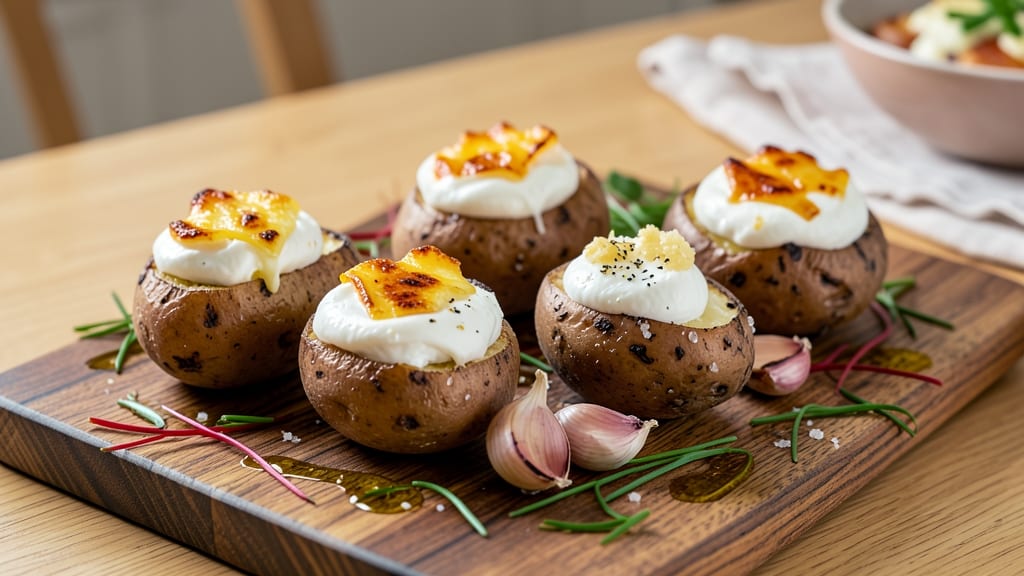
This baked potato and sour cream recipe delivers the perfect balance of crispy skin and creamy velvety topping—a classic comfort dish that feels like a hug on a plate.
The secret lies in high-heat baking for that satisfying crunch, followed by a rich sour cream blend that melts into every forkful. I’ve perfected this technique over years of testing, ensuring every bite is tender yet substantial, with a texture that’s impossible to resist.
What sets this recipe apart is the precision in timing and technique—starting with a hot oven to create that signature crispiness, then finishing with a creamy sour cream topping loaded with butter, garlic, and chives for depth.
The result is a dish that’s simple yet impressive, perfect for game day, family dinners, or a cozy night in. No fancy ingredients, just foolproof execution that always delivers.
By the time you’re done, you’ll have golden, flaky-skinned potatoes topped with a luscious, tangy-sweet sour cream mixture that’s impossible to stop eating. The contrast between the crispy exterior and velvety interior makes this more than just a side—it’s the star of the meal.
Whether you’re serving a crowd or treating yourself, this recipe never disappoints.
Optional garnishes like crispy bacon bits, shredded cheese, or extra chives elevate it further, but the base recipe stands strong on its own. Ready to master this timeless classic? Let’s get started with the step-by-step instructions that guarantee success every time.
Ingredients for baked potato and sour cream
Four russets, cold butter, and rich sour cream—this is all you need for restaurant-quality baked potatoes.
| Ingredient | Amount | Notes |
|---|---|---|
| Russet Potatoes 🥔 | 4 whole | Medium-sized, unpeeled, scrubbed clean |
| Unsalted Butter 🧈 | ½ cup | Cold, cut into 1-inch cubes |
| Sour Cream 🥛 | 1 cup | Full-fat, room temperature |
| Shredded Sharp Cheddar Cheese 🧀 | ½ cup | Freshly grated, mild or sharp |
| Garlic Cloves 🧄 | 3 cloves | Minced, fresh preferred |
| Fresh Chives 🌿 | ¼ cup | Finely chopped, stems removed |
| Kosher Salt 🧂 | 1 ½ tsp | Diamond Crystal preferred |
| Ground Black Pepper 🌶️ | ½ tsp | Freshly ground |
| Heavy Cream 🥛 | ¼ cup | For extra richness |
| Olive Oil 🫒 | 1 tbsp | Extra-virgin, for brushing |
| Bacon Bits 🥓 | ¼ cup | Optional garnish, crispy |
| Green Onions 🧅 | 2 whole | Sliced, for garnish |
The russets are non-negotiable—Idaho-grown potatoes from the grocery store’s produce section deliver the best texture. Look for firm, unblemished skins and avoid any with sprouts. Costco or Trader Joe's often carry pre-scrubbed organic russets, which cut down on prep time. For the butter, Plugrá or Land O’Lakes unsalted are my go-tos—both hold up well to high heat without burning. If you’re short on time, microwave the potatoes for 5 minutes before baking to jumpstart the cooking process, but don’t skip the high-heat finish for that crispy skin.
No fresh chives? Dried chives at half the amount work in a pinch, though fresh adds a brighter pop of color. Substituting sour cream for Greek yogurt cuts calories but loses some creaminess—stick with full-fat for the velvety texture. The heavy cream is optional but worth it for ultra-rich topping. For a dairy-free twist, swap the sour cream for coconut yogurt, though the flavor will differ slightly. Prefer a smoky kick? Add 1/4 tsp smoked paprika to the topping mix. And if you’re feeling indulgent, top with crispy fried shallots instead of bacon bits for a gourmet touch.
Potatoes keep 3-4 days in the fridge once baked, but they’re best served fresh. Store leftovers in an airtight container with parchment between layers to prevent sogginess. The topping mixture can be prepped ahead and reheated gently—just microwave 30 seconds to melt before serving. For meal prep, bake potatoes in advance, refrigerate, then reheat at 400°F for 15 minutes to restore crispiness. Freeze baked potatoes (without topping) for up to 2 months—thaw overnight in the fridge before reheating.
Why You'll Love This Recipe
- One-Pan Magic: I swear by this—just toss potatoes, butter, and garlic on a sheet pan, roast until golden, then smother with sour cream and cheddar. No pots, no mess, no stress.
- Creamy Crispy Bliss: That crispy skin? The melty, tangy sour cream? The sharp cheddar pulling everything together? It’s the kind of dish that makes you close your eyes and sigh. (Yes, even on a Tuesday night.)
- Weeknight Workhorse: Double the batch, store leftovers for up to 4 days, and reheat with a splash of milk—still creamy, still perfect. Honestly, I make this when I’m too tired to think, and it never lets me down.
- Budget-Friendly Luxury: Russets are cheap, butter makes it feel fancy, and a single tub of sour cream stretches across multiple meals. Here’s what sold me—the taste of something indulgent without the grocery shock.
Step-by-step instructions for baked potato and sour cream
Master the perfect balance between crispy skin and creamy filling with these precise techniques.
Prepare and Bake the Potatoes
Preheat your oven to 425°F for maximum crispiness. Pierce each of the 4 whole Russet Potatoes with a fork about 8 times around the surface—this prevents them from bursting as steam builds. Rub each potato generously with 1 tablespoon olive oil to create a barrier for even browning.
Place the potatoes directly on the oven rack (no baking sheet needed) for even heat circulation on all sides. Bake for 45-50 minutes until the skin is deep golden brown and a knife slides in easily. Real talk: don't cut into them too early—they'll lose heat and steam, resulting in soggy interiors. The potatoes should feel firm when gently squeezed.
Create the Creamy Filling
While the potatoes bake, prepare the filling by mixing 1 cup sour cream, 0.25 cup heavy cream, 0.5 cup shredded sharp cheddar cheese, 3 cloves minced garlic, 1.5 teaspoons kosher salt, and 0.5 teaspoon ground black pepper in a bowl. The mixture should be smooth but slightly thick—this ensures it clings perfectly to the potato.
For extra richness, melt 0.5 cup unsalted butter in a small saucepan over low heat until completely liquid. Let it cool slightly before folding it into the sour cream mixture. This butter infusion creates that signature velvety texture that separates this from ordinary sour cream toppings. Here's the thing—don't skip the cooling step or you'll end up with a broken sauce.
Fluff and Assemble the Potatoes
Carefully transfer the baked potatoes to a cutting board and let them rest for 5 minutes—this allows the steam to redistribute and makes them easier to handle. Using a sharp knife, cut each potato in half lengthwise and gently squeeze the insides to fluff the flesh with a fork. You want to create a light, airy texture that contrasts beautifully with the creamy filling.
Scoop out about ¾ cup of the fluffed potato from each half and mix it into the butter-sour cream mixture. This potato incorporation prevents the filling from being too heavy. The ratio is crucial—too much potato makes it dense, too little makes it runny. Return the mixture to the potato shells and spread it evenly, creating a smooth, inviting surface.
Finish with Garnishes
Broil the potatoes for 2-3 minutes until the tops are lightly browned and bubbly. Keep a close eye on them—they can go from perfect to burnt in seconds. Immediately after removing from the broiler, sprinkle each potato generously with 0.25 cup fresh chives and 0.25 cup bacon bits, then top with 2 sliced green onions for vibrant color and freshness.
Serve immediately while the filling is warm and creamy. The contrast between the crispy skin, fluffy interior, and rich sour cream topping is what makes this dish exceptional. Each bite should deliver that perfect harmony of textures—don't let them sit too long or the filling will separate. This is the moment that matters: serving while everything is at its peak.
Pro Tips For Making Baked Potato And Sour Cream
- PIERCE POTATOES FIRST: I learned this the hard way—skipping the fork holes means your potato will explode like a steam bomb when it hits the oven. Use a sharp knife or fork to make 4-5 deep holes before baking, or your butter will pool at the bottom like a sad, greasy puddle.
- SALT THE POTATOES: My grandmother swore by this, and she was right: Sprinkle a generous pinch of salt (about 1/2 teaspoon) into the pierce holes before baking. It seasons the flesh from the inside out—no more dry, bland centers, even if you forget to add salt later.
- WAIT FOR THE CHEESE: Does it look weird? Yes. Does it work? Every single time. After baking, let the potato cool for 5 minutes before mixing in the sour cream and cheese. The residual heat will melt the cheese smoothly instead of turning it into a gloppy, stringy mess.
- ROAST THE GARLIC: Skip the raw clove and go for roasted garlic instead—it’s sweeter, easier to mash, and adds depth without overpowering. Slice 2-3 cloves in half, wrap in foil with a pat of butter, and roast at 400°F for 10 minutes while the potatoes bake. Mash it right into the sour cream mix.
Make-ahead tips for this dish
Bake Ahead
Bake your potatoes up to 2 days in advance and store them in an airtight container at room temperature. The skin stays crispy for about 24 hours, but the interior will firm up slightly.
To revive, reheat at 400°F for 10-15 minutes—this restores moisture without sacrificing texture. I swear by this trick for game day prep when I need perfect potatoes without last-minute fuss. 💪
Topping Prep
Make the sour cream mixture 1 day ahead and store it in a sealed container in the fridge. When ready to serve, microwave it for 30-45 seconds to melt the butter and warm through.
The flavors meld beautifully overnight, and you’ll save time on the big day. Just stir before serving to restore that velvety consistency. 🥛
Freezer-Friendly
Unbaked potatoes freeze beautifully for up to 3 months. Wrap each one individually in plastic wrap, then place in a freezer bag. Bake straight from frozen at 425°F for 60-75 minutes—just increase the time to account for the cold start.
The skin crisps up just like fresh potatoes, and the interior stays fluffy. This is my go-to for holiday meals when I know I’ll have leftovers. ❄️
Reheating Leftovers
Store leftover potatoes (without topping) in the fridge for 3-4 days. Reheat at 350°F for 20 minutes to warm through gently. For the topping, microwave it separately for 1 minute, then stir and spread back over the potatoes.
The key is to avoid moisture—cover with a paper towel to prevent sogginess. Trust me, this method keeps everything perfect. 🔥
Portion Control
For meal prep, divide baked potatoes into individual servings before storing. Place parchment paper between layers in a container to prevent sticking. When reheating, focus on the topping first—microwave it separately, then add it back to the potato.
This keeps the filling creamy instead of watery. I pack these for lunches all week long. 📅
Nutrition facts
Frequently asked questions
Can I use sweet potatoes instead of russets?
While you can absolutely use sweet potatoes, they’ll have a different texture and flavor profile. Sweet potatoes are naturally sweeter and more moist, which pairs beautifully with sour cream but won’t give you that classic fluffy, starchy interior. For a true baked potato experience, stick with russets—they’re the gold standard for this dish.
Why does my baked potato skin turn out soggy?
Soggy skin usually happens when potatoes aren’t baked long enough or lose steam too quickly. Always bake russets at 425°F for 45-50 minutes on the oven rack (no sheet pan). If you cut into them too soon, steam escapes and the skin collapses. Let them rest 5 minutes before cutting to lock in crispiness.
How do I make this dish dairy-free?
Swap the sour cream for coconut yogurt (full-fat for best texture) and use olive oil or vegan butter instead of dairy butter. For richness, add 1 tbsp nutritional yeast to mimic the cheesy flavor. The topping will be tangy but still creamy—just expect a slightly different mouthfeel than traditional sour cream.
Can I bake these potatoes in foil?
Foil traps steam, which prevents crispy skin—the exact opposite of what you want! For perfect results, bake directly on the oven rack. If you’re worried about messes, place a baking sheet on the rack below to catch any drips, but skip the foil entirely for that signature crunch.
What’s the best way to reheat leftover baked potatoes?
Reheat in the oven at 350°F for 20 minutes to restore crispiness. For the topping, microwave it separately for 30 seconds, then stir and spread back over the potatoes. Avoid microwaving the whole dish—it turns the skin rubbery. Pro tip: Cover with a paper towel to prevent sogginess.