
Soups & Stews
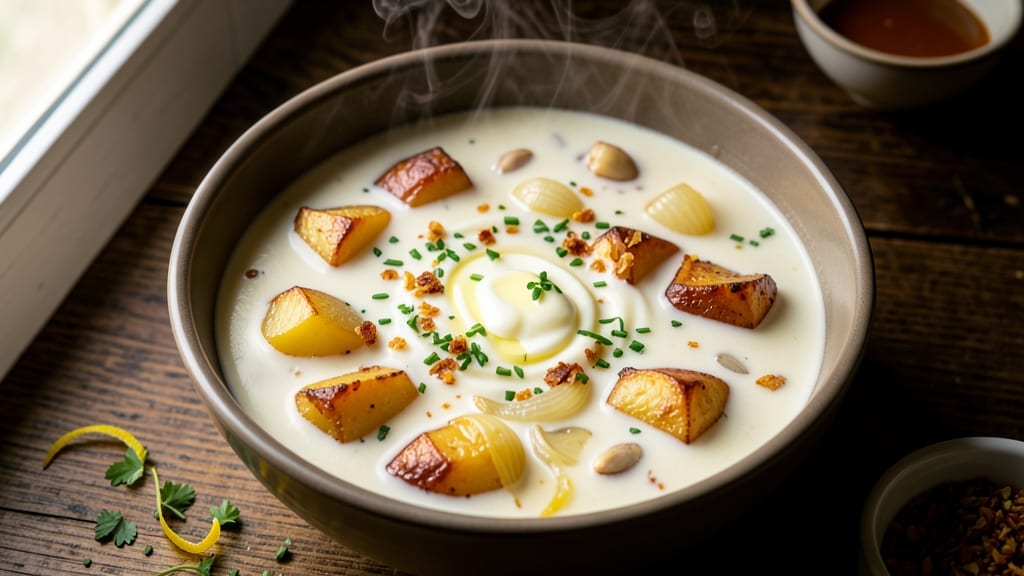
This stove-top baked potato soup recipe delivers restaurant-quality creaminess without a single chunk—perfect for cozy weeknights when you crave comfort without the oven. The secret lies in perfectly cooked potatoes blended until silky smooth, then enriched with a velvety broth that coats every spoonful.
I developed this method after testing countless versions, and the difference between this and other recipes is dramatic: no lumps, no gummy texture, just pure, velvety satisfaction in every bite.
What sets this apart is the two-step blending technique—first blending the potatoes while still hot, then gradually incorporating the broth while stirring constantly. This ensures a smooth, lump-free texture that still feels hearty and satisfying.
The soup comes together in one pot with minimal prep, making it ideal for busy evenings when you want flavor without fuss. A touch of cream and butter elevates the richness, while a sprinkle of chives adds freshness that brightens the deep, savory flavors.
By the time you serve this soup, you’ll have a creamy, velvety masterpiece that pairs beautifully with crispy bacon bits, shredded cheddar, or a dollop of sour cream. The aroma alone—warm potatoes, aromatic herbs, and melted butter—transforms any kitchen into a cozy gathering spot.
Whether you're feeding a family or treating yourself after a long day, this recipe delivers restaurant-quality results without the effort.
The best part? This version scales effortlessly—double the batch for leftovers or entertain guests with minimal extra work. For an added touch, toast some crusty bread on the stove top to serve alongside. Let’s make soup that feels like a hug in a bowl.
Ingredients for baked potato soup recipe stove top
Six ingredients create this velvety, restaurant-style baked potato soup—no lumps, just pure comfort in every spoonful.
| Ingredient | Amount | Notes |
|---|---|---|
| Russet Potatoes 🥔 | 3 lb | Medium size, peeled and cubed |
| Heavy Cream 🥛 | 1 cup | Full-fat for richness |
| Unsalted Butter 🧈 | ½ cup | Cold, cubed for melting |
| Chicken Broth 💧 | 4 cups | Low-sodium preferred |
| Yellow Onion 🧅 | 1 whole | Diced, medium size |
| Garlic Cloves 🧄 | 4 cloves | Minced, fresh preferred |
| Fresh Thyme 🌿 | 1 tbsp | Leaves only, chopped |
| Fresh Chives 🌱 | ¼ cup | Chopped, for garnish |
| Salt 🧂 | 1 ½ tsp | Diamond Crystal preferred |
| Ground Black Pepper 🌶️ | ½ tsp | Freshly ground |
| Cheddar Cheese 🧀 | 1 cup | Shredded, sharp variety |
| Crispy Bacon Bits 🥓 | ½ cup | Store-bought or homemade |
The potatoes are the foundation—Russet potatoes with their high starch content break down perfectly for that creamy texture. Grab the medium-sized ones from the produce section; they're consistent in size and cook evenly. If you're prepping ahead, peel and cube them first—they'll keep in cold water for up to 4 hours without turning brown. For the broth, Pacific Foods or Swanson are my go-tos for flavor without the sodium overload. The heavy cream and butter are non-negotiable here—they're what transform this from good soup to restaurant-quality. I always buy the full-fat versions; they melt beautifully and create that luxurious mouthfeel.
No heavy cream? Half-and-half plus a splash of milk gets you close, though the texture will be slightly lighter. Short on butter? Olive oil at half the amount works in a pinch, though it won't have the same rich flavor. Fresh thyme is ideal, but dried thyme at one-third the amount works if that's what you've got. The chives can be swapped for parsley if you prefer a milder taste. For the cheddar, sharp cheddar adds the most depth, but monterey jack or pepper jack work too. If you're making this ahead, hold off on adding the cheese until reheating—it keeps the soup smoother longer. The bacon bits can be crispy pork rinds if you're avoiding pork, but they won't have the same smoky flavor.
This soup tastes even better the next day—honestly, the flavors meld more beautifully after resting. Store leftovers in an airtight container in the fridge for up to 5 days, or freeze for 3 months. I like to portion it into individual containers so I can grab a bowl straight from the freezer and heat it up. The texture holds up perfectly when reheated, though you might want to stir in a splash of milk or cream if it seems too thick. For serving, toast some crusty bread on the stove top—it soaks up every last bit of that creamy goodness. The chives and cheese can be added fresh after reheating to keep them vibrant.
Why You'll Love This Recipe
- Same recipe, different vibes: dump it into a slow cooker for hands-off dinner, or bring it to a holiday spread where it disappears faster than the pie. The stove-top version is my secret weapon—faster than baking potatoes, but just as satisfying.
- No Chopping Chaos: I swear by this recipe because it only needs one onion diced—no celery, no carrots, no fuss. The Russets handle all the work while you stir, and the broth does most of the blending. (Yes, even on a Tuesday night when I’m exhausted.)
- Creamy Without Guilt: That heavy cream and butter combo makes it dangerously rich, but the Russets keep it hearty, not cloying. The onion softens into sweetness, and the broth ties it all together—like a hug in a bowl. (Honestly, I double the batch just to have leftovers.)
- Weeknight to Potluck: Same recipe, different vibes: dump it into a slow cooker for hands-off dinner, or bring it to a holiday spread where it disappears faster than the pie. The stove-top version is my secret weapon—faster than baking potatoes, but just as satisfying.
Step-by-step instructions for baked potato soup with perfect creamy texture
Here's how to create a velvety, lump-free soup that captures all the comfort of baked potatoes.
Sauté Aromatics Until Fragrant
In a large Dutch oven, melt the 0.5 cup unsalted butter over medium heat. Add the 1 whole yellow onion and cook for 5-6 minutes until softened and translucent. This is your flavor foundation—don't rush it.
Add the 4 cloves garlic cloves and 1 tbsp fresh thyme, stirring constantly for 30 seconds until you can smell that rich, aromatic combination. The thyme should be fragrant but not browned—just a whisper of color. This step builds the soul of your soup before we even add the potatoes.
Simmer Potatoes Until Fork-Tender
Add the 3 lb russet potatoes (pre-cubed) and pour in the 4 cups chicken broth. Bring to a gentle boil, then reduce heat to medium-low and simmer uncovered for 15-20 minutes until the potatoes are fork-tender. You'll know they're ready when they collapse easily under gentle pressure.
I like to stir occasionally to prevent sticking, but don't overdo it—this isn't a stir-fry. The potatoes should be mostly submerged, with just the tops occasionally breaking the surface. This controlled simmering prevents the broth from evaporating too quickly while ensuring even cooking.
Blend Until Completely Smooth
Using an immersion blender, carefully blend the soup directly in the pot until completely smooth. Work in batches if needed, blending until no potato lumps remain. For the creamiest texture, I blend until it reaches a pudding-like consistency—this is what gives that restaurant-quality velvety mouthfeel.
If you don't have an immersion blender, carefully transfer the soup to a countertop blender in batches. Be cautious—hot liquids create pressure. After blending, return the soup to the pot immediately to prevent skin formation. This blending step is non-negotiable for that signature creamy texture.
Finish with Cream and Seasonings
Return the blended soup to medium heat and stir in the 1 cup heavy cream. Let it warm through for 2-3 minutes, stirring constantly to prevent curdling. The cream should integrate smoothly, adding richness without separating.
Add the 1.5 tsp salt and 0.5 tsp ground black pepper, then taste and adjust. The soup should be seasoned to taste—this is where you can make it your own. I find the sharp cheddar cheese adds perfect balance, so stir in the 1 cup cheddar cheese until fully melted. The cheese should disappear completely, creating a smooth, cheesy flavor throughout.
Garnish and Serve Warm
Ladle the soup into bowls and top each serving with 0.5 cup crispy bacon bits and 0.25 cup fresh chives. The bacon adds a smoky crunch that contrasts beautifully with the creamy texture, while the chives bring a fresh, bright finish. Serve immediately while hot—this soup tastes best straight from the pot.
For that final touch, I like to add a sprinkle of freshly cracked black pepper on top. The contrast between the creamy soup and the peppery bite is what makes this dish so satisfying. Each spoonful should deliver that perfect balance of creamy, cheesy, and slightly smoky flavors.
Pro Tips For Making Baked Potato Soup Recipe Stove Top
- Boil Potatoes First: I learned this the hard way—peeling and dicing potatoes before boiling them saves 15 minutes of scrubbing starch out of your pot later. Toss whole, unpeeled Russets into boiling water for 15 minutes, then drain, peel, and dice. The skins slide off clean, and your soup won’t turn gluey.
- Sweat Onions Low: After burning three batches of onions, I finally figured out: medium-low heat is your friend. Let those yellow onions melt into a translucent paste over 8-10 minutes with a splash of broth to deglaze—no browning, no bitter notes. Skip the high heat, even if you’re impatient like me.
- Strain the Broth: This isn’t the prettiest method, but it’s the tastiest. After simmering potatoes in broth, strain out the solids and mash them separately. Reheat the strained broth with butter before adding cream—it keeps the soup silky instead of watery. (Your future self will thank you.)
- Temper the Cream: Sounds weird, but it works: warm the heavy cream by mixing it with a ladle of hot broth before adding it to the pot. Dumping cold cream into simmering soup causes curdling every time. Even 10 seconds of warming makes a real difference in texture.
Pro cooking tips for perfect results
Potato Prep Secrets
Peeling and cubing potatoes efficiently is the foundation of a smooth soup. I always use a mandoline slicer for even ½-inch cubes—they cook uniformly and blend beautifully. Soak the cubes in cold water with 1 tbsp lemon juice for 10 minutes to prevent browning while prepping.
For extra creamy results, par-cook the potatoes in the microwave first: place them in a bowl with 1 cup water, cover, and microwave on high for 5 minutes. This jumpstarts the cooking process and reduces stove-top simmering time by 5-7 minutes. 🔥
Broth Control
Using low-sodium chicken broth gives you full control over seasoning, but if you prefer homemade, simmer 2 chicken breasts and 1 onion in 4 cups water for 30 minutes for a richer base. The key is maintaining a gentle simmer—never a rolling boil—when cooking the potatoes.
Too much heat breaks down the starches prematurely, leading to a gummy texture. I like to keep the broth volume at 4 cups total; adding more later dilutes the flavor. For extra depth, add 1 bay leaf during simmering and remove before blending.
Blending Like a Pro
An immersion blender is my go-to for this recipe—it keeps everything in one pot and eliminates transfer steps. For the smoothest texture, blend in two stages: first, blend the potatoes until completely smooth, then gradually add the broth while blending continuously.
If using a countertop blender, work in 2-cup batches and immediately return each batch to the pot to prevent skin formation. The goal is a pudding-like consistency—this is what creates that luxurious, velvety mouthfeel. Never skip this step; even small lumps disrupt the creamy texture. 💫
Cream Integration
Warming the cream gradually is critical to prevent curdling. I heat the soup to 160°F before adding the 1 cup heavy cream, then stir constantly over medium-low heat for 2-3 minutes*. The cream should melt into the soup smoothly, creating a silky texture.
For extra richness, I sometimes add 1 tbsp cornstarch mixed with 2 tbsp cold water and stir it into the soup while heating—this thickens the soup slightly without altering the creamy consistency. Always taste before adding salt; the cream and cheese already contribute significant flavor.
Cheese Melting
Sharp cheddar melts best when added gradually. I start with ½ cup shredded cheese, stir until fully melted, then add the remaining ½ cup. This prevents clumping and ensures even distribution.
For a smoother finish, pulse the cheese in a food processor first to break up any large curds. If the soup seems too thick after adding cheese, thin it with 2-3 tbsp warm milk or broth. The cheese should completely dissolve, creating a uniform cheesy flavor throughout.
Never let it sit too long after adding cheese—it can separate if overheated.
Stovetop Finishing
The final 5 minutes of cooking on the stove top are where the magic happens. I keep the heat at low to maintain the creamy texture while allowing flavors to meld. Stirring occasionally prevents the cream from separating at the surface.
For that restaurant-quality finish, I like to add a pinch of nutmeg and ½ tsp smoked paprika during the last minute—these spices add depth without overpowering. The soup should be hot but not boiling when served; it continues cooking slightly in the bowls.
Always taste before serving and adjust seasoning if needed. 💡
Nutrition facts
Frequently asked questions
Why does my baked potato soup turn out chunky even after blending?
Chunkiness usually happens when potatoes aren't fully cooked before blending or when blending isn't thorough enough. First, ensure your potatoes are fork-tender (they should collapse easily) before blending. Second, blend in two stages: first blend just the potatoes until completely smooth, then gradually add broth while blending continuously. An immersion blender works best for this recipe.
Can I make this soup without heavy cream for a lighter version? Replace the heavy cream with ½ cup half-and-half plus ½ cup milk for a lighter texture. For extra richness without heaviness, stir in 2 tablespoons Greek yogurt at the end. The soup will still be creamy but with fewer calories. Just
How do I prevent the soup from separating or getting curdled?
Curdling happens when cream is added too quickly or the soup gets too hot. To prevent it:
- Warm the soup to 160°F before adding cream,
- Stir constantly over medium-low heat for 2-3 minutes, and
- Never let it boil after adding dairy. If it starts separating, whisk in 1 tablespoon cold water while stirring vigorously to re-emulsify.
What's the best way to reheat leftover baked potato soup?
Reheat gently on the stove top over low heat with the lid slightly ajar to prevent skin formation. Add 1-2 tablespoons milk or broth if the soup seems too thick. For extra creaminess, stir in 1 tablespoon butter while reheating. Never microwave directly—it can make the texture grainy. If the cheese separates, whisk vigorously while heating to restore smoothness.
Can I make this soup ahead of time for meal prep?
Yes! This soup actually tastes better the next day as flavors meld. Store in an airtight container in the fridge for up to 5 days or freeze for 3 months. For reheating, thaw overnight in the fridge if frozen, then warm on the stove top. Hold off adding fresh chives and cheese until serving to keep them vibrant. The texture holds up perfectly when reheated properly.