
Soups & Stews
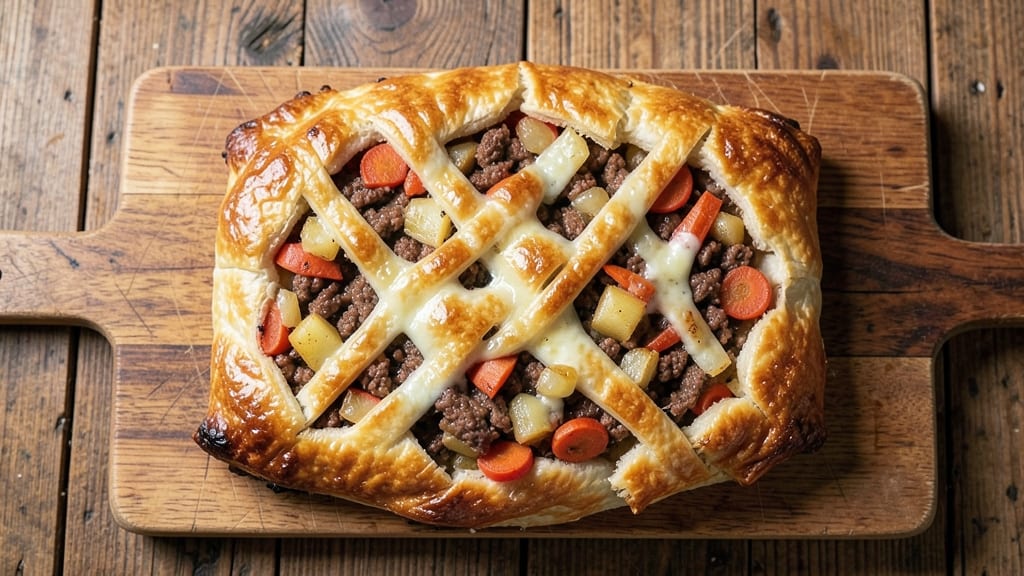
This beef and potato pasty recipe delivers the flaky, golden crust and hearty filling that made Cornish pasties legendary. The secret lies in a well-seasoned beef filling that simmers until tender, wrapped in a buttery, layered pastry that creates the signature steam pocket—no soggy bottoms here.
I've perfected this technique over years of baking, ensuring every bite delivers that perfect balance of crispy crust and savory filling.
The recipe begins with browning ground beef and onions until deeply flavorful, then simmering with potatoes, carrots, and a rich blend of spices. Meanwhile, the pastry dough comes together with cold butter cut into the flour for maximum flakiness.
The assembly is where the magic happens—folding the filling into a half-moon, sealing it tightly, and creating that essential steam pocket to keep everything moist.
What you'll end up with is a pasty that's restaurant-quality at home—crispy on the outside, tender on the inside, with layers of flavor in every bite. The beef filling stays juicy and well-seasoned, while the potatoes absorb all the savory goodness.
This isn't just a dish; it's a taste of Cornwall's culinary tradition, brought to your kitchen.
Perfect for meal prep or a cozy family dinner, these pasties reheat beautifully and freeze well for up to three months. Whether you stick to the classic seasoning or experiment with herbs, the technique remains the same—flaky crust, savory filling, and that unmistakable Cornish charm.
Ingredients for beef and potato pasty
Here's what transforms simple ingredients into a legendary Cornish pasty with flaky crust and hearty filling.
| Ingredient | Amount | Notes |
|---|---|---|
| Ground Beef 🥩 | 1 ½ lb | 80% lean for optimal flavor |
| Russet Potatoes 🥔 | 2 lb | Peeled, cut into 1-inch cubes |
| Yellow Onions 🧅 | 1 whole | Medium, finely chopped |
| Carrots 🥕 | 3 medium | Peeled, sliced into thin rounds |
| Unsalted Butter 🧈 | 1 cup | Cold, cut into 1-inch cubes |
| All-Purpose Flour 🌾 | 4 cups | Plus 2 tbsp for dusting |
| Ice Water 💧 | ½ cup | For pastry dough |
| Salt 🧂 | 1 ½ tsp | Diamond Crystal preferred |
| Ground Black Pepper 🌶️ | ½ tsp | Freshly ground |
| Ground Allspice 🌿 | ½ tsp | For authentic Cornish flavor |
| Ground Cumin 🌿 | ½ tsp | Toasted for depth |
| Dried Thyme 🍃 | ½ tsp | Or 1 tbsp fresh |
| Beef Stock 🍲 | 1 cup | Homemade preferred |
| Whole Milk 🥛 | ¼ cup | For pastry tenderness |
The beef and potatoes are the foundation of this pasty. Look for well-marbled ground beef—it stays juicier during baking. Russet potatoes are ideal for their fluffy texture when cooked, but Yukon Golds work too if you prefer a creamier bite. Whole Foods or local butchers often carry the best-quality beef, but the standard supermarket variety works perfectly fine. For the potatoes, avoid waxy varieties like red potatoes—they won't break down as nicely. The carrots should be firm and bright orange; Trader Joe's often has excellent organic options at a reasonable price. If you're feeling ambitious, make your own beef stock—it elevates the entire dish.
No beef stock? Substitute with vegetable broth plus 1 tsp Worcestershire sauce for depth. Short on allspice? Combine 0.25 tsp cinnamon and 0.25 tsp cloves for a similar warmth. The milk in the pastry can be swapped for water or cream, though whole milk gives the best flaky texture. For the butter, Plugrá or Land O'Lakes unsalted work beautifully, but any cold, high-fat butter will do. If you're making multiple pasties, pre-peel and cube the potatoes ahead of time—they'll keep in cold water in the fridge for up to 24 hours without browning. The onions should be finely chopped, almost like a salsa; a food processor works well for this.
This recipe makes two large pasties, perfect for a family meal or meal prep. Store-bought puff pastry can be used in a pinch, though homemade delivers that authentic flakiness. The assembled pasties can be kept in the fridge for 2 days before baking, or frozen for 3 months. For freezing, bake first, then cool completely before wrapping tightly in foil. Reheat in a 350°F oven for 15-20 minutes—the crust will crisp up beautifully. Leftovers reheat well too; microwave for 2-3 minutes with a damp paper towel over them to restore crispiness.
Why You'll Love This Recipe
- One-Pot Magic: I swear by this recipe when I’m too tired to wash dishes. The potatoes, onions, and carrots all cook together in the same pan as the beef—no chopping boards to clear, no pots to juggle. Just one sheet pan, one spatula, and a satisfying meal that feels like a hug.
- Rich, Layered Bite: That crispy butter-baked crust on top? Chef’s kiss. The ground beef browns up with onions until it’s tender but still holds its shape, while the potatoes soften into fluffy clouds. Every forkful has that perfect mix of savory beef, sweet caramelized veggies, and buttery richness—no fancy seasoning needed.
- Weeknight to Picnic: Honestly, this pasty is my secret weapon for anything. Pack it for a tailgate, serve it at a potluck, or just reheat leftovers for lunch. The flavors only get better the next day, and it’s hearty enough to feed a crowd without breaking the bank.
- Budget-Friendly Powerhouse: Russets and carrots are cheap, ground beef stretches far, and butter adds luxury without guilt. I make two or three at once, freeze extras, and pull them out for lazy nights. It’s the kind of dish that makes grocery money stretch while still feeling like a treat.
Step-by-step instructions for beef and potato pasty
Mastering this Cornish classic requires precise technique for that signature flaky crust and hearty filling.
Prepare the Pastry Dough for Maximum Flakiness
Cut the 1 cup unsalted butter into 1-inch cubes and place in the freezer for 10 minutes to firm up. This cold butter is essential for achieving those delicate layers. In a large bowl, whisk together the 4 cups all-purpose flour, 1.5 teaspoons salt, 0.5 teaspoon ground black pepper, 0.5 teaspoon ground allspice, 0.5 teaspoon ground cumin, and 0.5 teaspoon dried thyme. The flour should be evenly distributed with no lumps.
Add the cold butter cubes to the flour mixture and use your fingertips to work the butter into the flour until you have pea-sized crumbs. This process, called "rubbing in," creates the fat pockets that will melt during baking and create steam for flaky layers. Avoid overworking the mixture—just until the butter is fully coated and the texture resembles coarse breadcrumbs.
Assemble the Savory Filling with Perfect Texture
In a large skillet over medium-high heat, combine the 1.5 pounds ground beef, 1 whole yellow onion (finely chopped), 3 medium carrots (sliced into thin rounds), 1.5 teaspoons salt, and 0.5 teaspoon black pepper. Cook for 8-10 minutes, breaking up the beef with a wooden spoon, until the meat is fully browned and the vegetables begin to soften. You'll see the beef release its juices and the onions caramelize slightly.
Pour in the 1 cup beef stock and 0.25 cup whole milk, scraping up any browned bits from the bottom of the pan. These bits, called fond, are packed with flavor. Simmer for 5-7 minutes until the liquid reduces by half and the mixture thickens slightly. Remove from heat and let cool for 10 minutes—this prevents the pastry from steaming and losing its flakiness.
Combine Dough and Filling for Structural Integrity
Place the cooled filling mixture in the center of your work surface. Sprinkle the 0.5 cup ice water evenly over the filling—this helps bind the dough and keeps the pastry tender. Gently shape the pastry dough into a rough rectangle about 12x10 inches on a lightly floured surface. The dough should be cold but pliable; if it's too crumbly, chill it for 10 minutes before proceeding.
Carefully drape the dough over the filling, stretching it gently to cover completely. Press the edges firmly to seal, then use a sharp knife to trim any excess dough. Fold the edges inward, creating a 1-inch border around the filling. This border will help hold the pasty together during baking and prevent the filling from leaking. Place on a parchment-lined baking sheet and refrigerate for 20 minutes to firm up before baking.
Bake to Golden Perfection with Steaming Technique
Preheat your oven to 375°F. Place the pasty on a baking sheet and cut 4-5 small slits in the top to allow steam to escape. This prevents the pasty from bursting open during baking. Bake for 50-60 minutes until the crust is deep golden brown and the internal temperature reaches 190°F—the filling should be bubbling gently through the slits.
For extra flakiness, I like to place a small baking dish filled with 1 cup hot water on the lower oven rack 10 minutes before removing the pasty. The steam creates additional layers in the crust. Let the pasty rest for 15 minutes before slicing—this allows the filling to set slightly and makes it easier to serve. The result should be a crisp, flaky exterior with a moist, savory interior where the flavors meld perfectly.
Pro Tips For Making Beef And Potato Pasty
- CRUMBLE THE POTATOES: Russets hold moisture like a sponge, and chopped chunks won’t cook evenly in a pasty. Use a food processor or knife to break them into pea-sized pieces—no bigger than a dime. This ensures they soften completely while the beef stays juicy, not soggy.
- SWEAT THE ONIONS FIRST: I learned this the hard way—adding raw onions to the beef makes the filling watery. Cook them in butter until translucent (about 5 minutes) before mixing with the ground beef. That caramelized base keeps the pasty from falling apart when baking.
- DON’T OVERWORK THE DOUGH: Pasty dough is delicate. Once you’ve mixed it with water, handle it just enough to shape it—over-kneading makes it tough. Roll it out thin enough to crisp but thick enough to hold the filling (about ¼-inch). Too thick = gummy crust; too thin = burnt edges.
- SALT THE FILLING LIKE IT’S 1950: Unsalted butter + ground beef = bland disaster if you skimp. Season the filling with 1½ teaspoons salt per pound of beef before baking. The crust won’t absorb it, so you need the salt inside to balance the richness. Trust me, your taste buds will notice.
Pro cooking tips for this dish
Butter Temperature Matters
The secret to that legendary flaky crust starts with your butter. I can't stress this enough: use cold butter cubes straight from the freezer. When I first tried this recipe, I used room-temperature butter, and my pasties turned out dense and tough.
The cold butter creates those essential steam pockets during baking. Cut your 1 cup unsalted butter into 1-inch cubes and freeze them for 10 minutes before mixing with the flour. This ensures they stay firm enough to create those delicate layers. 🧈
Rubbing In Technique
Don't just toss the butter into the flour—this is where the magic happens. Use your fingertips to work the butter into the flour until you get pea-sized crumbs.
I like to use the "pincer method" where I pinch the butter between my thumb and fingers, then gently press it into the flour. This creates the perfect fat distribution for maximum flakiness.
Overworking the dough will melt the butter too soon, so stop as soon as everything looks like coarse breadcrumbs. Trust me, this step makes all the difference in the final texture.
Filling Cooling Critical
Here's a mistake I made early on: skipping the cooling step for the filling. After browning the beef and vegetables, I was eager to assemble the pasties immediately. Big mistake! The hot filling steams the pastry dough, making it soggy.
Always let your filling cool for 10 minutes before assembling. This gives the dough a chance to firm up and maintain that perfect flaky texture. I now make it a point to set a timer for this cooling period—no exceptions!
Sealing the Edges
The edges of your pasty are what hold everything together during baking. Press them firmly to create a tight seal—this prevents filling from leaking out and keeps the steam trapped inside for that perfect texture. I use a rolling pin to gently press the edges, then
Steam for Extra Flakiness
For restaurant-quality flakiness, I add a steam tray to my baking routine. Place a small baking dish filled with 1 cup hot water on the lower oven rack 10 minutes before removing the pasty. The steam creates additional layers in the crust that you won't believe. This technique might seem like overkill, but it's what separates home-baked pasties from professional ones. The extra effort is worth it for that buttery, melt-in-your-mouth texture. 💫
Resting Before Slicing
Patience is key here—never slice your pasty immediately after baking. Let it rest for 15 minutes before cutting. This allows the filling to set slightly and redistribute its juices, preventing them from leaking out when you slice.
I've seen too many people cut into pasties too soon and end up with messy, runny fillings. The 15-minute rest also makes the crust firmer and easier to handle. Trust the process, and you'll be rewarded with clean slices and happy eaters.
Nutrition facts
Frequently asked questions
Can I make this pasty recipe without a steam pocket?
The steam pocket is what makes traditional pasties so special, but you can still make a great version without it. Skip the slits in the top and fold the edges inward to fully enclose the filling. The crust will still be flaky, though slightly less dramatic. For extra moisture, brush the top with a little milk before baking.
What's the best way to reheat leftover pasties?
For best results, reheat in a 350°F oven for 15-20 minutes on a baking sheet with a splash of water in the pan. This restores crispiness to the crust. Microwave reheating works in a pinch—cover with a damp paper towel for 2-3 minutes to prevent drying out.
Can I substitute lamb for the beef in this recipe?
Ground lamb works beautifully and adds a slightly richer flavor. Use the same amount (1.5 pounds) and adjust the seasoning slightly—reduce the allspice to 0.25 teaspoon and add 0.25 teaspoon ground cinnamon for depth. Brown the lamb longer (10-12 minutes) to render more fat.
Why did my pastry crust turn out tough instead of flaky?
This usually happens when butter melts too soon during mixing or baking. Always use cold butter cubes and handle the dough minimally. Another common mistake is overworking the dough—stop mixing as soon as you see pea-sized crumbs. For extra flakiness, chill the dough for 30 minutes before rolling.
How do I make individual pasties instead of one large one?
Divide the filling into 4 equal portions and roll each into a 4-inch log. Wrap each with a 1/4 of the dough (about 1 cup total), sealing edges tightly. Bake at 375°F for 30-35 minutes until golden. The smaller size bakes faster and creates a more portable individual portion.