
Soups & Stews
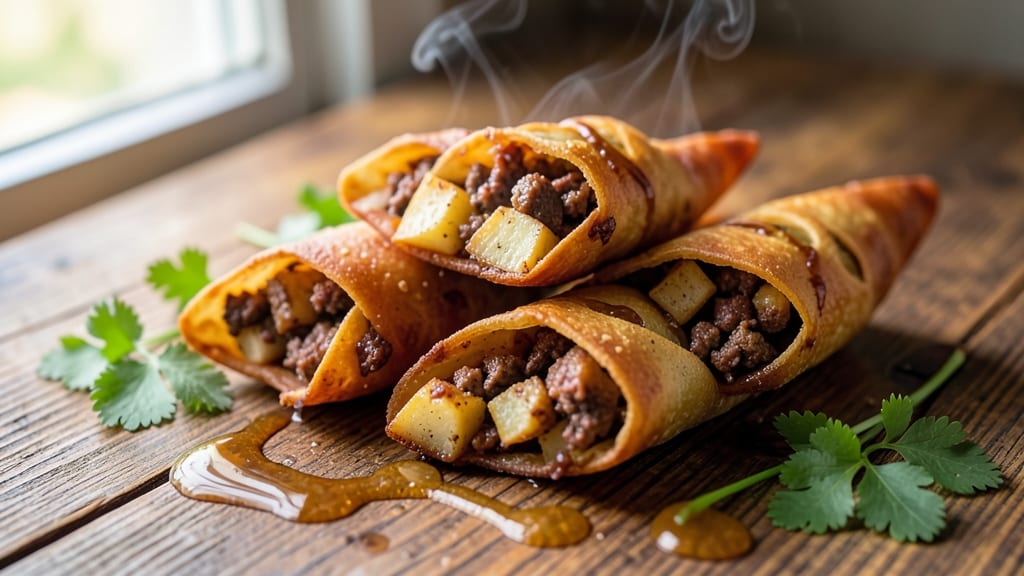
This beef and potato samosa recipe delivers the perfect balance of crispy golden shells and flavorful spiced filling—just like your favorite street vendor's. The secret lies in a well-spiced potato-beef mixture that stays tender while the dough achieves that signature crunch.
I've adapted traditional techniques for modern kitchens, ensuring you get restaurant-quality results without specialized equipment.
The filling combines tender potatoes, lean beef, and a blend of warm spices like cumin, coriander, and garam masala that infuse every bite with aromatic depth. The dough, made with simple ingredients, gets its signature crispiness from a precise rolling technique and hot oil frying.
What makes this recipe special is how the flavors meld together—spicy, savory, and slightly sweet all at once.
By the time you're done, you'll have perfectly shaped samosas with paper-thin, shatteringly crispy shells that give way to the tender, spiced filling inside. The aroma alone will have everyone gathering around your kitchen.
Serve with mint chutney or tamarind sauce for dipping, and watch these disappear faster than you can say "second helping."
This recipe is designed to be foolproof for home cooks—no experience required. The dough comes together quickly, and the filling can be prepped ahead of time.
Whether you're making them for a party or just treating yourself to a taste of India, these samosas will be your new favorite comfort food. Let's get started!
Ingredients for beef and potato samosa
Here's what you need to make restaurant-style beef samosas with crispy shells and spiced filling.
| Ingredient | Amount | Notes |
|---|---|---|
| Lean Ground Beef 🥩 | 1 ½ lb | 80/20 fat ratio preferred |
| Russet Potatoes 🥔 | 4 medium | Peeled and cubed evenly |
| All-Purpose Flour 🌾 | 4 cups | Plus 2 tbsp for sealing |
| Ghee or Vegetable Oil 🫒 | ½ cup | For dough and frying |
| Garam Masala 🌶️ | 2 tbsp | Store-bought or homemade |
| Ground Cumin 🌿 | 1 tbsp | Toasted for deeper flavor |
| Ground Coriander 🌿 | 1 tbsp | Freshly ground preferred |
| Red Chili Powder 🌶️ | 1 ½ tbsp | Adjust for spice preference |
| Salt 🧂 | 1 ½ tsp | Kosher or sea salt |
| Fresh Cilantro 🌿 | ¼ cup | Chopped, for garnish |
| Lemon Juice 🍋 | 2 tbsp | Freshly squeezed |
| Baking Soda 🧪 | ¼ tsp | For dough crispiness |
| Water 💧 | ½ cup | For dough consistency |
| Vegetable Oil 🫒 | 3 cups | For deep frying |
The potatoes and beef are the heart of these samosas—Russet potatoes give that perfect fluffy texture when cooked just right. Buy small to medium potatoes (they're more uniform) and cube them evenly so they cook through without turning mushy. Ground beef should be lean but not too dry—80/20 fat ratio works best for juiciness. For spices, Penzeys or local Indian markets have the best blends, but the grocery store stuff works too if it's fresh. The garam masala is non-negotiable—it's where all the magic happens. If you can't find it, mix cumin, coriander, cinnamon, cardamom, and cloves yourself.
No ghee? Vegetable oil or butter works fine for the dough, though ghee gives that authentic flavor. Running out of all-purpose flour? Bread flour at 1:1 ratio makes the dough extra crispy. Fresh cilantro is ideal, but dried works at half the amount if you're in a pinch. The dough needs to be firm but pliable—if it's too sticky, add a bit more flour; if it's cracking, add a splash of water. For the filling, cook the potatoes until fork-tender so they hold up during frying. And trust me, don't skip the baking soda in the dough—it's what makes those shells shatteringly crisp.
Samosa dough keeps for 3 days wrapped in plastic in the fridge, and the filling can be prepped 2 days ahead. For frying, maintain oil at 350°F—too hot and they'll burn; too cool and they'll soak up oil. These reheat beautifully in a 350°F oven for 10 minutes if you want to serve them warm later. I always make extra filling and freeze it in portions—just thaw and fry when needed. The crispiness is best fresh out of the fryer, but they're still delicious within 2 hours if kept warm.
Why You'll Love This Recipe
- One-Pot Magic: I swear by this—just brown the beef with onions, toss in diced potatoes, and let it all simmer in the same pan. The flour thickens everything into a golden, spiced filling without extra cleanup. (Yes, even on a Tuesday night.)
- Spice Bomb Fusion: That garam masala and ghee combo? It’s like a warm hug in every bite—earthy, slightly sweet, with just enough kick. The potatoes soak up all the flavor while staying tender, and the beef stays juicy instead of drying out.
- Leftover Reinvention: Make a double batch for game day or lazy Sundays—these reheat like a dream. Serve them crispy-fried for a snack, or mash the filling into a curry for a hearty weeknight dinner. My kids beg for both.
- Budget Crunch-Saver: Ground beef stretches further than you’d think when paired with potatoes, and flour is the cheapest thickener around. A single bag of spices and a tub of ghee lasts for months, making this my go-to when groceries feel tight. (Honestly, it’s my secret weapon.)
Step-by-step instructions for beef and potato samosa
Let's make these golden, crispy triangles with a flavorful spiced filling that'll have everyone begging for more.
Prepare the Spiced Beef and Potato Filling
Start by boiling the 4 medium Russet Potatoes in salted water until fork-tender, about 15 minutes. Drain and let them cool slightly, then peel and cube them evenly. In a large pan, heat 0.25 cup Ghee or Vegetable Oil over medium heat. Add the 1.5 lb Lean Ground Beef and cook until browned, breaking it apart with a spoon.
Stir in 1 tbsp Ground Cumin, 1 tbsp Ground Coriander, 1.5 tbsp Red Chili Powder, and 1.5 tsp Salt. Cook for 3-4 minutes until the spices bloom and the beef is fully cooked. Add the cubed potatoes, 2 tbsp Garam Masala, and 0.25 cup Fresh Cilantro. Mix well and cook for another 5 minutes until the potatoes are heated through. Remove from heat and let the filling cool completely before shaping. The filling should be warm but not hot when you handle it—this prevents the dough from getting soggy.
Make the Samosa Dough and Shape the Triangles
In a large bowl, combine 4 cups All-Purpose Flour, 0.25 tsp Baking Soda, and 1.5 tsp Salt. Gradually add 0.5 cup Water while mixing with a fork until a rough dough forms. Knead the dough on a lightly floured surface for 5-7 minutes until smooth and elastic. Cover with a damp cloth and let it rest for 30 minutes—this relaxation step makes the dough easier to roll out.
Divide the dough into 12 equal portions (about 1.5 oz each) and roll each into a 6-inch circle using a rolling pin. Cut each circle in half diagonally to form two triangles. Place 1 tablespoon of the beef and potato filling near the wide end of each triangle. Fold the sides inward, then fold the wide end up to seal, forming a cone shape. Press the edges firmly to ensure a tight seal—this prevents filling from leaking during frying.
Fry the Samosas to Golden Perfection
Heat 3 cups Vegetable Oil in a deep fryer or heavy pot to 350°F. You'll know it's ready when a small piece of dough sizzles and floats to the surface. Fry the samosas in batches of 4-5, being careful not to overcrowd the pan. Fry for 3-4 minutes until they turn a deep golden brown color—this is your crispy checkpoint. Drain on a paper towel-lined plate to remove excess oil.
For extra crispiness, sprinkle the hot samosas with a pinch of salt and 2 tbsp Lemon Juice while they're still warm. Serve immediately with mint chutney or tamarind sauce. If you're making them ahead, store in an airtight container and reheat in a 375°F oven for 5-7 minutes to restore crispiness. The key to perfect samosas is keeping them hot and crispy—don't let them sit too long after frying!
Pro Tips For Making Beef And Potato Samosa
- Boil Potatoes Until Fork-Tender: I learned this the hard way—undercooked potatoes turn to mush in the filling. Boil russets until they just give under a fork, then let them cool completely before grating. No one wants a soggy center, especially when you’ve gone through the trouble of making samosas.
- Fry Beef Until It’s Dry: The filling should be dry enough to hold its shape when stuffed. Cook the ground beef over medium-high heat until it’s fully browned and the moisture has evaporated—no one likes a greasy filling that leaks everywhere. Break it up into small, even pieces while it cooks for better texture.
- Chill the Dough Before Rolling: Flour dough gets sticky and hard to handle when warm. Wrap the dough in plastic and refrigerate for at least 30 minutes before rolling it out—this makes it easier to cut crisp, even triangles. Trust me, your future self will thank you when the pastry doesn’t stick to the rolling pin.
- Use Ghee for Frying, Oil for Cooking: Ghee gives that rich, golden crust when frying, but it’s expensive to use for the entire process. Cook the filling in vegetable oil (it handles high heat better), but switch to ghee for the final fry—it’s worth the splurge for that authentic, crispy finish. Just don’t overcrowd the pan, or you’ll end up with greasy samosas instead of crispy ones.
Regional styles of this dish
North Indian Style
In North India, samosas are often made with a slightly thicker dough and a filling that includes chana dal (split chickpeas) alongside the beef and potatoes.
The dough here gets a touch of semolina for extra crispiness, and the filling is often finished with a splash of tamarind paste for tanginess. I love adding fennel seeds to the spice mix for a subtle anise note that complements the beef beautifully. 🌿
For an authentic touch, North Indian cooks often shape the samosas into pyramid-like cones rather than flat triangles. This requires a bit more practice but gives that signature street-food look. The filling is also typically less spicy compared to South Indian versions, relying more on coriander and cumin for depth.
Serve with a side of boondi raita (gram flour dumplings in yogurt) for the full experience.
South Indian Variations
South Indian samosas, like those from Tamil Nadu, often use rice flour instead of all-purpose flour for the dough, giving it a lighter, almost papery texture. The filling here leans heavily on mustard seeds and curry leaves for a distinct flavor profile that's tangy and slightly bitter.
I swap out the garam masala for a blend of black pepper, turmeric, and asafoetida (hing) for that signature South Indian kick. 🌶️
The key difference is the frying technique—South Indian cooks often fry the samosas twice: once to set the shape and a second time for crispiness. The filling also includes grated coconut and green chilies for a fresher, brighter taste.
Pair these with coconut chutney or a spicy tomato-onion salad to cut through the richness.
Pakistani Puri-Style
In Pakistan, samosas are sometimes made with puri dough—a fluffier, almost brioche-like dough that's rolled thin and puffed up during frying. The filling here is often richer, with more beef and sometimes dried fruits like raisins or apricots for a sweet-savory contrast.
I like adding cardamom and nutmeg to the spice mix for warmth. The samosas are typically larger than Indian versions, almost like handheld appetizers. 💛
Pakistani cooks also use a special frying trick: they dip the shaped samosas in beaten egg before frying, which creates an extra-crispy, golden-brown crust. The filling is sometimes finished with a squeeze of lemon juice and a sprinkle of chopped mint right before serving.
These are often enjoyed with yogurt-based raita or a spicy green chutney made with cilantro and garlic.
Bangladeshi Crispy Twist
Bangladeshi samosas take the concept to another level with double-layered dough—a thin outer layer and a slightly thicker inner layer that creates an airy, almost flaky texture. The filling is heavily spiced with five-spice powder and star anise, giving it a unique aromatic depth.
I find that using a mix of beef and lamb in the filling adds even more complexity. 🔥
The secret here is the filling preparation: the potatoes are often boiled in salted water with a pinch of baking soda to keep them fluffy, and the beef is cooked with crushed black peppercorns for a bold kick.
Serve these with a tangy date chutney or a spicy tamarind dip—the contrast is what makes them unforgettable.
Nutrition facts
Frequently asked questions
Can I make the samosa dough ahead of time?
The dough keeps beautifully for 3 days wrapped tightly in plastic in the fridge. Let it sit at room temperature for 30 minutes before using to make rolling easier. For longer storage, freeze the dough balls for up to 1 month—thaw overnight in the fridge before shaping.
Why did my samosas turn out soggy instead of crispy?
Soggy samosas usually happen from one of three things: oil that's too cool (350°F is key), overcrowding the pan, or filling that's still too hot when sealed. Let the filling cool completely before shaping, and fry in small batches. Also, make sure your dough has rested properly—overworking it can make it tough and less crisp.
What's the best way to make these gluten-free?
Replace the all-purpose flour with a 1:1 gluten-free flour blend (like Bob's Red Mill) plus 0.5 tsp xanthan gum for structure. Use 1 extra tablespoon of oil in the dough to compensate for dryness. For the filling, keep everything the same—just ensure your spices are certified gluten-free. The texture will be slightly different but still delicious!
How do I prevent the filling from leaking during frying?
Sealing is everything! Press the edges firmly with your thumb as you fold, and use a tiny bit of water to "glue" the seams shut. For extra security, dip the folded samosa in beaten egg before frying—this creates a protective barrier. Also, make sure your filling isn't packed too tightly when shaping. A little air space helps!
Can I bake these instead of frying?
Brush the shaped samosas with oil and bake at 400°F for 15-18 minutes until golden and crisp. For extra crunch, broil for 2-3 minutes at the end. They won't be as crispy as fried versions, but they're still delicious. Just watch closely—they burn easily!