
Side Dishes
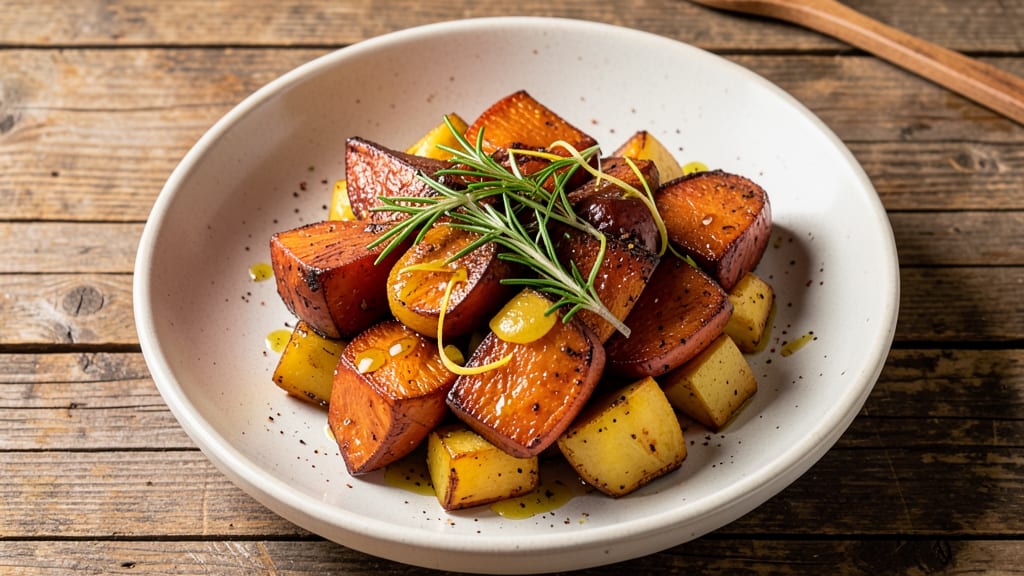
Roasted sweet potatoes and rutabaga transform into a caramelized, herby side dish that steals every meal. The natural sweetness of sweet potatoes pairs perfectly with the earthy depth of rutabaga when roasted together, creating a texturally rich combination that's both comforting and elegant.
This recipe delivers restaurant-quality results with minimal effort—just slice, season, and roast until golden and tender.
The secret lies in the high-heat roasting technique, which develops deep caramelization while keeping the interiors creamy. A simple blend of olive oil, salt, pepper, and fresh rosemary ensures the flavors shine without overpowering the natural sweetness of the vegetables.
The rutabaga adds a subtle peppery note that balances the sweet potatoes beautifully, making this dish far more interesting than plain roasted veggies.
What you'll end up with is a golden-brown, aromatic medley that's crisp at the edges and tender inside, with a fragrant herb crust that adds an extra layer of complexity.
This versatile side works equally well alongside roasted meats, grilled fish, or even as a hearty vegetarian main dish when paired with a fresh salad or crusty bread. The flavors develop as they roast, creating a dish that's even better the next day.
Perfect for weeknight dinners, holiday feasts, or meal prep, this recipe comes together in under 45 minutes with just five key ingredients. The process is straightforward, but the results are anything but ordinary—this is the kind of side dish that turns ordinary meals into memorable ones. Let's get started!
Ingredients for sweet potato and rutabaga
Five ingredients transform humble root vegetables into a restaurant-worthy side dish with caramelized edges and herby sophistication.
| Ingredient | Amount | Notes |
|---|---|---|
| Sweet Potatoes 🍠 | 2 lbs | Medium size, peeled and cut into 1-inch cubes |
| Rutabagas 🥕 | 1 ½ lbs | Peeled and cut into 1-inch cubes |
| Extra-Virgin Olive Oil 🫒 | ½ cup | High-quality, fruity variety for optimal flavor |
| Fresh Rosemary 🌿 | ¼ cup | Finely chopped, stems removed |
| Diamond Crystal Kosher Salt 🧂 | 1 ½ tsp | Adjust to taste for seasoning |
| Freshly Ground Black Pepper 🌶️ | 1 tsp | Freshly cracked for maximum aroma |
| Garlic Cloves 🧄 | 3 cloves | Minced, for enhanced depth of flavor |
The quality of your sweet potatoes and rutabagas makes all the difference here. Look for firm, vibrant orange sweet potatoes with no soft spots, and rutabagas that feel heavy for their size—this indicates moisture and freshness. Trader Joe's and Whole Foods consistently carry excellent organic varieties, but the standard produce section at most grocery stores will suffice if you select carefully. The rutabaga's peppery bite contrasts beautifully with the sweetness of the potatoes, so don't skip this essential ingredient. For even cooking, cut both vegetables into uniform 1-inch cubes—this ensures they caramelize at the same rate during roasting. Fresh rosemary is non-negotiable; dried will lack the aromatic complexity that makes this dish special.
No fresh rosemary? Dried rosemary at one-third the amount works in a pinch, though the flavor will be more subdued. Substituting thyme or sage won't provide the same peppery brightness, but they'll still create an interesting herbal profile. Running short on rutabagas? Turnips or parsnips can stand in, though they'll alter the dish's signature peppery contrast. The olive oil should be extra-virgin—anything less will lack the fruity notes that complement the vegetables' natural sweetness. For a smoky twist, consider adding 1/2 teaspoon smoked paprika to the seasoning blend, though it's not traditional. The garlic is optional but recommended—its aromatic depth elevates the dish from simple side to sophisticated accompaniment.
These vegetables roast best when prepared just before cooking—no need to peel or chop ahead of time. Store unpeeled sweet potatoes and rutabagas in a cool, dark place for up to 2 weeks, but refrigerate once cut to maintain freshness. The roasted vegetables develop their best flavors when reheated, so portion into airtight containers and store in the refrigerator for up to 5 days. For longer storage, freeze the cooled vegetables in a single layer before transferring to a sealed bag—this preserves their texture for up to 3 months. When reheating, a quick stint in a 400°F oven for 10-15 minutes restores their crisp edges and tender centers.
Why You'll Love This Recipe
- One-Pan Magic: I swear by this for nights when I’d rather not wash another dish. Just slice, toss with olive oil and rosemary, and let the oven do the work—no chopping boards to scrub, no pots to dry.
- Earthy & Crispy: That caramelized edge on the rutabaga? It’s the kind of flavor that makes you pause mid-bite. The sweet potatoes stay tender, while the rosemary adds a fresh, piney kick that’s weirdly addictive.
- Meal Prep MVP: Between us, this keeps for days in the fridge—perfect for lunches or quick dinners. Honestly, I make a big batch on Sundays and just reheat portions. The flavors even get better as it sits.
- Budget Booster: Sweet potatoes and rutabagas are dirt cheap, yet they feel like a fancy side. I’ll be real: this is how I stretch my grocery budget without sacrificing taste. A little olive oil and salt go a long way.
Step-by-step instructions for roasted sweet potatoes and rutabagas
Here's the method for achieving perfectly caramelized roots with aromatic depth and herby crunch.
Prep the Vegetables for Even Roasting
Begin by peeling the 2 lbs sweet potatoes and 1.5 lbs rutabagas, then cut them into uniform 1-inch cubes. Consistency in size ensures even cooking and caramelization. Place the cubes in a large bowl and toss gently to separate any clumps. This step prevents uneven roasting where larger pieces might stay undercooked while smaller ones burn.
I like to work in batches if needed—don't overcrowd the bowl. The cubes should be dry before seasoning, so pat them with a clean kitchen towel if they feel damp. This helps the seasoning adhere better and promotes crispier edges during roasting.
Season and Toss with Olive Oil and Herbs
In the same bowl, drizzle the 0.5 cup extra-virgin olive oil evenly over the vegetable cubes. Toss gently but thoroughly until each piece is lightly coated. This oil not only carries flavor but also helps create that golden caramelization we're after. I use a high-quality fruity olive oil here—the subtle fruitiness pairs beautifully with the earthy sweetness of the roots.
Add the 0.25 cup finely chopped fresh rosemary, 1.5 tsp Diamond Crystal kosher salt, 1 tsp freshly ground black pepper, and 3 cloves minced garlic. Toss again until the rosemary and garlic are evenly distributed throughout the vegetables. The rosemary's piney aroma will infuse beautifully during roasting, while the garlic adds a subtle depth that complements the natural sweetness.
Roast Until Caramelized and Tender
Preheat your oven to 425°F and arrange the seasoned vegetables in a single layer on two rimmed baking sheets. Use parchment paper for easy cleanup, but don't skip the single layer—this prevents steaming and ensures crispy edges. Leave about 1 inch between each cube for proper air circulation.
Roast for 30 minutes, then carefully flip each piece using tongs. Return to the oven and roast another 25-30 minutes until the edges are deeply caramelized and the vegetables are fork-tender. You'll know they're done when the rutabagas pull apart easily and the sweet potatoes have developed a beautiful mahogany crust. The aroma should be intoxicating—sweet, earthy, with herbal notes wafting from the oven.
Rest and Serve Warm
Transfer the roasted vegetables to a serving platter and let them rest for 5 minutes. This brief resting period allows the juices to redistribute, ensuring each bite is tender and flavorful. The caramelized edges will be slightly crisp, while the interiors remain creamy—this contrast is what makes this dish so satisfying.
Garnish with an additional sprinkle of fresh rosemary if desired, though the herbs should already be infused throughout. Serve immediately while still warm, as these roots taste best straight from the oven. The combination of sweet potatoes' natural sweetness and rutabagas' nutty depth creates a harmonious balance that's both comforting and sophisticated.
Pro Tips For Making Sweet Potato And Rutabaga
- PEEL AND CUBE SMALL: Sweet potatoes and rutabagas shrink when roasted, so cut them into even 1.5-inch cubes—no need for perfect uniformity, just consistent size. I used to overcompensate with tiny pieces, and they’d dry out faster than I could finish seasoning.
- SALT THE OIL FIRST: Toss the cubed veggies in a bowl with 1 tablespoon kosher salt before adding olive oil—it’ll cling better and season deeper. I learned this after tasting bland edges on my first batch; now the salt penetrates while they crisp.
- ROAST IN BATCHES: Crowding the pan steams the rutabagas instead of browning them. Use two sheets at 425°F—first batch goes in, then rotate pans halfway. I burned my first tray because I was impatient; now I set a timer for 20 minutes between batches.
- FRESH ROSEMARY NEEDS TIME: Chop rosemary fine (no tiny leaves, just needle clusters) and scatter it over the veggies after the first 15 minutes of roasting. It burns fast, so add it when the edges are golden, not at the start—I’ve ruined rosemary’s bright flavor by adding it too early.
Serving suggestions for this sweet potato and rutabaga
Protein Pairings
These caramelized roots shine alongside lean proteins like grilled chicken breast or herb-crusted pork tenderloin. The rutabaga's peppery bite cuts through the richness of pan-seared salmon, while the sweet potatoes' natural sweetness complements smoky turkey meatballs.
For vegetarian mains, serve alongside crispy chickpeas or mushroom-walnut burgers—the earthy rutabaga balances the heartiness perfectly. 🍗
Salad Complements
A bright arugula salad with lemon vinaigrette and toasted pine nuts provides the perfect acidity contrast. I love adding shaved fennel and pomegranate seeds for crunch and sweetness that mirrors the roasted roots.
For a heartier option, pair with kale and apple salad—the apple's crispness echoes the sweet potatoes' caramelized edges. Add a sprinkle of crumbled goat cheese for creaminess that ties everything together.
Bread Pairings
Warm crusty sourdough or fresh focaccia soaks up any leftover caramelized juices beautifully. For extra flair, try rosemary-infused bread—the herb ties into your roasted vegetables' seasoning. If you're serving this as a vegetarian main, a garlic naan or whole-grain flatbread adds satisfying texture.
I often serve it with a side of whipped ricotta drizzled with honey for a sweet contrast.
Sauce Elevations
Drizzle with honey-mustard glaze (mix 2 tbsp Dijon mustard with 1 tbsp honey) for a tangy-sweet finish. A creamy horseradish sauce (blend ½ cup sour cream, 1 tbsp prepared horseradish, and 1 tsp lemon juice) adds a peppery kick that mirrors the rutabaga's natural flavor.
For a lighter option, a balsamic reduction (simmer ¼ cup balsamic vinegar until syrupy) enhances the caramelized notes without overpowering.
Dessert Contrasts
Balance the savory-sweet with a citrusy sorbet like blood orange or lemon-lime—the acidity cleanses the palate beautifully. For a warmer option, serve with spiced apple compote (simmer 2 apples, 1 cinnamon stick, and 2 tbsp brown sugar until jammy).
A small dark chocolate square (70% cacao) on the side lets the natural sweetness of the roots shine without competing flavors. 🍫
Meal Prep Serving
Store leftovers in airtight containers with a paper towel to absorb moisture, keeping them crisp for up to 5 days. Reheat at 400°F for 10 minutes to restore their caramelized edges.
For a quick lunch, assemble in mason jars with a layer of quinoa at the bottom, followed by the roasted veggies, and top with avocado slices and crumbled feta. Pack a side of hummus for dipping—it adds creaminess that complements the roasted roots' texture.
Nutrition facts
Frequently asked questions
Can I substitute rutabagas with another vegetable?
Yes! If rutabagas are hard to find, turnips or parsnips work well as substitutes. They'll change the flavor profile slightly—turnips add a milder sweetness while parsnips contribute a nuttier taste. For the closest match, use 1.5 lbs of turnips and reduce roasting time by 5-10 minutes since they cook faster than rutabagas.
How do I prevent the sweet potatoes from burning while roasting?
Cut all vegetables into uniform 1-inch cubes and arrange them in a single layer with 1 inch between pieces. This ensures proper air circulation. For extra insurance, roast at 400°F instead of 425°F—this gives you more control over the caramelization. Flip the pieces halfway through cooking to promote even browning.
Can I make this recipe ahead of time?
Roast the vegetables up to 2 days in advance and store in airtight containers at room temperature. For longer storage, refrigerate for up to 5 days or freeze for 3 months. Reheat at 400°F for 10-15 minutes to restore crisp edges. The flavors actually improve as they sit, developing deeper caramelization over time.
What's the best way to serve this as a vegetarian main dish?
Turn this into a hearty vegetarian meal by pairing with crispy chickpeas or white beans for protein. Add a bright salad with citrus dressing and top with toasted nuts or crumbled feta. For extra substance, serve with garlic naan or quinoa. The rutabaga's peppery bite balances the sweetness perfectly, making this dish satisfying on its own.
Why does my rutabaga taste bitter?
Rutabagas develop bitterness when overcooked or if they're not fresh. Always choose firm, heavy rutabagas with no soft spots. Cook until just tender—25-30 minutes at 425°F is ideal. If you notice bitterness, try adding a pinch of sugar or apple cider vinegar to balance the flavor. Freshly peeled rutabagas should have a mild, slightly peppery taste without bitterness.