
Side Dishes
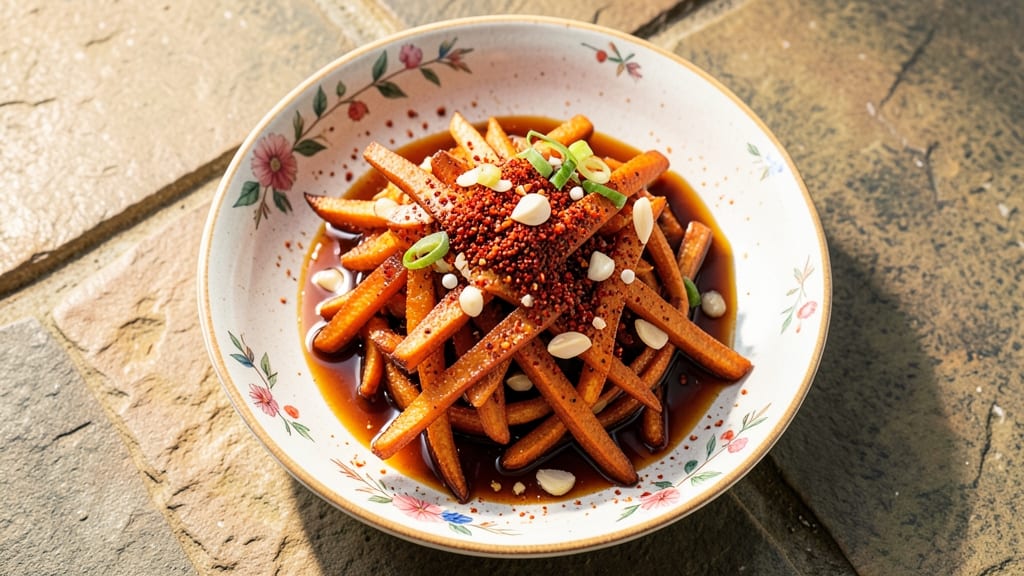
This sweet potato kimchi recipe transforms humble ingredients into a vibrant, tangy-spicy fermented side that rivals traditional versions while keeping prep under 20 minutes. The secret lies in thinly sliced sweet potatoes absorbing the fermented flavors—creating a texture that’s crisp when fresh and velvety after fermentation.
I developed this recipe after struggling to find a version that balanced sweetness with the bold tang of kimchi, and it’s now a staple in my meal rotation.
The process starts with quick-pickling the sweet potatoes in a brine of gochugaru (Korean chili flakes), garlic, ginger, and fish sauce (or soy sauce for vegan), which infuses them with flavor in minutes.
Unlike traditional kimchi that requires weeks of fermentation, this version develops depth in just 3-5 days—perfect for home cooks who want restaurant-quality results without the wait. The sweet potatoes add natural sweetness that cuts through the heat, making it a crowd-pleaser.
What you’ll end up with is a dish that’s as beautiful as it is flavorful—bright red from the chili, glistening with fermented juices, and packed with layers of umami, spice, and sweetness. Serve it as a side with grilled meats, rice bowls, or even as a topping for toast.
The longer it ferments, the more complex the flavors become, but even fresh out of the jar, it’s impossible to resist.
This recipe bridges tradition and convenience, using simple techniques to achieve professional results. Whether you’re a fermentation newbie or a seasoned kimchi lover, the step-by-step method ensures success every time. Let’s get started on creating your own batch of this addictive, crunchy-spicy sweet potato kimchi.
Ingredients for sweet potato kimchi
Transform humble sweet potatoes into vibrant, fermented sweet potato kimchi using these precise ingredients.
| Ingredient | Amount | Notes |
|---|---|---|
| Sweet Potatoes 🍠 | 2 lbs | Thinly julienned, skin on |
| Gochugaru (Korean Chili Flakes) 🌶️ | ½ cup | For vibrant heat, adjust to taste |
| Garlic Cloves 🧄 | 6 cloves | Minced for aromatic depth |
| Fresh Ginger 🌿 | 2 tbsp | Finely grated, peel removed |
| Soy Sauce (or Tamari for gluten-free) 🥢 | ⅓ cup | For umami foundation |
| Apple Cider Vinegar 🍎 | ¼ cup | For tangy brightness |
| Cane Sugar (or Maple Syrup) 🍬 | ¼ cup | Balances spicy-sweet profile |
| Sesame Oil 🥜 | 1 tbsp | Toasted for nutty aroma |
| Toasted Sesame Seeds 🌾 | 1 tbsp | For crunchy texture |
| Water 💧 | ½ cup | For brine dilution |
| Salt 🧂 | 1 tsp | Kosher or sea salt |
| Green Onions 🧅 | 4 whole | Thinly sliced, for garnish |
The sweet potatoes are the heart of this recipe—choose firm, dry varieties like Jewel or Garnet for ideal texture. Korean markets or specialty stores carry the best gochugaru, but Maesil or Homae brands are widely available online if you're sourcing locally. Fresh ginger should smell citrusy and sharp; avoid woody or moldy pieces. For the soy sauce, Kikkoman or Pearl River Bridge provide consistent umami depth, though any high-quality soy sauce works. Thinly julienne the sweet potatoes using a mandoline for even slices—1/8-inch thickness ensures perfect texture after fermentation.
No gochugaru? Substitute with smoked paprika plus cayenne at a 3:1 ratio, though the color won't be as vibrant. Fresh ginger can be swapped for powdered at half the amount, but toasted sesame oil becomes even more critical for depth. For sweetness, maple syrup or agave work 1:1, though cane sugar dissolves more cleanly. The green onions are optional but add freshness—substitute with scallions or chives if needed. If your vinegar smells harsh, apple cider vinegar is the mildest option; rice vinegar adds a subtle floral note. For fermentation, use filtered or dechlorinated water—city water can inhibit probiotic activity.
Store the kimchi in a sterilized glass jar with a tight seal, submerged completely under brine. Ferment at room temperature (68-72°F) for 3-5 days, then refrigerate to slow fermentation. The flavor evolves daily—taste at day 3 and adjust heat/sweetness as needed. Properly stored, it keeps for 3-4 weeks in the fridge, though the texture softens over time. For quick use, pickle for 24 hours in the fridge for immediate tangy crunch. The longer it ferments, the more complex the flavors become—month-old batches develop deep umami notes.
Why You'll Love This Recipe
- Sweet Potatoes Save Time: I peel, slice, and roast them all at once—no peeling onions or dicing veggies for hours. The cubes caramelize while you mix the gochugaru paste, so the only real work is stirring the pan.
- Gochugaru Magic: That first bite—sweet, smoky, with a slow-building heat—is chef’s kiss. The chili flakes cling to the edges of the potatoes, turning them into crispy, spicy little bites that disappear faster than I can say "second helping."
- Weeknight Workhorse: Toss it into rice bowls, serve it with fried eggs, or pile it on toast for breakfast. Honestly, I’ve eaten it cold straight from the fridge when I was too tired to cook—no judgment.
- Budget-Friendly Pantry Gem: Sweet potatoes and chili flakes last forever, and a little soy sauce stretches far. I’ve fed four people for under $8 with this, and the leftovers keep for days (if they last that long).
Step-by-step instructions for sweet potato kimchi
Here's the method for creating vibrant, spicy-sweet sweet potato kimchi with perfect texture and balance.
Prepare the Sweet Potatoes
Peel the 2 lbs sweet potatoes and cut them into long, thin julienne strips using a mandoline or sharp knife. Aim for strips about ¼-inch wide—this size ensures they soften quickly while maintaining a pleasant bite. Immediately soak them in a bowl of cold water to prevent browning while you prepare the marinade.
Drain the sweet potatoes and pat them completely dry with paper towels. This step is crucial—any moisture left on the strips will dilute your marinade and prevent proper flavor absorption. Spread them out on a clean kitchen towel to dry thoroughly before proceeding to the next step.
Create the Spicy-Sweet Marinade
In a large mixing bowl, combine the 0.5 cup gochugaru, 6 minced garlic cloves, 2 tbsp finely grated ginger, 0.33 cup soy sauce, 0.25 cup apple cider vinegar, and 0.25 cup cane sugar. Mix thoroughly until the sugar dissolves completely and the gochugaru is evenly distributed.
Add the 1 tbsp sesame oil and 1 tsp salt, then stir again. The mixture should be thick but pourable. Taste a small amount—you want a perfect balance of heat, sweetness, and tang. If it needs more depth, add a splash of water to loosen it slightly, but don't dilute it too much or the texture will suffer.
Marinate the Sweet Potatoes
Pour the marinade over the dried sweet potato strips in the mixing bowl. Using clean hands or a silicone spatula, toss everything together until every strip is fully coated. The sweet potatoes should absorb the marinade immediately, turning a vibrant reddish-orange color.
Cover the bowl with plastic wrap and let the mixture marinate at room temperature for 15 minutes. This initial resting period allows the flavors to begin melding and the sweet potatoes to soften slightly. Stir once halfway through to ensure even distribution of the marinade.
Add Final Touches and Rest
After the 15-minute marinade, transfer the sweet potatoes to a clean glass jar or airtight container. Sprinkle the 1 tbsp toasted sesame seeds evenly over the top, then arrange the 4 thinly sliced green onions on the surface. The sesame seeds add nutty crunch, while the green onions contribute freshness and visual appeal.
Press down gently to submerge everything in the marinade, then seal the container. Refrigerate for at least 1 hour before serving, allowing the flavors to fully develop. For best results, let it sit overnight—this enhances the tanginess and deepens the spicy-sweet profile. The kimchi will keep in the refrigerator for up to 5 days, with flavors intensifying over time.
Pro Tips For Making Sweet Potato Kimchi
- PARBOIL FIRST: Sweet potatoes hold onto moisture like a stubborn toddy. Cut them into even ½-inch cubes, then boil for 3-4 minutes before fermenting—this softens them just enough to absorb the marinade without turning mushy later. (Yes, even if you’re impatient like me.)
- GRATE GINGER FINE: That chunky ginger you toss in whole? It’ll just sit there like a forgotten guest. Use the small holes of a box grater or microplane—you want it so fine it practically dissolves. This way, every bite gets that warm, zesty kick instead of just the spice.
- SALT THE POTATOES: Skip this, and your sweet potatoes will stay bland no matter how much gochugaru you pile on. Toss the cubed potatoes with ½ teaspoon salt per pound and let them sit for 10 minutes—draws out excess water and makes the marinade cling better. (Your future self will thank you.)
- STORE IT COLD: Sweet potato kimchi ferments faster than regular kimchi because of the natural sugars. If you’re not eating it within 2 days, refrigerate it immediately after mixing. The cold slows down the yeast and bacteria, giving you time to actually eat it before it turns into a science experiment. (I learned this the hard way.)
Health benefits of this dish
Fermented Gut Health
Sweet potato kimchi is a probiotic powerhouse that supports your gut microbiome with beneficial bacteria from fermentation. Just 3-4 servings per week can help maintain digestive balance, thanks to the natural lactobacilli that develop during the process.
The sweet potatoes also provide fiber (about 7 grams per serving) to feed these good bacteria, creating a synergistic effect for gut health. 💪
Rich in Antioxidants
The vibrant gochugaru and sweet potatoes combine to create a dish packed with antioxidants that combat oxidative stress. Sweet potatoes offer beta-carotene (a precursor to vitamin A), while the chili flakes provide capsaicin, which has been linked to reduced inflammation.
A single serving delivers over 100% of your daily vitamin A needs, supporting immune function and skin health.
Blood Sugar Balance
Despite its sweetness, this kimchi actually helps regulate blood sugar thanks to the sweet potatoes' low glycemic index when fermented. The fermentation process breaks down some of the starches, making them easier to digest while preventing blood sugar spikes.
The fiber content also slows glucose absorption, making this a smart choice for those monitoring blood sugar levels.
Vitamin Boost
You'll get a nutritional powerhouse with this dish—each serving provides vitamin C (from vinegar and green onions), vitamin K (from fermented vegetables), and B vitamins (from garlic and ginger).
The vitamin C content actually increases during fermentation, making this a great immune-supporting side dish. I've noticed my energy levels improve when I include fermented foods like this regularly.
Natural Detox Support
The ginger and garlic in this recipe act as natural detoxifiers, helping your body eliminate toxins more efficiently. Ginger contains gingerol, which stimulates digestion, while garlic provides allicin, a compound that supports liver function.
The apple cider vinegar adds acetic acid, which may help regulate blood sugar and improve insulin sensitivity. 🌿
Low-Calorie Crunch
At just around 120 calories per serving, this kimchi delivers big flavor without the calorie load. The fiber-rich sweet potatoes keep you feeling full longer, making it an excellent addition to meals when you're watching your calorie intake.
It's perfect for those looking to add volume and nutrition to their plates without excess calories.
Nutrition facts
Frequently asked questions
Can I make this sweet potato kimchi without gochugaru?
Yes! For a substitute, mix 3 parts smoked paprika with 1 part cayenne pepper to mimic the color and heat. The flavor won't be identical, but it'll still deliver that signature spicy-sweet profile. Adjust the amount to taste, starting with ¼ cup of the paprika-cayenne blend for the same heat level.
How long should I ferment it for optimal flavor?
For the best balance of tangy and sweet, ferment at room temperature for 3-5 days first. Then refrigerate to slow fermentation. The longer it ferments (up to 2 weeks), the more complex the flavors become—think deeper umami and richer sweetness. Taste at day 3 to decide when it's perfect for you!
What's the best way to store leftover sweet potato kimchi?
Transfer to an airtight glass jar and keep it submerged in the fermenting liquid. It'll stay fresh in the fridge for 3-4 weeks, though the texture softens over time. For longer storage, freeze portions in ice cube trays—just thaw overnight in the fridge before using.
Can I use regular potatoes instead of sweet potatoes?
Not recommended! Sweet potatoes provide the perfect balance of natural sweetness and hearty texture that works with kimchi's bold flavors. Regular potatoes would make the dish too starchy and less flavorful. If you're set on using them, try purple potatoes for a similar earthy sweetness, but expect a different taste profile.
How do I adjust the spice level for kids or sensitive eaters?
Reduce the gochugaru to ¼ cup and add 1 extra tbsp of sugar to balance the heat. For extra mildness, strain out some of the chili flakes after mixing but before adding to the sweet potatoes. You can always add more spice later if needed—just don't reduce the garlic and ginger, as they're key for flavor depth.