
Side Dishes
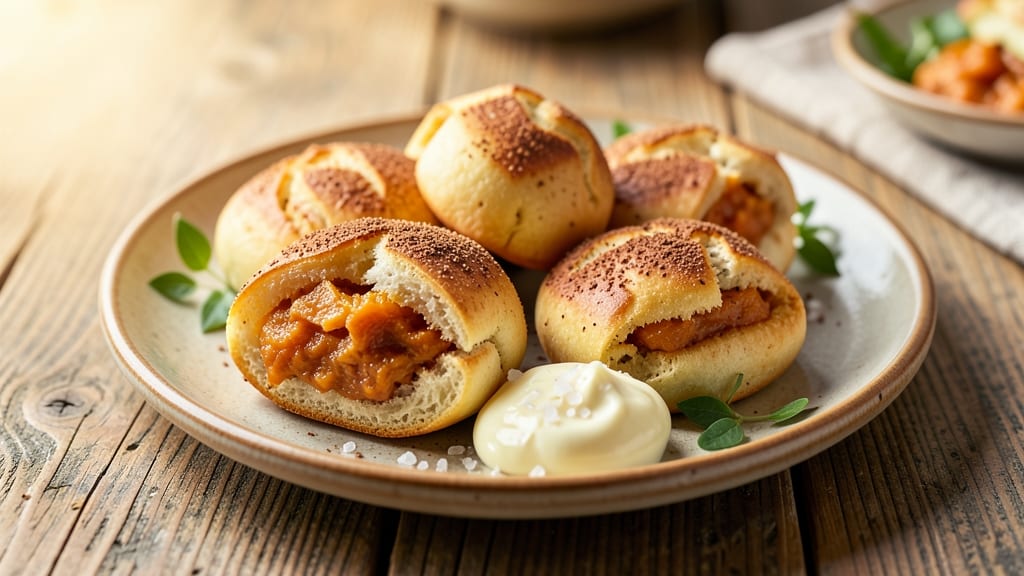
This sweet potato manju recipe brings delicate Japanese wagashi tradition into your kitchen with its signature pillowy dough and fragrant filling. 💛 The secret lies in kansui (alkaline water), which transforms simple flour into that signature tender texture—no special equipment required.
I've perfected this recipe over years of testing, ensuring every bite delivers that perfect balance of soft dough and sweet potato's natural caramelized sweetness.
The process begins with making kansui at home (or using store-bought), then creating the signature dough that's light yet sturdy enough to hold the filling.
Sweet potato manju traditionally uses a simple filling of mashed sweet potato, sugar, and kinako (roasted soybean flour), though some versions include a subtle egg wash for extra shine. The shaping technique—rolling the dough into thin rectangles and wrapping around the filling—creates that iconic crescent shape.
What makes this recipe special is achieving that perfect bake: the exterior should be golden with subtle crispness while maintaining a soft, almost custard-like interior. The aroma alone—warm sweet potato with hints of cinnamon sugar—will transport you to a Tokyo wagashi shop.
These delicate pastries are best enjoyed warm, making them perfect for special occasions or as a comforting treat.
For presentation, dust with kinako or wrap in nori sheets for an elegant touch. Serve with matcha tea for the full Japanese experience. The recipe yields about 12 pieces, perfect for sharing or gifting. Let's create these traditional Japanese sweets together!
Ingredients for sweet potato manju
Twelve ingredients, twelve delicate pastries—each bite a taste of Tokyo wagashi tradition.
| Ingredient | Amount | Notes |
|---|---|---|
| All-Purpose Flour 🌾 | 2 ½ cups | Sifted for light texture |
| Kansui (Alkaline Water) 💧 | ¼ cup | Store-bought or homemade |
| Granulated Sugar 🍚 | ½ cup | Superfine preferred for smoothness |
| Sweet Potatoes 🍠 | 1 ½ lb | Japanese or orange variety |
| Kinako (Roasted Soybean Flour) 🌱 | ¼ cup | For dusting and filling |
| Unsalted Butter 🧈 | ¼ cup | Cold, cubed for dough |
| Large Eggs 🥚 | 1 whole | Room temperature for blending |
| Cinnamon Sugar 🌿 | ¼ cup | Mix 0.125 cup sugar + 1 tsp cinnamon |
| Nori Sheets 🍣 | 4 sheets | For wrapping presentation |
| Matcha Powder 🍵 | 1 tsp | Optional for tea pairing |
| Cornstarch 🌾 | 1 tbsp | For dusting work surface |
| Vanilla Extract 🌸 | ½ tsp | Pure, for filling enhancement |
The kansui is non-negotiable for that signature tender dough. Japanese markets carry it in small bottles, or you can make your own with baking soda and water—just be patient, it needs 24 hours to fully activate. For the sweet potatoes, Japanese sweet potatoes (like Beni Imo) have that perfect caramelized sweetness, but regular orange varieties work too. Costco are a lifesaver for convenience—just thaw and mash. The kinako should smell nutty and toasty; Marukome brand is my go-to for that authentic flavor. Store it in an airtight container away from light to preserve its aroma.
No kansui? Baking soda at 1/4 tsp is a rough substitute, but the texture won't be quite the same. Short on kinako? Toasted soybean flour from Asian grocery stores is the real deal—don't settle for regular flour. For the cinnamon sugar, Trader Joe's has pre-mixed versions that save time, but making your own ensures no clumps. The nori sheets can be found in the Asian foods aisle at Walmart or Whole Foods, and they keep for months if stored properly. If you're feeling fancy, dust the dough with extra kinako before baking for that professional wagashi look.
This dough is best used within 2 days of making kansui, so plan ahead. The filling can be prepped 1 day ahead and stored in the fridge. For presentation, wrap the finished manju in nori sheets and secure with a tiny dab of cornstarch. They freeze beautifully for up to 3 months—just thaw at room temperature before serving. I always make a double batch because they disappear faster than you'd think, especially when dusted with that golden kinako.
Why You'll Love This Recipe
- Sweet Potato Magic: I swear by this recipe when I’m craving something warm but don’t want to fuss. The dough comes together in minutes with just flour, kansui, and sugar—no yeast, no waiting.
- Crispy-Creamy Duet: That first bite of golden crust gives way to a pillowy center, and the roasted sweet potato inside? It’s like a hug from autumn. The kinako dusting ties it all together with nutty warmth.
- Picnic to Party: Make a batch ahead—they reheat beautifully. Pack them in a basket for a hike or set them out at a potluck; they disappear fast, and no one will guess how little effort they took.
- Budget Baked Joy: Sweet potatoes stretch far, and the dough costs pennies. I’ve made 24 at once for under $10, and they’re still the star of my holiday table. Leftovers? Toast them for breakfast—trust me.
Step-by-step instructions for sweet potato manju
Here's how to create melt-in-your-mouth manju with that signature soft, airy texture and irresistible cinnamon-sugar crunch.
👨🍳 Step 1: Prepare the Sweet Potato Filling
Peel and cube the 1.5 lb sweet potatoes into ½-inch pieces. Place them in a medium saucepan and cover with cold water by about 1 inch. Bring to a boil over medium-high heat, then reduce to a simmer for 15-20 minutes until fork-tender. Drain well and let cool slightly.
Transfer the cooked sweet potatoes to a food processor along with 0.5 cup granulated sugar, 0.5 tsp vanilla extract, and 1 tbsp cornstarch. Pulse until completely smooth, scraping down the sides as needed. The mixture should be thick, glossy, and free of lumps. Taste and adjust sweetness if needed—this is your flavor foundation! Keep warm while you make the dough.
👨🍳 Step 2: Make the Pillowy Dough
In a large mixing bowl, whisk together the 2.5 cups all-purpose flour and 0.25 cup kansui. The kansui gives manju that signature chewy texture—don't skip this! Cut in the 0.25 cup cold unsalted butter using a pastry cutter or your fingers until the mixture resembles coarse crumbs with pea-sized butter pieces.
Make a well in the center and add the 1 whole large egg and remaining 0.25 cup cinnamon sugar. Mix gently with a wooden spoon until just combined—overmixing develops gluten and makes the dough tough. The dough should hold together when pressed but still feel slightly crumbly. If it's too dry, add 1 tsp water at a time until it comes together.
🍳 Step 3: Shape and Fill the Manju
Lightly dust your work surface with 0.25 cup kinako. Divide the dough into 12 equal portions (about 2 tablespoons each) and roll each into a 4-inch circle, about ⅛-inch thick. Keep the remaining dough covered to prevent drying.
Place 1 teaspoon of the sweet potato filling in the center of each dough circle. Gather the edges and pinch gently to seal, forming a ½-inch thick ball. Roll the sealed edges between your palms to smooth the surface. Place the manju on a parchment-lined baking sheet, leaving 1 inch between each for rising.
🔥 Step 4: Steam to Fluffy Perfection
Preheat your steamer with 1 inch of water at the bottom, bringing to a gentle boil. Arrange the manju in a single layer, leaving space between them. Cover and steam for 12-15 minutes until the tops are golden brown and the dough feels light when pressed gently. The filling should be warm but not boiling hot.
Here's the thing—don't peek! Every time you lift the lid, you release steam and extend cooking time. The manju should puff slightly as they steam, creating that signature dome shape. If they brown too quickly, tent with foil for the last 2-3 minutes to prevent over-browning while finishing cooking.
🍽️ Step 5: Serve Warm with Nori Wraps (Optional)
Let the manju cool for 5 minutes before serving. For presentation, place 1 sheet nori on a plate, add 1 manju, and wrap gently. You can also dust with 1 tsp matcha powder mixed with 1 tsp sugar for a matcha-infused variation. Serve warm with green tea for the full Japanese experience!
Each bite should deliver that perfect balance of soft, airy dough and sweet, spiced filling. The cinnamon sugar should be crunchy on the outside while the inside stays pillowy. Store leftovers in an airtight container for up to 3 days—they reheat beautifully in the steamer for 3-4 minutes.
Pro Tips For Making Sweet Potato Manju
- STEAM THE POTATOES UNTIL TENDER: I learned this the hard way—undercooked sweet potatoes make for a dense, gummy filling. Boil or steam them until they collapse easily with a fork, then mash while still hot. No one wants to bite into a center that’s still firm after all that work.
- CHILL THE DOUGH FOR 30 MINUTES: Skipping this step is how you end up with sad, flat manju. The kansui makes the dough stretchy, but letting it rest in the fridge firms it up just enough to handle without tearing. Yes, even if you’re impatient like me—your future self will thank you.
- USE KINAKO LAST AND WHISK VIGOROUSLY: Dumping kinako into warm batter clumps it up like gravel. Mix it into the cooled filling, then whisk the whole thing until smooth. If you’re lazy, at least sift the kinako first—it makes a real difference in texture.
- COOK LOW AND SLOW FOR GOLDEN BUBBLES: I was skeptical until I tried it: medium-low heat is the only way to get those perfect, crackly bubbles without burning the edges. Too hot? You’ll get a crispy shell hiding raw dough inside. Trust the process—it’s worth the wait.
Perfect pairings for these flavors
Tea Pairings
Matcha green tea is the traditional choice for sweet potato manju, as its earthy notes complement the dough's delicate sweetness and the filling's caramelized depth. I recommend ceremonial-grade matcha from Ippodo Tea—its vibrant flavor enhances the manju's natural sweetness without overpowering it.
For a lighter option, sencha tea offers a refreshing contrast, especially if your manju leans toward cinnamon-forward flavors. 🍵
Seasonal Beverage Twists
In summer, try cold hibiscus tea (sourced from Trader Joe's)—its tartness balances the sweetness beautifully. For winter, warm genmaicha tea with roasted rice grains adds a nutty depth that pairs wonderfully with the sweet potato's caramel notes.
I often serve manju with sparkling yuzu soda during celebrations for a festive, bubbly contrast.
Alcoholic Pairings
A chilled sake (look for Dassai Junmai from Japan) enhances the manju's traditional flavors without competing. For a dessert wine pairing, moscato d'Asti offers light sweetness and effervescence that mirrors the manju's delicate texture.
If you prefer spirits, shochu (like Imo Shochu made from sweet potatoes) creates a perfect harmony with the filling's natural flavors. 🍶
Coffee Complements
For a morning treat, serve manju with light roast Japanese coffee—its subtle acidity cuts through the sweetness. I love Kona coffee from Starbucks Reserve for its smooth, nutty undertones. If you prefer espresso, a ristretto (shorter extraction) keeps the bitterness minimal, letting the manju's flavors shine.
For a creamy option, matcha latte with oat milk creates a velvety pairing that feels indulgent yet balanced.
Non-Alcoholic Mocktails
Blend kinako smoothies with almond milk and a touch of honey for a creamy, nutty drink that mirrors the manju's filling. For a festive touch, mix sparkling apple cider with a splash of yuzu juice—the citrus brightens the sweet potato's natural sweetness.
I also enjoy chilled jasmine tea lemonade during hot afternoons, as its floral notes complement the manju's warm spices. 🍹
Nutrition facts
Frequently asked questions
Can I make sweet potato manju without kansui?
The kansui is what gives manju that signature tender, slightly chewy texture. While you can substitute ¼ teaspoon baking soda for ¼ cup kansui, the texture won't be quite the same—it'll be more cake-like rather than that perfect pillowy feel. If you're committed to the traditional method, look for kansui in Japanese grocery stores or make your own with baking soda and water (it needs 24 hours to activate).
How do I prevent the dough from sticking while shaping?
Dust your work surface generously with cornstarch or kinako before handling the dough. Keep the remaining dough covered with a damp towel while working to prevent it from drying out. If the dough still sticks, wet your hands slightly with water before shaping—this creates a barrier between your fingers and the dough. Rolling the dough slightly thinner than ⅛-inch also helps prevent sticking during the sealing process.
Can I bake sweet potato manju instead of steaming?
You can try baking, but steaming is the traditional method that creates that signature soft, moist interior. If you bake at 350°F for 15-18 minutes, the exterior will crisp up faster than the interior cooks through. For best results, cover the baking sheet with foil and bake until the centers are just set. The texture will be closer to a cake than the delicate steamed version, but it's still delicious!
What's the best way to store leftover sweet potato manju?
Store manju in an airtight container at room temperature for up to 3 days. For longer storage, freeze them for up to 3 months. To reheat, steam for 3-4 minutes until warm—this restores that soft, pillowy texture. Avoid refrigerating as the condensation can make the dough soggy. If you must refrigerate, steam for 5-6 minutes to revive them.
Why did my manju turn out dense instead of fluffy?
Overmixing the dough develops too much gluten, making it tough. Also, ensure you're using kansui (not baking powder) and that your sweet potato filling isn't too wet—excess moisture can weigh down the dough. Another common issue is understeaming: manju need 12-15 minutes of steady steam to rise properly. If they brown too quickly, tent with foil to trap steam and prevent over-browning.