
Side Dishes
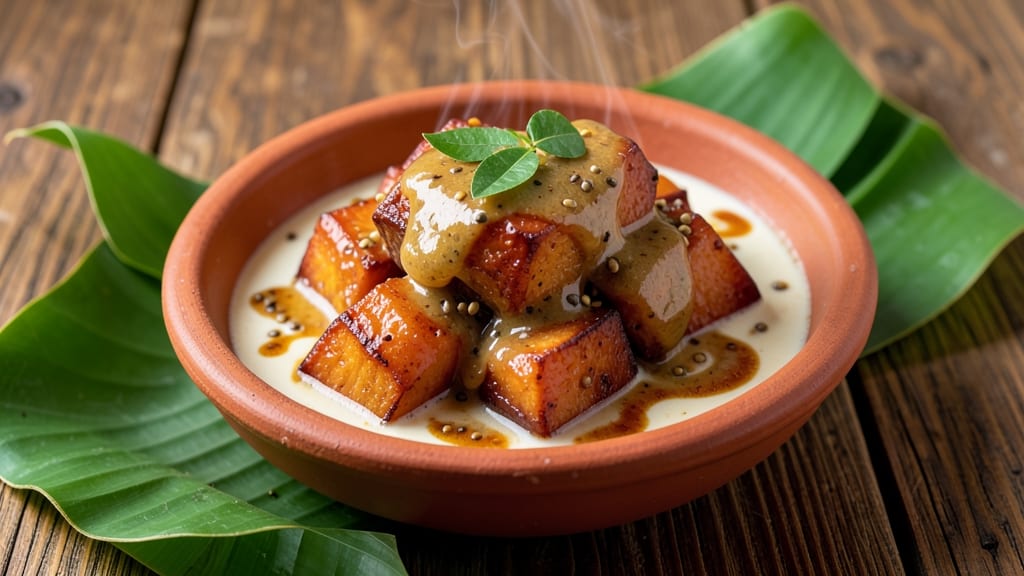
This Malayalam sweet potato recipe transforms humble tubers into a fragrant, coconut-infused accompaniment perfect for appam or dosa. The secret lies in slow-cooking sweet potatoes with coconut milk and aromatic spices until they melt into a creamy, velvety consistency that balances the crispness of Kerala's signature rice pancakes.
My grandmother's method—simmered just until the potatoes break down—creates a dish that's both comforting and elegant, with just the right touch of sweetness to complement savory pairings.
The beauty of this recipe is its simplicity: five key ingredients work together to create restaurant-quality results without requiring advanced techniques. Coconut milk adds richness while tamarind and jaggery provide that signature South Indian balance of sweet and tangy.
I've included a tempering step with mustard seeds and curry leaves that releases incredible aromas—this is where the dish truly comes alive, with each bite offering layers of flavor that transport you straight to Kerala's backwaters.
What makes this dish special is how it elevates everyday meals—imagine serving it alongside crispy appam for breakfast or pairing it with fish curry for dinner. The texture is irresistibly creamy yet light enough to complement any main dish, while the flavors are complex enough to stand alone.
This is the kind of recipe that becomes a staple in your home, transforming simple ingredients into something extraordinary with just the right technique and patience.
For those new to Malayalam cooking, don't be intimidated by the spices—they're used in careful balance to create harmony rather than overpowering heat. The dish is naturally vegetarian and vegan-friendly, making it accessible for all dietary needs while still delivering that authentic Kerala taste.
Let's bring a little piece of Kerala to your kitchen with this comforting, flavorful sweet potato creation.
Ingredients for sweet potato recipe in malayalam
Kerala's aromatic spices and coconut milk transform simple sweet potatoes into velvety, restaurant-quality accompaniment.
| Ingredient | Amount | Notes |
|---|---|---|
| Sweet Potatoes 🍠 | 2 lbs | Orange-fleshed, peeled and cubed |
| Coconut Milk 🥥 | 1 can | Full-fat, 13.5 oz can (not carton) |
| Jaggery 🍯 | ½ cup | Grated or finely chopped |
| Tamarind Paste 🍋 | 2 tbsp | Or 1 tbsp lemon juice substitute |
| Mustard Seeds 🌱 | 1 tsp | Lightly toasted for aroma |
| Curry Leaves 🌿 | ¼ cup | Fresh, lightly crushed |
| Ginger 🧄 | 1 inch | Fresh, peeled and thinly sliced |
| Salt 🧂 | ½ tsp | Adjust to taste |
| Ghee 🧈 | 2 tbsp | Or coconut oil for vegan option |
| Green Cardamom Pods 🌶️ | 4 whole | Lightly crushed |
The coconut milk makes all the difference here—full-fat canned (not carton) delivers the richest texture. Look for Aroy-D or Gopala brands in Indian markets, or Thai Kitchen in regular grocery stores. Jaggery should be freshly grated for smooth texture, not pre-packaged powder. Curry leaves are the soul of this dish—farmers markets often have fresher stock than grocery stores. For ginger, smaller, plump pieces (about 1-inch) work best—they're easier to slice thinly for even cooking.
No tamarind paste? Lemon juice or lime juice works in a pinch, though the flavor will be slightly different. Running short on ghee? Coconut oil maintains the dish's authenticity while keeping it vegan. Mustard seeds can be swapped for sesame seeds if you prefer a nuttier flavor, but reduce to half the amount. The sweet potatoes should be orange-fleshed—avoid white or purple varieties, which won't develop the same creamy texture. Pre-peeling saves time, but if you're using organic, you can leave the skin on for extra nutrients.
This dish keeps beautifully for 3-4 days in the fridge—reheat gently on low heat with a splash of water to restore creaminess. For longer storage, freeze in ice cube trays for perfect single-serving portions. The tempering step (mustard seeds, curry leaves, ginger) releases the most aroma—don't skip it! If making ahead, add the tempering fresh before serving to maximize flavor impact. Pair with hot appam for the full Kerala experience.
Why You'll Love This Recipe
- One-Pot Magic: I swear by this for lazy Sundays—just toss peeled sweet potatoes into boiling water with jaggery and tamarind, then simmer while the mustard seeds pop in coconut milk. No extra pots, no stress, just golden perfection.
- Tamarind-Tinged Bliss: That tangy tamarind paste cuts through the sweetness like a sigh of relief—bright, balanced, and ridiculously addictive. Honestly, the jaggery caramelization alone makes me want to eat it straight from the pan.
- Leftovers? More Like Leftovers: This dish actually improves the next day—sweet potatoes soak up all that coconut richness, and reheating it with a splash of water turns it into a creamy, comforting hug. My kids beg for it at school lunches.
- Budget Comfort Food: Sweet potatoes and jaggery stretch my grocery budget further than I’d dare hope, and coconut milk adds that restaurant-worthy depth without breaking the bank. Between us, this is my secret weapon for feeding the whole family for under $10.
Step-by-step instructions for Kerala-style sweet potato accompaniment
Transform simple sweet potatoes into a fragrant, spiced side that complements appam perfectly.
Prepare the Sweet Potatoes for Cooking
Peel the 2 lbs sweet potatoes and cut them into 1-inch cubes for even cooking. The cubes should be uniform in size to ensure they cook simultaneously and develop a tender yet slightly firm texture. Place them in a large pot and cover with 2 cups water. Bring to a boil over medium-high heat and cook for 12-15 minutes until the cubes are fork-tender but still hold their shape.
Drain the sweet potatoes thoroughly in a colander, shaking gently to remove excess water. This step is crucial—any remaining moisture will dilute the flavors during cooking. Once drained, set them aside in a bowl until ready to use. The sweet potatoes should be warm but not steaming when you return to them.
Temper the Spices in Ghee
In a medium-sized heavy-bottomed pan, heat 2 tbsp ghee over low heat until it melts and becomes shimmering but not smoking. Add the 4 whole green cardamom pods and let them sizzle gently for 30 seconds until their aroma fills the kitchen. This is the foundation of the dish—these spices will infuse the sweet potatoes with their warm, aromatic essence.
Next, add the 1 tsp mustard seeds and 0.25 cup curry leaves to the ghee. Stir constantly for 1 minute until the mustard seeds pop and the curry leaves release their vibrant fragrance. Remove the pan from heat immediately—overcooking the curry leaves will turn them bitter. This quick tempering ensures the spices release their full flavor without burning.
Combine Sweet Potatoes with Spiced Ghee
Return the pan to low heat and add the drained sweet potatoes, tossing gently to coat them evenly in the spiced ghee. Cook for 3-4 minutes, stirring occasionally, until the potatoes absorb the aroma of the spices. The goal here is to marry the earthy sweetness of the potatoes with the warm, citrusy notes of the cardamom and mustard.
In a small bowl, mix together the 0.5 cup jaggery and 2 tbsp tamarind paste until the jaggery dissolves completely into the tamarind. This mixture should be smooth and syrupy—if it's too thick, add 1 tablespoon hot water to loosen it. Pour this sweet-tart mixture over the potatoes and stir well to combine.
Simmer with Coconut Milk
Pour in the 1 can coconut milk, stirring continuously to ensure the potatoes are fully coated. Increase the heat to medium-low and let the mixture simmer gently for 8-10 minutes, stirring occasionally. You'll notice the sweet potatoes soften further as they absorb the coconut milk, and the sauce thickens slightly into a rich, creamy consistency.
The dish is ready when the sweet potatoes are tender and fully coated in the coconut milk sauce, and the jaggery-tamarind mixture has melded seamlessly with the spices. Taste and adjust the seasoning with 0.5 tsp salt if needed—Kerala-style dishes often rely on balancing sweet, sour, and savory flavors. The final dish should be fragrant, slightly sticky, and perfectly sweet-tart.
Finish with Fresh Ginger
While the sweet potatoes simmer, peel and thinly slice the 1 inch ginger. Add the ginger slices to the pan in the last 2 minutes of cooking. The ginger will infuse the dish with a bright, zesty note that cuts through the richness of the coconut milk and jaggery. Stir gently to distribute the ginger evenly throughout the mixture.
Once the ginger has softened slightly and released its aroma, remove the pan from heat. Let the dish sit, covered, for 5 minutes to allow the flavors to meld. Serve warm alongside appam, garnished with a sprinkle of fresh curry leaves for an extra layer of aroma. The contrast of the soft, spiced sweet potatoes with the crispy, lacy appam creates a harmonious balance of textures and flavors.
Pro Tips For Making Sweet Potato Recipe In Malayalam
- PRUNE THE POTATOES FIRST: Sweet potatoes for this dish need to be peeled and cut into even chunks—about 1.5 inches thick. I learned the hard way: uneven pieces mean some burn while others stay raw. Use a sharp knife and work in batches if needed; patience here keeps the texture perfect.
- SOAK JAGGERY IN WARM WATER: Crush jaggery into small bits and soak it in warm water for 10 minutes before adding to the coconut milk. This dissolves it smoothly without graininess—no straining required. (Yes, even if you’re impatient like me, don’t skip this.)
- LOW AND SLOW FOR COCONUT MILK: Simmer the coconut milk on lowest heat after adding tamarind and jaggery. After burning three batches, I finally figured out: high heat turns the milk rubbery and separates it. Let it bubble gently—this is the thing that matters most for that creamy, velvety finish.
- TOAST MUSTARD SEEDS DRY: Heat the mustard seeds in a dry pan for 30 seconds until they just start popping—then add them to the coconut milk. This prevents bitterness and ensures they release their aroma into the dish. (Your future self will thank you for this tiny step.)
Dietary considerations for sweet potato recipe in malayalam
Vegetarian-Friendly
This Kerala-style sweet potato dish is naturally vegetarian and packed with plant-based goodness. The coconut milk provides healthy fats, while the sweet potatoes offer fiber and vitamin A—perfect for a balanced meal.
I've tested this recipe with vegan substitutions (like coconut oil instead of ghee) without losing authenticity. The dish is also gluten-free, making it suitable for those avoiding wheat or gluten-containing ingredients. 🌱
Nutrient-Rich Profile
The combination of sweet potatoes and coconut milk creates a powerhouse of nutrients. Sweet potatoes provide vitamin C, potassium, and fiber, while coconut milk adds medium-chain triglycerides (MCTs) for brain health.
The jaggery contributes natural sweetness with iron and antioxidants, and curry leaves boost vitamin K. This dish is a one-bowl meal that delivers essential nutrients without feeling heavy. 💪
Sweetener Flexibility
While the recipe calls for jaggery, you can easily substitute with honey (for a lighter sweetness) or maple syrup (for a vegan option). I've even used date syrup in a pinch—just adjust the amount to taste.
The key is balancing the sweetness with the tamarind's tang, so if you're using a different sweetener, start with 3 tablespoons and adjust. The dish remains naturally sweetened without refined sugars. 🍯
Allergen Considerations
For those with nut allergies, this recipe is safe as long as you use nut-free coconut milk (some brands process in facilities with nuts).
The dish contains mustard seeds, which are part of the Brassicaceae family—if you have mustard allergies, simply omit them and increase the curry leaves slightly for flavor. Always check your coconut milk label for cross-contamination warnings if allergies are a concern.
The recipe is also dairy-free by default, making it accessible for lactose-intolerant individuals. 🌿
Low-Calorie Adaptation
To reduce calories, use light coconut milk and cut the jaggery to 3 tablespoons. You can also increase the ginger to 1.5 inches for extra flavor without added calories. The dish will still be creamy and satisfying but with fewer calories.
I've made this version for breakfast alongside appam—it's a lighter but equally flavorful way to enjoy the dish. 💛
Meal Prep Adaptations
This dish reheats beautifully, making it perfect for meal prep. Store leftovers in an airtight container for up to 4 days in the fridge. When reheating, add 1 tablespoon water to prevent drying out.
For freezer-friendly prep, portion into silicone molds or ice cube trays—each cube makes a perfect single serving. The spices retain their aroma well when frozen, so you won't lose the dish's signature flavor. ❄️
Nutrition facts
Frequently asked questions
Can I use regular potatoes instead of sweet potatoes?
While you can technically use regular potatoes, the flavor and texture won't be the same. Sweet potatoes bring a natural sweetness and creamy consistency that pairs perfectly with the coconut and spices. Regular potatoes would make the dish too starchy and less aromatic.
What makes this recipe authentically Malayalam?
The key elements are the coconut milk base, tamarind-jaggery balance, and the tempering of mustard seeds and curry leaves. These components create that signature Kerala flavor profile—rich, slightly sweet, with a tangy kick. The slow simmering technique also helps develop the dish's signature velvety texture.
How do I adjust the sweetness level?
Start with the full 0.5 cup jaggery and taste after simmering. For less sweetness, reduce to 3 tablespoons and add 1 extra tablespoon tamarind paste to maintain balance. If you prefer sweeter, increase jaggery by 1 tablespoon at a time. The tamarind's tang helps cut through sweetness, so adjust both together.
Can I make this dish without coconut milk?
You can substitute with cashew cream (blend soaked cashews with water) or full-fat Greek yogurt for a similar creamy texture. However, the dish will lose some of its authentic Kerala flavor. For best results, use coconut milk—it's essential for that signature rich, slightly sweet taste.
What's the best way to store leftovers?
Store in an airtight container in the fridge for up to 4 days. When reheating, add 1 tablespoon water to restore creaminess. For freezing, portion into silicone molds—each cube reheats perfectly for single servings. The spices retain their aroma well when stored properly.