
Desserts
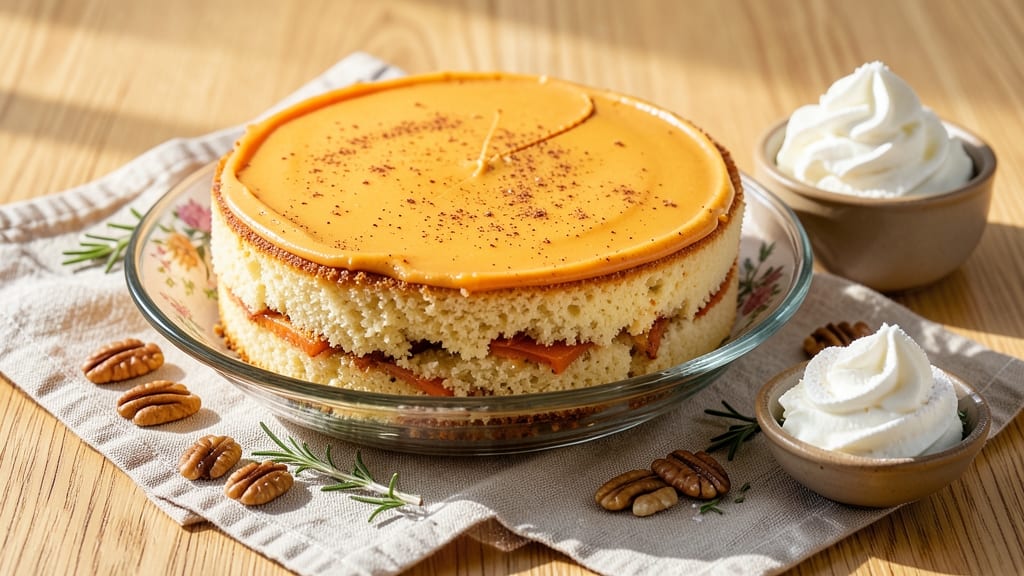
This sweet potato sponge cake delivers moist layers infused with warm cinnamon spice that taste like autumn in every bite. The secret lies in roasting the sweet potatoes first—this transforms their natural sugars into a velvety, flavorful base that keeps the cake tender for days.
I developed this recipe after struggling with dry sponge cakes, and the difference is night and day.
The cake's magic comes from a precise blend of ingredients: ripe sweet potatoes, warm spices, and a touch of sour cream for richness. Unlike traditional sponge cakes, this version stays moist without being dense, thanks to a gentle folding technique that incorporates air for lightness.
The cinnamon-spiced glaze ties everything together with a subtle sweetness that enhances every slice.
What you'll end up with is a cake that's perfect for holidays or weekend treats—rich but not heavy, with warm vanilla and cinnamon notes that make it irresistible. The roasted sweet potato flavor gives it depth, while the tender crumb ensures every bite is satisfying.
This is the kind of dessert that disappears quickly but leaves a lasting impression.
Pair it with cream cheese frosting or a drizzle of caramel for extra indulgence, or enjoy it plain to let the natural flavors shine. The recipe scales beautifully for gatherings, and leftovers keep well for up to 5 days. Let's get baking!
Ingredients for sweet potato sponge cake
Roasted sweet potatoes and warm spices create this cake's signature moist, tender crumb.
| Ingredient | Amount | Notes |
|---|---|---|
| Orange Sweet Potatoes 🍠 | 2 lbs | Firm, no bruises, organic preferred |
| All-Purpose Flour 🌾 | 2 ½ cups | Sifted for lightness, bleached or unbleached |
| Granulated Sugar 🍚 | 1 ½ cups | White or light brown for subtle molasses notes |
| Light Brown Sugar 🍚 | ½ cup | Packed firmly, for moisture |
| Unsalted Butter 🧈 | 1 cup | Room temperature, full-fat for richness |
| Large Eggs 🥚 | 4 whole | Room temperature, separated for folding |
| Sour Cream 🥛 | ½ cup | Full-fat for tenderness |
| Vanilla Extract 🌿 | 2 tsp | Pure, high-quality for flavor |
| Ground Cinnamon 🌶️ | 2 tsp | Freshly ground for warmth |
| Ground Nutmeg 🌶️ | ½ tsp | Freshly grated for depth |
| Baking Powder 🍞 | 2 tsp | Double-acting for rise |
| Salt 🧂 | ½ tsp | Fine sea salt for balance |
| Powdered Sugar 🍚 | 1 cup | For glaze, sifted smooth |
| Orange Zest 🍊 | 1 tbsp | Fresh, bright orange peel |
| Orange Juice 🍊 | ¼ cup | Freshly squeezed, no pulp |
The sweet potatoes are the heart of this cake. Orange varieties have the perfect balance of sweetness and moisture, though regular sweet potatoes work too. Roast them until tender and mash them smooth—this step unlocks their natural sugars and transforms them into a velvety base. Trader Joe's and Whole Foods carry excellent organic options, but any firm, unblemished sweet potato from your grocery store will do. For extra flavor, skip peeling them—the skin adds texture and nutrients. If you're short on time, you can use canned sweet potatoes, but roasting gives the best results. Two pounds ensures enough for both the cake and a little extra for garnish or another use.
No sour cream? Plain Greek yogurt at the same amount works in a pinch, though it adds a slight tang. Freshly ground spices make all the difference—Penzeys or local spice shops carry the best quality, but the grocery store stuff is fine if it's recently opened. The orange zest and juice brighten the cake, so use fresh citrus. If you can't find orange juice, lemon juice with extra zest is a decent substitute, though it'll taste slightly different. For the glaze, powdered sugar should be sifted to avoid lumps, and a splash of milk (or almond milk for a vegan option) helps it drizzle smoothly. The butter must be room temperature—cold butter creates dense layers, while melted butter can make the cake sink.
Store the cake in an airtight container at room temperature for up to 3 days, or refrigerate for 5 days. For longer storage, freeze it wrapped tightly for up to 3 months. The glaze sets at room temperature, so it's best to add it just before serving. This cake reheats beautifully—wrap a slice in foil and warm it in the oven at 300°F for 5 minutes to restore its softness. The roasted sweet potato flavor actually improves the next day, making it perfect for baking ahead. Portion it into individual servings for easy distribution at gatherings.
Why You'll Love This Recipe
- No Boil Needed: I’ll admit, I was skeptical about roasting sweet potatoes instead of boiling them—until I tried this. The oven does all the work while you mix the batter, and that deep caramelized sweetness? Chef’s kiss. No peeling, no mess, just slide them straight into the mix.
- Butter-Sugar Magic: That combo of light brown sugar and butter? It’s what turns this into something special. The cake has this perfect balance—moist from the sweet potato but with just enough structure from the flour, and the sugars keep it tender without being gummy. Honestly, it’s the kind of cake that makes you go back for seconds without guilt.
- Breakfast or Dessert: Here’s what sold me—this cake works for any meal. Serve it warm with a drizzle of honey for breakfast, or dust it with powdered sugar for a cozy dessert. My kids even sneak slices for lunch. (Yes, even on a Tuesday.)
- Pantry Staple Power: Between us, this recipe is my budget-friendly secret. Sweet potatoes stay fresh forever, and the rest of the ingredients? Already in my cupboard. Plus, leftovers keep for days—slice it up, wrap it, and it’s ready for grab-and-go mornings or last-minute treats. No waste, all win.
Step-by-step instructions for sweet potato sponge cake
Here's how to create layers of tender, moist sweet potato cake with perfect cinnamon-spiced flavor.
👨🍳 Step 1: Prepare the Sweet Potato Puree
Preheat your oven to 400°F and pierce the 2 lbs orange sweet potatoes with a fork. Place them on a baking sheet and roast for 45-50 minutes until fork-tender. The skin should be slightly charred and the flesh easily pierced with a knife.
Once cooled enough to handle, peel the sweet potatoes and transfer them to a food processor or blender. Add 0.25 cup orange juice and blend until completely smooth. You should have about 2 cups of puree. Strain through a fine-mesh sieve if needed to remove any lumps. This puree forms the moist, velvety base of our cake.
👨🍳 Step 2: Mix Dry and Wet Ingredients Separately
In a medium bowl, whisk together the 2.5 cups all-purpose flour, 1.5 cups granulated sugar, 0.5 cup light brown sugar, 2 tsp baking powder, 0.5 tsp salt, 2 tsp ground cinnamon, and 0.5 tsp ground nutmeg. Sift the mixture once to aerate the flour and ensure even distribution of the spices.
In a separate large bowl, beat the 1 cup unsalted butter (at room temperature) and the sweet potato puree together until smooth and fully combined. Add the 4 whole large eggs one at a time, beating well after each addition. Stir in the 0.5 cup sour cream and 2 tsp vanilla extract until the mixture is homogeneous and slightly thickened.
🥘 Step 3: Combine Wet and Dry Ingredients
Gradually add the dry ingredients to the wet mixture in three additions, mixing just until combined after each addition. Be careful not to overmix—the batter should be smooth with a few small lumps remaining. This ensures a tender cake rather than a dense one.
Fold in the 1 tbsp orange zest using a spatula, making sure it's evenly distributed throughout the batter. The orange zest adds a bright citrus note that complements the warm cinnamon and nutmeg. Let the batter rest for 10 minutes at room temperature while you prepare your baking pans.
🔥 Step 4: Bake in Prepared Pans
Preheat your oven to 350°F. Grease three 8-inch round cake pans and line the bottoms with parchment paper. Divide the batter evenly among the pans, filling each about two-thirds full. Bake for 25-30 minutes or until a toothpick inserted in the center comes out clean and the tops spring back when touched.
Real talk: Your oven might run hot, so start checking at the 20-minute mark. The cake should be golden brown at the edges but still slightly pale in the center. If it browns too quickly, tent the pans with foil to prevent overbrowning. Let the cakes cool in the pans for 10 minutes before transferring to a wire rack to cool completely.
🍽️ Step 5: Assemble and Glaze the Cake
Once completely cooled, level the tops of the cakes if needed. Place one layer on a serving plate and spread a thin layer of sweet potato puree (about 1-2 tablespoons) over the top. Repeat with the remaining layers, spreading puree between each layer. This keeps the cake moist and adds to the sweet potato flavor.
For the glaze, whisk together the 1 cup powdered sugar with 2-3 tablespoons orange juice until smooth. Drizzle the glaze evenly over the top and sides of the cake. Let the glaze set for 10 minutes before serving. The cake should have a tender crumb with a perfect balance of sweetness from the sugars and warmth from the spices.
Pro Tips For Making Sweet Potato Sponge Cake
- Bake at 325°F—Not Hotter: I learned this the hard way—sweet potato sponge cake needs a gentle oven. High heat makes the butter melt too fast, and the cake collapses like a sad soufflé. That said, don’t go lower than 320°F, or it’ll take forever to set.
- Peel and grate sweet potatoes cold: Skip the microwave shortcut—grating raw, chilled sweet potatoes gives you finer, drier shreds that drain better. Warm potatoes turn to mush in your hands, and that’s a one-way ticket to a gummy cake. (Yes, even if you’re impatient like me.)
- Sift the flour—twice: This isn’t the prettiest method, but it’s the tastiest. Sweet potato batter is thick, and unsifted flour clumps like a stubborn lump of dough. Sift once before mixing, then sift again after adding the dry ingredients. Your cake will rise higher and stay lighter—trust the process.
- Use room-temperature butter: Cold butter creates pockets of air that make the cake dense, while warm butter (softened to 65°F) blends smoothly and creates a tender crumb. Take it out of the fridge 30 minutes before mixing—no excuses. (Your future self will thank you.)
Best sauces and condiments for this dish
Cream Cheese Frosting
This classic pairing elevates the cake's warm spices with cool, tangy richness. Beat 8 oz cream cheese (room temperature) with ½ cup unsalted butter until smooth. Gradually add 2 cups powdered sugar and 1 tsp vanilla extract, then pipe or spread between layers.
For extra flavor, add ½ tsp cinnamon or 1 tbsp orange zest. Chill for 30 minutes before serving to set properly. 🍰
Salted Caramel Drizzle
Add a luxurious touch with homemade caramel. Simmer 1 cup granulated sugar in a saucepan until amber-colored, then whisk in ½ cup heavy cream and ¼ cup butter. Stir in ½ tsp flaky sea salt and drizzle over the cake while warm.
The salt enhances the sweet potato's natural sweetness while adding depth. Store-bought caramel works too—I recommend Trader Joe's for convenience. 🍯
Whipped Mascarpone
For a lighter option, whip 1 cup mascarpone cheese with ½ cup powdered sugar and 1 tsp vanilla until fluffy. Fold in 2 tbsp orange juice for brightness. Spread between layers or top the cake for a silky finish.
This Italian-style pairing balances the cake's density with airy texture. Use a hand mixer for 3-4 minutes to achieve perfect peaks. 🥄
Spiced Maple Glaze
Combine ½ cup maple syrup with 1 cup powdered sugar, 1 tsp cinnamon, and ¼ tsp nutmeg. Thin with 1 tbsp orange juice as needed. The maple's earthy notes complement the sweet potato beautifully.
Drizzle over the cake and let set for 15 minutes before serving. This glaze works especially well for fall gatherings. 🍁
Vanilla Bean Buttercream
For a neutral base, whip 1 cup softened butter with 4 cups powdered sugar and 2 tbsp vanilla bean paste (or 2 tsp extract). Pipe onto layers and top with toasted pecans or candied orange peel.
The vanilla enhances the cake's warm spices without overpowering them. Store in an airtight container for up to 5 days. 🌿
Citrus Curd Swirl
Make a quick curd by whisking ½ cup orange juice, 2 tbsp cornstarch, ¼ cup sugar, and 2 egg yolks in a saucepan. Cook over medium heat until thickened, then strain.
Spread between cake layers and swirl with a knife for a marbled effect. The tangy citrus brightens every bite. 🍊
Nutrition facts
Frequently asked questions
Why do I need to roast the sweet potatoes first?
Roasting transforms the sweet potatoes into a velvety puree that unlocks their natural sugars and creates a moist, flavorful base for the cake. This step prevents a dry crumb and adds depth to every bite—canned sweet potatoes won't give the same rich texture or taste.
Can I make this cake without sour cream?
Yes! Use ½ cup plain Greek yogurt as a substitute, though it adds a slight tang. For a neutral flavor, try ½ cup mashed ripe banana or ½ cup applesauce—both keep the cake tender. Just reduce any additional liquids in the recipe by 2 tablespoons to maintain balance.
How do I know when the cake is fully baked?
Insert a toothpick into the center—it should come out clean with no wet batter clinging. The edges should pull away slightly from the pan, and the top should spring back when gently pressed. If it browns too quickly, tent with foil after 20 minutes to prevent overbaking.
Can I bake this in a different pan size?
Yes, but adjust the baking time. For 9-inch pans, bake 20-25 minutes—they'll cook faster. For 6-inch pans, bake 30-35 minutes—they'll need more time. Always check with a toothpick to avoid overbaking. The cake should be golden brown at the edges but still slightly pale in the center.
What if my cake turns out dense instead of light?
Overmixing the batter or using cold butter are the most common causes. For next time, gently fold the dry ingredients into the wet mixture just until combined, and ensure your butter is room temperature (it should dent when pressed). Also, don't skip the 10-minute rest before baking—it helps the flour hydrate properly.