
Main Courses
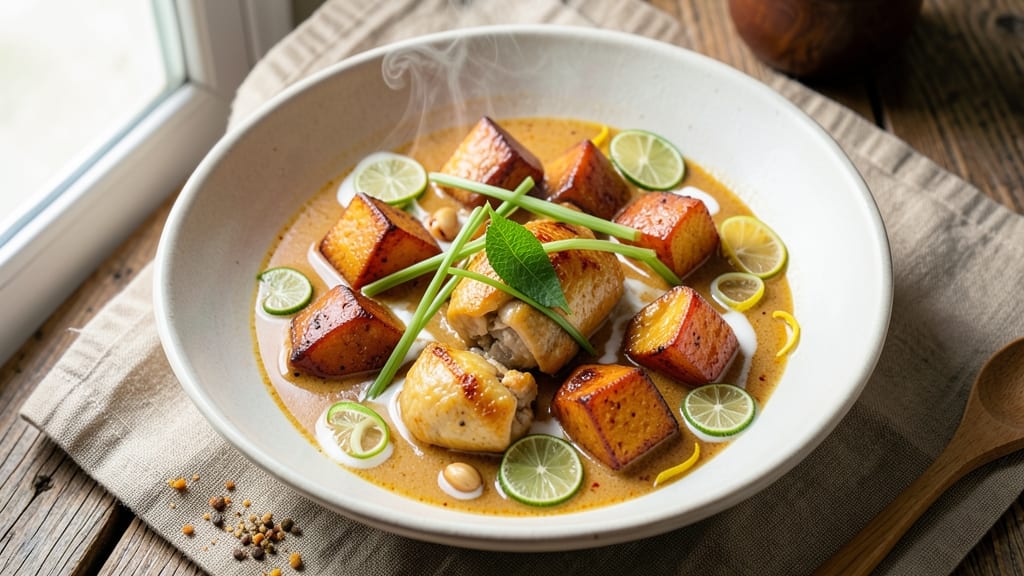
This Thai chicken sweet potato curry recipe transforms weeknight dinners into fragrant, flavor-packed experiences with just one pot. The aromatic blend of lemongrass, galangal, and kaffir lime creates layers of complexity that balance sweet potatoes' natural caramelization and tender chicken.
I developed this recipe after years of perfecting Thai curries—each ingredient plays a crucial role in achieving that restaurant-quality harmony at home.
The beauty of this dish lies in its simplicity: chicken and sweet potatoes simmer together in a velvety coconut milk base, absorbing the rich, spiced sauce. No fancy techniques required—just a few essential aromatics, a can of coconut milk, and about 45 minutes of hands-off cooking time.
The result? A curry that's creamy yet bright, sweet yet savory, with just the right amount of heat to linger on your palate.
What makes this curry truly special is how it comes together—starting with a fragrant paste of lemongrass, galangal, and garlic that forms the backbone of the sauce. As it simmers, the sweet potatoes soften into tender, caramelized bites while the chicken stays juicy and flavorful.
The final touch? A squeeze of lime and fresh cilantro that adds brightness and freshness to every spoonful.
Serve this curry over jasmine rice or with warm naan for the full experience. The one-pot method means minimal cleanup, and the leftovers reheat beautifully—perfect for meal prep or feeding a crowd. Let's get cooking!
Ingredients for thai chicken sweet potato curry
Six aromatic ingredients and twelve pantry staples create this fragrant, restaurant-quality curry in one pot.
| Ingredient | Amount | Notes |
|---|---|---|
| Boneless Chicken Thighs 🍗 | 1 ½ lb | Skin-on preferred for flavor |
| Sweet Potatoes 🍠 | 2 medium | Peeled, cut into 1-inch cubes |
| Fresh Lemongrass 🌿 | 3 stems | Bruised and cut into 2-inch pieces |
| Galangal 🍃 | 1 piece | Peeled, sliced thinly (substitute ginger) |
| Kaffir Lime Leaves 🍋 | 4 leaves | Bruised and torn |
| Garlic Cloves 🧄 | 6 cloves | Peeled, lightly crushed |
| Shallots 🧅 | 3 whole | Peeled, thinly sliced |
| Full-Fat Coconut Milk 🥥 | 1 can (13.5 oz) | High-quality brand preferred |
| Red Curry Paste 🌶️ | 2 tbsp | Maesri brand recommended |
| Fish Sauce 🐟 | 1 tbsp | Red Boat brand preferred |
| Coconut Sugar 🍯 | 2 tbsp | Or substitute brown sugar |
| Fresh Cilantro 🌿 | ¼ cup | Chopped for garnish |
| Lime Juice 🍋 | 2 tbsp | Freshly squeezed |
| Vegetable Oil 🫒 | 2 tbsp | For sautéing aromatics |
| Salt 🧂 | 1 tsp | Diamond Crystal preferred |
The aromatic trio—lemongrass, galangal, and kaffir lime leaves—forms the curry's soul. Thai markets or specialty grocery stores carry these best, but don't substitute ginger for galangal (it's different!). Bruise the lemongrass and galangal with the side of your knife to release oils. If you can't find kaffir lime leaves, lime zest plus extra lime juice works in a pinch. For the coconut milk, full-fat is non-negotiable—it creates that velvety texture. Maesri or Thai Kitchen brands are my go-to for curry paste, but any quality red curry paste will work. The fish sauce adds depth, so Red Boat or Three Crabs brands ensure optimal quality.
No galangal? Ginger at half the amount keeps the dish on track. Running low on kaffir lime leaves? Lime zest plus extra lime juice mimics the citrusy aroma. For coconut milk, light coconut milk works but loses richness. The shallots can be swapped for regular onions, though shallots add a delicate sweetness. If coconut sugar isn't available, brown sugar maintains the caramel notes. The chicken thighs should be skin-on for extra flavor, but boneless, skinless works if that's what you have. For extra heat, add 1/2 tsp of chili flakes—just adjust to taste.
This curry reheats beautifully—tastes even better the next day as flavors meld. Store in an airtight container in the fridge for up to 5 days or freeze for 3 months. The aromatics (lemongrass, galangal, lime leaves) can be prepped ahead and refrigerated for 3 days. For meal prep, portion into containers with rice so lunches are ready to grab. The sauce thickens as it cools, so add a splash of water or coconut milk when reheating if needed.
Why You'll Love This Recipe
- One-Pot Magic: I swear by this recipe when I’m too tired to wash a million dishes. The chicken thighs and sweet potatoes simmer together—no extra pans, no fuss—just that rich, aromatic broth clinging to everything.
- Lemongrass Kiss: Between us, fresh lemongrass is my secret weapon. It brightens the whole dish without overpowering, and when you crush those stalks right into the oil? Instantly, the kitchen smells like a Thai street stall.
- Leftovers That Win: This curry actually improves the next day. The flavors meld deeper, the sweet potatoes get even tender, and I’ve reheated it cold straight from the fridge—still delicious. (Yes, even on a Tuesday night.)
- Budget-Friendly Feast: Chicken thighs and sweet potatoes stretch this into four servings without breaking the bank. Galangal and lime leaves might sound fancy, but they’re cheap staples that make everything taste like a splurge.
Step-by-step instructions for Thai chicken sweet potato curry
This aromatic curry comes together in a single pot with layers of Thai-inspired flavors.
Prepare the Aromatics and Chicken
In a large, heavy-bottomed pot, heat the 2 tablespoons vegetable oil over medium heat until shimmering but not smoking. Add the 3 whole shallots and 6 cloves garlic, cooking for 2-3 minutes until the shallots turn translucent and the garlic releases its fragrance.
Next, add the 1 piece galangal and 3 stems lemongrass, stirring for 1 minute until the galangal softens slightly. This step builds the aromatic foundation—don't rush it. Then, add the 1.5 lb boneless chicken thighs, seasoning immediately with the 1 teaspoon salt. Cook for 4-5 minutes on each side until the chicken develops a light golden crust but remains tender.
Build the Curry Base
Push the chicken to one side of the pot and add the 2 tablespoons red curry paste, stirring continuously for 1-2 minutes until it deepens in color and releases its oils. This is where the curry's signature complexity develops—watch carefully to avoid burning.
Pour in the 1 can (13.5 oz) full-fat coconut milk and scrape up any browned bits from the bottom of the pot. Add the 2 medium sweet potatoes (pre-cut into 1-inch cubes) and 4 leaves kaffir lime leaves, stirring gently to combine. Bring the mixture to a gentle simmer over medium-low heat, then reduce to low heat to maintain a slow, steady bubble.
Simmer Until Tender
Return the chicken to the center of the pot and add the 1 tablespoon fish sauce and 2 tablespoons coconut sugar. Partially cover the pot and let the curry simmer gently for 25-30 minutes, stirring occasionally, until the chicken is cooked through and the sweet potatoes are fork-tender with slight resistance.
Here's the key: the curry should reduce slightly, coating the ingredients in a rich, velvety sauce. If it thickens too much before the chicken is done, add 2-3 tablespoons water to maintain balance. The sweet potatoes should be soft enough to pierce easily with a fork but still hold their shape.
Finish with Bright Flavors
Once the chicken reaches an internal temperature of 165°F and the sweet potatoes are tender, remove the pot from heat. Stir in the 2 tablespoons lime juice and 0.25 cup fresh cilantro, allowing the lime to brighten the curry's depth and the cilantro to add a fresh finish. Taste and adjust seasoning—you may need a touch more fish sauce for saltiness or lime for acidity.
Let the curry rest for 5 minutes before serving, allowing the flavors to meld completely. The final dish should balance creamy coconut, spicy heat, sweet potatoes' natural sweetness, and the umami depth of the chicken. Garnish each serving with additional cilantro if desired, and serve with steamed jasmine rice to soak up every last drop of sauce.
Pro Tips For Making Thai Chicken Sweet Potato Curry
- BLANCH THE SWEET POTATOES FIRST: Toss peeled sweet potatoes into boiling water for 3 minutes before adding to the curry—this softens them faster and keeps them from turning to mush later. I learned this the hard way when my curry ended up with a watery, overcooked potato sludge.
- SLICE GALANGAL THINLY: Galangal should be sliced no thicker than 1/8-inch—any thicker and it’ll stay tough and undercooked. Use a sharp knife and angle it like you’re shaving; the more surface area, the better the flavor.
- DON’T OVERCOOK THE CHICKEN: Chicken thighs are forgiving, but pull them out when they hit 165°F (74°C) at the thickest part—any longer and they’ll dry out. I used to wait until the sauce reduced completely, and the meat would turn rubbery.
- USE THE LIME LEAF JUICE: Tear the kaffir lime leaves and crush them slightly to release their citrusy oils—don’t just toss them in whole. The juice makes a real difference in brightening the curry, especially if your galangal or lemongrass is on the milder side.
Wine and beer pairings for this recipe
Thai White Wine
For this curry's creamy coconut richness and subtle spice, I reach for a Thai-inspired white wine like Meiomi Pinot Grigio—its crisp acidity and citrus notes cut through the coconut fat while complementing the lemongrass and lime.
The slight mineral finish balances the dish's sweetness, making each bite feel fresh. If you prefer something more floral, Sauvignon Blanc (like Kim Crawford) adds herbal brightness that mirrors the curry's aromatic base. 🍷
Light Thai Red
A Thai red blend like Thai Winery Cabernet Sauvignon (from Thailand's vineyards) stands up to the curry's heat and umami depth. Its dark fruit and spice notes harmonize with the red curry paste and fish sauce, while its moderate tannins won't overpower the dish.
For a more accessible option, Pinot Noir (like La Crema) offers a lighter body that lets the curry's flavors shine through.
Craft Beer Pairings
For beer lovers, a Thai-inspired lager like Singha (a crisp, clean Thai beer) mirrors the curry's brightness with its subtle citrus and hop notes. If you prefer something more robust, a wheat beer (like Blue Moon) adds a touch of sweetness that complements the coconut and sweet potatoes.
Avoid heavy IPAs—they'll clash with the dish's delicate balance.
Non-Alcoholic Options
For a refreshing non-alcoholic match, try Thai iced tea (sweetened with coconut sugar) or sparkling limeade—both highlight the curry's citrusy, herbal notes. I also love hibiscus iced tea (like Tazo's version) for its tartness that cuts through the richness.
Serve chilled for the perfect contrast to the warm curry. 💛
Nutrition facts
Frequently asked questions
Can I substitute regular potatoes for sweet potatoes?
While regular potatoes work in a pinch, sweet potatoes add natural sweetness and a creamier texture that pairs beautifully with the coconut sauce. For a close substitute, use Yukon Gold potatoes—they hold their shape better than russets and have a slightly sweet flavor. If you do use regular potatoes, reduce the coconut sugar to 1 tablespoon to balance the sweetness.
How do I make this curry less spicy?
Adjust the heat by reducing the red curry paste to 1 tablespoon instead of 2 tablespoons, or use a mild curry paste if available. For an extra-mild version, add 1 teaspoon of honey or coconut sugar during the simmering time—this helps balance the spice with natural sweetness. Always taste as you go and adjust gradually.
Can I make this curry in an Instant Pot?
Sauté the aromatics (shallots, garlic, galangal, lemongrass) in 1 tablespoon oil on sauté mode. Add the chicken and cook 3 minutes on high pressure. Then, add all remaining ingredients and pressure cook for 8 minutes on high. Let the pressure release naturally for 10 minutes before serving. The Instant Pot version cooks faster but may need a splash of coconut milk if the sauce thickens too much.
What's the best way to store leftovers?
Store leftovers in an airtight container in the refrigerator for up to 5 days. The flavors actually improve overnight as the ingredients meld! For reheating, warm gently on the stove over low heat and add a splash of water or coconut milk if the sauce thickens. You can also freeze portions for up to 3 months—just thaw in the fridge before reheating.
Why does my curry taste bland?
Most likely, you need more fish sauce or lime juice. Start with an extra 1/2 teaspoon of fish sauce and 1 tablespoon of lime juice, then taste again. The fish sauce adds umami depth, while the lime brightens the flavors. If you used light coconut milk, try adding 1/2 teaspoon of coconut extract for richness. Always taste as you go!