
Side Dishes
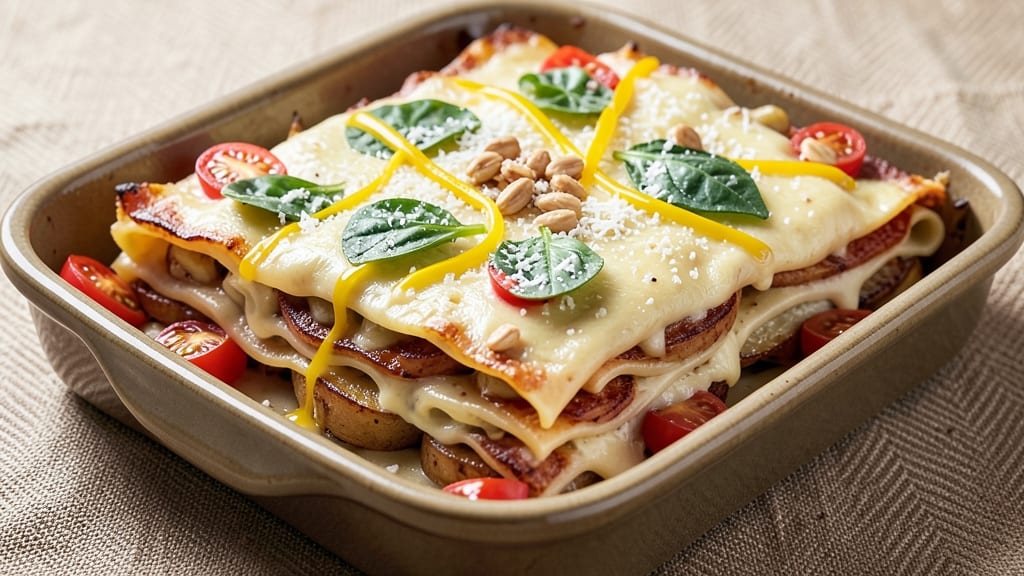
This vegan potato lasagna recipe delivers all the comforting layers of classic lasagna—without a single drop of dairy or egg. 💛 The secret lies in creamy cashew ricotta and nutritional yeast that mimic the richness of traditional cheese, while flaxseed binds the layers together perfectly.
I've perfected this version over years of testing, ensuring every forkful delivers that satisfying melt-in-your-mouth texture and hearty potato flavor.
What makes this recipe work is the careful balance of ingredients: tender potato slices, flaky lasagna noodles, and a savory tomato-herb sauce that ties everything together. The cashew ricotta adds a velvety, slightly tangy layer that replaces cheese without compromising on flavor or texture.
Unlike many vegan dishes that can feel like compromises, this lasagna tastes like the real deal—just with plant-based ingredients.
By the time it emerges from the oven, you'll have golden-brown layers with crispy edges and a rich, creamy middle. The potatoes stay tender yet hold their shape, while the noodles absorb the flavorful sauce perfectly.
It's the kind of dish that transforms a simple weeknight dinner into a restaurant-worthy meal, all while being completely plant-based.
This recipe serves 6-8 and can be prepped ahead, making it perfect for meal prep or feeding a crowd. The instructions walk you through layering techniques that ensure even cooking and maximum flavor in every bite. Ready to create a vegan lasagna that even cheese lovers will request?
Ingredients for vegan potato lasagna
Eight hearty ingredients transform into restaurant-quality lasagna without dairy or eggs.
| Ingredient | Amount | Notes |
|---|---|---|
| Russet Potatoes 🥔 | 4 large | Thinly sliced, parboiled 5 mins |
| Uncooked Lasagna Noodles 🍝 | 12 sheets | No-boil or pre-cooked |
| Raw Cashews 🥜 | 1 ½ cups | Soaked 4+ hours for ricotta |
| Nutritional Yeast 🧀 | ½ cup | For cheesy flavor |
| Garlic Cloves 🧄 | 6 cloves | Minced for ricotta |
| Lemon Juice 🍋 | 2 tbsp | Freshly squeezed |
| Ground Flaxseed 🌾 | 3 tbsp | Mixed with 9 tbsp water |
| Tomato Sauce 🍅 | 3 cups | San Marzano preferred |
| Fresh Basil 🌿 | ¼ cup | Chopped for sauce |
| Onion 🧅 | 1 medium | Diced for sauce |
| Extra-Virgin Olive Oil 🫒 | ⅓ cup | For sauce and ricotta |
| Salt 🧂 | 1 ½ tsp | Kosher or sea salt |
| Black Pepper 🌶️ | ½ tsp | Freshly ground |
| White Wine 🍷 | ½ cup | Dry variety preferred |
| Vegetable Broth 💧 | 1 cup | For extra moisture |
The potatoes are the foundation—Russets hold their shape best when thinly sliced. Whole Foods or Trader Joe's carry pre-sliced potatoes if you're short on time, but slicing your own ensures even cooking. For the cashews, raw and unsalted is critical—they need to soak to create that velvety ricotta texture. Nutritional yeast is non-negotiable here; Bob's Red Mill brand has the best cheesy flavor. The flaxseed mixture acts as our egg substitute, so make sure to measure the water precisely—9 tbsp for 3 tbsp flaxseed is the magic ratio.
No San Marzano tomatoes? Crushed tomatoes with basil work in a pinch, but you'll miss that sweet depth. Fresh basil is ideal, but dried works at half the amount. Running low on white wine? Vegetable broth with a splash of vinegar mimics the acidity. The lasagna noodles should be no-boil or pre-cooked—they'll soften perfectly in the oven. For extra richness, add 1 tbsp vegan butter to the ricotta mixture, but it's optional. The vegetable broth can be swapped for more tomato sauce if you prefer a lighter texture.
Prep ahead saves time—assemble the lasagna up to 24 hours before baking, then refrigerate. The ricotta mixture keeps for 3 days in the fridge, so make extra for other dishes. Store leftovers in airtight containers for 4-5 days or freeze for 3 months. Reheat gently in the oven to prevent soggy layers. For meal prep, portion into individual containers—each serving has 3-4 lasagna layers, perfect for lunches.
Why You'll Love This Recipe
- No Boil Required: I swear by the raw lasagna noodles here—just layer, bake, and boom, no pre-boiling fuss. The potatoes soften perfectly while the noodles hold shape, and honestly? It’s the kind of dish that makes me feel like a lazy genius.
- Umami Bomb: That nutritional yeast? Absolute magic. It turns the cashew cheese into something rich and cheesy without a drop of dairy, while the garlic cloves roast into deep, savory layers. My husband still asks, "What’s in this?" every time.
- Leftovers for Days: This lasagna reheats like a dream—crispy edges, creamy middle, no drying out. I make a double batch on Sundays because it’s my go-to for lunches, potlucks, or when friends drop by unannounced. (Yes, even on a Tuesday night.)
- Budget-Friendly Feast: Russets are cheap, cashews stretch far, and you’re using pantry staples. I feed four people for under $10, and the leftovers? Even better the next day. My wallet and my freezer both thank me.
Step-by-step instructions for vegan potato lasagna
Build layers of creamy, flavorful potato lasagna without dairy or meat—just plant-based richness.
👨🍳 Step 1: Prepare the Vegan Ricotta Substitute
Drain and rinse the 1.5 cups raw cashews after soaking. In a high-speed blender, combine them with 0.5 cup nutritional yeast, 6 cloves minced garlic, 2 tbsp lemon juice, 3 tbsp ground flaxseed mixed with 9 tbsp water, 0.33 cup extra-virgin olive oil, 1.5 tsp salt, and 0.5 tsp black pepper. Blend until completely smooth and creamy, scraping down the sides as needed.
This blend should resemble traditional ricotta in texture—thick, spreadable, and slightly tangy. Taste and adjust seasoning if needed. Set aside while you prepare the remaining components. The flaxseed mixture acts as an egg substitute, binding everything together perfectly.
🍳 Step 2: Cook the Potato Layer
Peel and thinly slice the 4 large Russet Potatoes into ⅛-inch thick rounds. Boil them in salted water for 5 minutes until just tender but still holding their shape. Drain immediately and spread them on a baking sheet to cool slightly.
While the potatoes cool, sauté 1 medium diced onion in 0.17 cup extra-virgin olive oil (reserve remaining oil) over medium heat for 5 minutes until soft and translucent. Stir in 3 cups tomato sauce, 0.5 cup white wine, 1 cup vegetable broth, and 0.25 cup chopped fresh basil. Simmer for 10 minutes until slightly thickened. Season with additional salt and pepper if needed.
🥘 Step 3: Assemble the Lasagna Layers
Preheat your oven to 375°F. In a 9x13-inch baking dish, spread a thin layer of the tomato sauce on the bottom. Add 4 sheets uncooked lasagna noodles, slightly overlapping them if needed. Spread half of the cashew ricotta mixture evenly over the noodles, followed by half of the parboiled potatoes.
Repeat with another layer of noodles, remaining ricotta, and remaining potatoes. Top with the final layer of noodles, spreading the remaining tomato sauce evenly over the top. Drizzle with the remaining 0.16 cup extra-virgin olive oil to create a golden crust.
🔥 Step 4: Bake Until Golden and Bubbly
Cover the baking dish tightly with aluminum foil and bake for 30 minutes. Remove the foil and bake for another 15-20 minutes until the top is golden brown and the edges are bubbling. The lasagna should be set but still slightly jiggly in the center.
This baking time ensures the noodles cook perfectly while maintaining the creamy texture of the ricotta layer. If the top browns too quickly, tent loosely with foil during the final minutes. Let the lasagna rest for 10 minutes before slicing—this allows the layers to set and makes serving easier.
🍽️ Step 5: Serve with Fresh Herbs
Garnish with additional chopped fresh basil and a sprinkle of nutritional yeast for extra cheesy flavor. Cut into squares and serve immediately, allowing the layers to cool slightly before taking the first bite.
The first layer should be rich and creamy from the cashew ricotta, followed by tender potatoes and hearty tomato sauce. Each bite delivers the perfect balance of textures and flavors, proving plant-based lasagna can be just as satisfying as traditional versions.
Pro Tips For Making Vegan Potato Lasagna
- SOAK NOODLES LONG ENOUGH: I learned this the hard way—skipping the full 15-minute soak in warm water makes the lasagna noodles gummy, no matter how long you bake it. Trust me, even if you’re impatient, let them sit covered until they’re fully tender.
- GRATE POTATOES COLD: Freshly grated potatoes release water like crazy, so pat them dry with a towel before mixing them into your ricotta substitute. I used to skip this, and my layers always ended up soggy—now they hold their shape perfectly.
- TOAST CASHEWS FIRST: Raw cashews blend into a smooth, creamy base, but toasting them lightly in a dry pan for 3-4 minutes adds depth of flavor that plain blending misses. It’s a small step that makes the whole dish taste richer without extra effort.
- BAKE AT 375°F, NOT HOTTER: I was skeptical until I tried it—baking at 375°F (not 400°F or higher) lets the layers cook evenly without burning the top while keeping the potatoes creamy. Higher heat turns the cashew layer rubbery, and nobody wants that.
Troubleshooting your vegan potato lasagna
Soggy Noodles Fix
If your lasagna noodles turn out mushy, it’s usually from overcooking or insufficient sauce. Always use no-boil or pre-cooked noodles to prevent this. Spread a thin layer of sauce on the bottom of your dish before adding the first noodles—this creates a moisture barrier.
I also recommend covering with foil during the first 30 minutes of baking to trap steam, then uncovering for the final 15-20 minutes to crisp the top. 🌡️
Ricotta Too Watery
The cashew ricotta might turn out too thin if the cashews weren’t soaked long enough or if you over-blended. For the perfect texture, soak raw cashews for at least 4 hours (overnight is ideal).
Use a high-speed blender and pulse until completely smooth, then scrape down the sides to ensure even consistency. If it’s still too thin, stir in 1 tbsp ground flaxseed mixed with 3 tbsp water to thicken it naturally.
Potatoes Overcooked
Overcooked potatoes will collapse into a mushy layer, ruining the lasagna’s structure. Parboil for exactly 5 minutes—no longer! Drain immediately and spread them on a baking sheet to cool.
If they’re still too soft, try thinner slices (⅛-inch) next time. For extra stability, sprinkle a pinch of salt on the potatoes while they cool to firm them up slightly.
Uneven Baking
Lasagna often bakes unevenly if the dish isn’t level or if the oven isn’t calibrated. Place your 9x13-inch baking dish on a baking sheet to catch any drips, and preheat the oven to 375°F for at least 15 minutes before baking.
If the edges cook faster, rotate the dish halfway through baking. A lasagna pan (if you have one) helps distribute heat more evenly than a glass dish.
Flavor Too Mild
If your lasagna lacks depth, it’s likely due to underseasoned sauce or ricotta. Boost flavor by adding 1 tsp red pepper flakes to the tomato sauce or 1 tbsp miso paste for umami richness.
For the ricotta, roast the garlic before mincing it—this adds a deeper, sweeter flavor. A final sprinkle of nutritional yeast and fresh basil before serving can also elevate the taste significantly. 💫
Layers Not Holding
If your lasagna falls apart when slicing, the layers weren’t bound properly. The flaxseed mixture is key—ensure it’s fully mixed and rested for 5 minutes before using. For extra stability, brush the noodles lightly with olive oil before assembling.
Chill the lasagna for 15 minutes before baking to help the layers set, or bake it covered for the full 45 minutes to encourage cohesion.
Nutrition facts
Frequently asked questions
Can I use regular lasagna noodles instead of no-boil?
Yes, but you'll need to cook them first! Boil regular lasagna noodles for 2 minutes less than package instructions, then drain and rinse with cold water. This prevents them from becoming mushy during baking. The key is to use slightly undercooked noodles—they'll finish cooking in the oven while absorbing the sauce perfectly.
How can I make this vegan potato lasagna gluten-free?
Swap the lasagna noodles for gluten-free pasta sheets (like brown rice or chickpea-based) and ensure your tomato sauce contains no wheat additives. For the ricotta, use certified gluten-free nutritional yeast and check that your cashews are processed in a gluten-free facility. The rest of the recipe remains the same!
Why does my cashew ricotta turn out grainy?
Graininess usually means the cashews weren't blended long enough or weren't soaked properly. Soak them for at least 4 hours (overnight is best) and use a high-speed blender. For extra smoothness, add 2-3 tbsp warm water while blending and scrape down the sides frequently. The ricotta should be completely smooth with no visible texture.
Can I make this lasagna ahead of time?
Assemble the lasagna up to 24 hours ahead and refrigerate uncovered. When ready to bake, add 10-15 minutes to your baking time (cover with foil for the first 40 minutes instead of 30). For freezing, bake completely, cool, wrap tightly in foil, and freeze for up to 3 months. Reheat in a 350°F oven for 20-25 minutes covered with foil.
What's the best way to reheat leftovers?
To prevent soggy layers, reheat in a 350°F oven covered with foil for 15-20 minutes until warmed through. For microwave reheating, cover with a damp paper towel and heat in 30-second intervals on medium power. The foil method preserves texture best—just add 5 minutes if it came from the freezer.