
Side Dishes
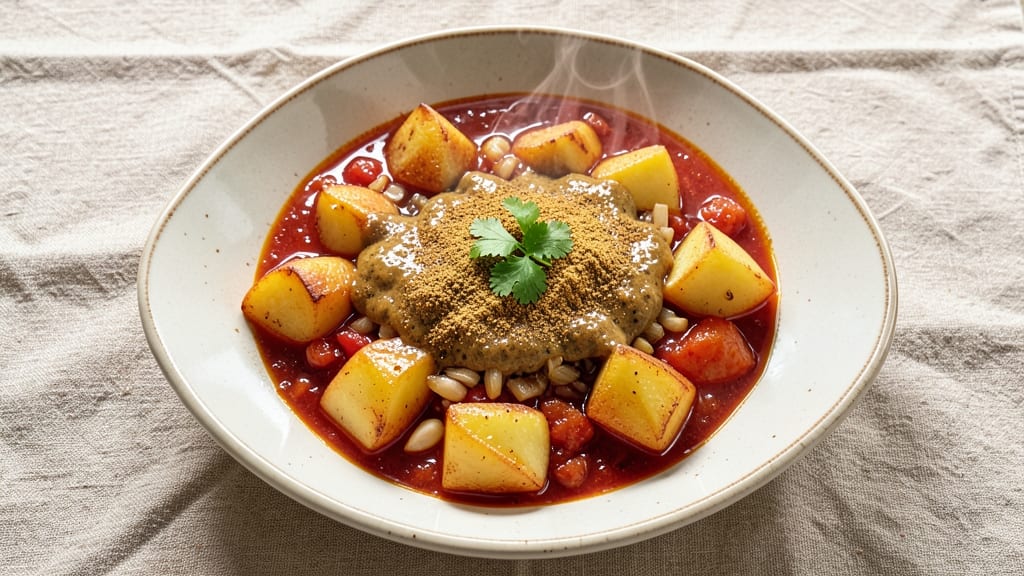
This aloo potato curry recipe transforms simple potatoes into a velvety, aromatic dish that's the heart of every Indian meal. 💛 The secret lies in slow-cooked spices and tomatoes that develop deep, caramelized flavors, creating a gravy so rich it clings to every bite.
I've perfected this technique over years of testing, balancing sweetness, tang, and just the right amount of spice.
What sets this recipe apart is the tempering process—blooming whole spices in hot oil to release their maximum aroma before adding them to the curry. This method creates layers of flavor that you won't find in instant mixes.
The potatoes emerge tender yet firm, swimming in a sauce that's neither too thin nor too thick, with just the right consistency to coat each spoonful perfectly.
By the time you serve this curry, your kitchen will smell like a bustling Indian restaurant, and every bite will deliver that perfect balance of creamy potatoes, aromatic spices, and tangy tomatoes.
The dish pairs beautifully with warm naan or basmati rice, making it a complete meal that's both comforting and impressive.
Ready in about 45 minutes with minimal prep, this recipe is perfect for weeknight dinners or special occasions. The best part? You can adjust the spice level to suit your taste while keeping all the authentic flavors intact. Let's get cooking!
Ingredients for aloo potato curry
Simple potatoes meet aromatic spices—this curry's soul lies in slow-simmered tomatoes and tempered whole spices.
| Ingredient | Amount | Notes |
|---|---|---|
| Russet Potatoes 🥔 | 2 lbs | Cut into 1-inch cubes |
| Canned Crushed Tomatoes 🍅 | 1 can | San Marzano preferred |
| Onions 🧅 | 1 whole | Yellow, finely chopped |
| Fresh Ginger 🌿 | 2 tbsp | Grated, freshly peeled |
| Garlic Cloves 🧄 | 6 cloves | Minced, fresh preferred |
| Garam Masala Powder 🌶️ | 1 tbsp | Ground whole spices |
| Ground Cumin 🌿 | 1 tsp | Toasted for depth |
| Ground Coriander 🌶️ | 1 tsp | Freshly ground preferred |
| Turmeric Powder 🌿 | ½ tsp | Fresh root preferred |
| Red Chili Powder 🌶️ | ½ tsp | Adjust for heat |
| Vegetable Oil 🫒 | ½ cup | For tempering |
| Bay Leaves 🍃 | 2 whole | Dried, crushed slightly |
| Fresh Cilantro 🌿 | ¼ cup | Chopped, for garnish |
| Sea Salt 🧂 | 1 ½ tsp | Diamond Crystal preferred |
| Heavy Cream 🥛 | ¼ cup | For richness (optional) |
The potatoes are the star, so Russets or Yukon Golds work best—they hold up to simmering without turning mushy. Indian grocery stores often carry them pre-washed, but regular supermarkets have them too. Look for firm, unblemished tubers. For the tomatoes, San Marzano cans are worth the splurge—they're sweeter and less acidic, which keeps the curry from tasting bitter. The ginger and garlic? Fresh is non-negotiable here—dried spices just can't match the brightness. I grab mine from Whole Foods or my local Indian market, where they're always freshly ground.
No garam masala? Mix 1/4 tsp each of cardamom, cinnamon, cloves, and black pepper—it's the closest you'll get. Running out of bay leaves? Dried thyme at half the amount works in a pinch, though it won't taste exactly the same. The heavy cream is optional but adds that restaurant-quality richness—full-fat coconut milk is a great vegan swap if you need it. For the chili powder, Kashmiri red chili from an Indian store gives a sweeter, deeper flavor than regular cayenne. And if you're short on time, pre-chopped onions from the salad bar section save you 5 minutes of prep.
This curry tastes even better the next day as flavors meld—store leftovers in airtight containers for up to 5 days. Freezes beautifully for 3 months too, though the texture gets slightly softer after thawing. I always make a double batch and portion it into containers for the week. The garnish of fresh cilantro? Add it right before serving—it wilts fast in hot curry. And if you're serving with naan, warm it in the oven for 5 minutes to keep it soft.
Why You'll Love This Recipe
- One-Pot Magic: I swear by this recipe when I’m too tired to wash a million bowls—just chop, sauté, simmer. The potatoes soften right in the same pot where the onions caramelize, and honestly? That’s my kind of cooking.
- Garlic-Ginger Bomb: Between us, the fresh ginger and minced garlic cloves turn this into something ridiculously flavorful. The slow simmer lets those aromatics meld into the tomatoes, creating a depth that makes store-bought curry pastes look sad.
- Lunchbox Hero: This curry reheats like a dream—pack it in containers for work or school lunches, and it’ll still taste fresh hours later. (Yes, even on a Tuesday night when you forgot to prep.)
- Budget Stretch: Russet potatoes and canned tomatoes? That’s my wallet’s best friend. A single batch feeds four, and leftovers taste just as good the next day—no sad, dry curry here.
Step-by-step instructions for aloo potato curry
This spiced tomato gravy transforms humble potatoes into a velvety, aromatic masterpiece.
🍳 Step 1: Temper the Spices in Oil
Heat the 0.5 cup vegetable oil in a heavy-bottomed pot over medium heat. Add the 2 whole bay leaves and let them sizzle for 30 seconds until fragrant. This is where the magic begins—those crushed bay leaves will infuse the oil with deep, earthy notes.
Next, add the 1 whole onion (finely chopped) and cook for 5-6 minutes until golden brown, stirring occasionally. This caramelization builds sweetness that balances the spices. Then add the 2 tbsp fresh ginger and 6 cloves garlic cloves (minced), cooking for another 2 minutes until the raw aroma disappears and you smell that beautiful garlic-ginger punch.
🍳 Step 2: Build the Spice Foundation
Lower the heat to medium-low and add the 1 tsp ground cumin, 1 tsp ground coriander, 0.5 tsp turmeric powder, and 0.5 tsp red chili powder. Stir constantly for 1 minute—this prevents burning and lets the spices bloom fully. You'll see the oil turn vibrant red and smell that toasty, aromatic warmth.
Now add the 1 can canned crushed tomatoes and 1.5 tsp sea salt. Stir well and let the mixture simmer for 8-10 minutes until it thickens slightly. This step develops the rich, tangy tomato base that will cradle those tender potatoes. The sauce should coat the back of a spoon but still be pourable.
🥘 Step 3: Cook the Potatoes to Perfection
Add the 2 lbs russet potatoes (cut into 1-inch cubes) to the pot. Gently stir to coat each piece with the spiced tomato sauce. Increase heat to medium-high and bring to a gentle boil. Then reduce to medium-low and let it simmer uncovered for 20-25 minutes, stirring occasionally.
You'll know the potatoes are done when they're fork-tender—pierce one with a fork and it should slide in easily with just slight resistance. The sauce should have thickened into a glossy, velvety consistency that clings beautifully to the potatoes. If it's too thick, add 2-3 tablespoons of water to loosen it.
🍳 Step 4: Finish with Cream and Fresh Herbs
Stir in the 0.25 cup heavy cream (if using) and the 1 tbsp garam masala powder. Simmer for 2-3 minutes—this adds that final aromatic depth and creamy richness that makes this curry sing. The garam masala should dissolve completely, leaving you with a fragrant, well-rounded flavor.
Remove from heat and let it sit for 5 minutes to allow the flavors to meld. Then stir in the 0.25 cup fresh cilantro, reserving a few sprigs for garnish. Taste and adjust seasoning—you might need a pinch more salt or a dash of chili powder to perfect the balance.
Pro Tips For Making Aloo Potato Curry
- CUT POTATOES EVENLY: Russet potatoes break when boiled—save yourself from mushy curry by slicing them into 1-inch chunks (not too small, or they’ll turn to paste) and soaking them in cold water for 10 minutes first. I learned this the hard way after ending up with a watery, gluey mess.
- SAUTÉ ONIONS UNTIL GOLDEN: Don’t rush the onion step—cook them on medium heat until they’re deep golden, not browned. That’s when their sweetness peaks and the base flavor actually matters. (Yes, even if you’re impatient like me.)
- ADD TOMATOES LATE: Dumping crushed tomatoes too early flattens the flavor. Wait until the onions are soft and fragrant, then stir them in for just 5 minutes before adding potatoes. This keeps the sauce vibrant and prevents a dull, watery finish.
- MASH HALF THE POTATOES: For texture that’s creamy but not soupy, boil the potatoes until just tender, then drain and mash half of them into the curry while leaving the other half whole. The contrast makes every bite better—trust me, I’ve tried both ways.
Common mistakes when making great aloo potato curry
Skipping the Tempering
This is the biggest flavor killer I see in home cooks. Tempering—blooming whole spices in hot oil—releases their essential oils and creates layers of aroma that you just can't get by adding spices directly to the pot. When you skip this step, your curry will taste flat and one-dimensional.
The bay leaves alone add a deep, earthy complexity that's essential. I always set aside 5 minutes for this step—it's worth every second for that restaurant-quality depth. 🌿
Using Pre-Cut Potatoes
Pre-cut potatoes often release too much starch into the water, which can make your curry gluey instead of creamy. When potatoes break down prematurely, they turn mushy and ruin the texture. Always cut your Russet potatoes right before adding them to the pot.
For 1-inch cubes, use a sharp knife and work quickly to minimize oxidation. If you're short on time, at least pat them dry with a paper towel to remove excess moisture. 🥔
Overcrowding the Pot
Packing too many potatoes into the pot at once causes them to steam instead of simmer gently in the sauce. This leads to uneven cooking and a watery consistency. For 2 lbs of potatoes, use a pot that's at least 3-quart capacity.
If your pot is too small, cook the potatoes in batches or use a larger vessel. The sauce needs room to develop its velvety texture around each potato. 🥘
Ignoring the Simmer Time
Rushing the simmering process results in potatoes that are only partially cooked on the outside but still hard in the center. The 20-25 minutes simmer time is crucial for even doneness. Check doneness by piercing a potato with a fork—it should slide in easily with just slight resistance.
If you're impatient, cover the pot with a lid to speed up cooking slightly, but don't skip this step entirely. 🕒
Adding Cream Too Early
Introducing the heavy cream before the potatoes are fully cooked causes the cream to curdle from the heat. Always add it in the final 2-3 minutes of cooking when the potatoes are nearly done.
This ensures the cream blends smoothly for that luxurious finish. If you're worried about curdling, stir constantly and keep the heat at low-medium. 🥛
Underseasoning the Final Dish
Many home cooks hold back on salt and spices until the end, but by then it's too late to adjust properly. Taste your curry before adding the final garnish of cilantro. You can always add more salt or chili powder, but you can't remove excess salt.
I recommend tasting halfway through cooking and again at the end. The garam masala should be added last to preserve its aromatic oils. 🧂
Nutrition facts
Frequently asked questions about aloo potato curry
Can I make this curry without cream for a lighter version?
Skip the heavy cream and replace it with 2 tablespoons of coconut milk or an extra 1/2 cup water to maintain the creamy texture. For extra richness without dairy, add 1 tablespoon of cashew butter at the end and stir well. The dish will still taste delicious while being lighter.
How do I adjust the spice level for kids or sensitive eaters?
Reduce the red chili powder to just 1/4 teaspoon and omit the fresh ginger if you want to minimize heat. For a milder garam masala, use 1/2 teaspoon instead of the full tablespoon. Always taste as you go—you can add more spices later, but you can't remove them.
What's the best way to store leftovers?
Let the curry cool completely, then transfer to an airtight container. It keeps well in the fridge for 4-5 days and freezes beautifully for up to 3 months. Reheat gently on low heat with a splash of water to restore the creamy texture. The flavors actually improve after a day or two!
Can I use frozen potatoes instead of fresh?
Frozen potatoes work in a pinch, but they'll release more moisture and may make the curry watery. If using frozen, thaw and pat them very dry first. For best results, stick with fresh potatoes—they hold their shape and absorb the flavors better.
What are the best sides to serve with this curry?
This rich curry pairs perfectly with warm basmati rice, garlic naan>, or roti>. For a complete meal, add a simple cucumber raita or a fresh salad. The contrast of cool yogurt or crisp greens balances the spiced potatoes beautifully.