
Side Dishes
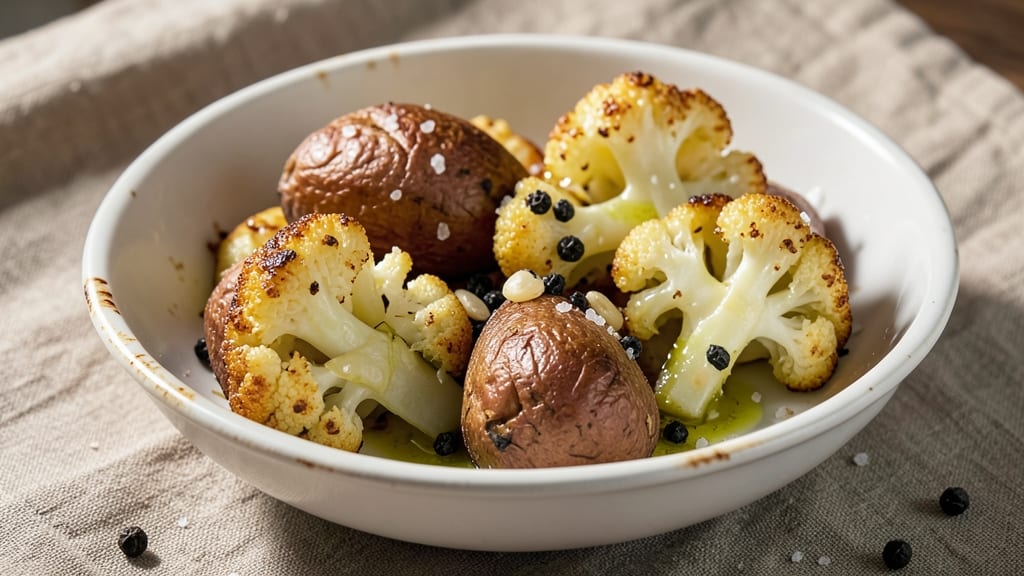
This baked cauliflower and potato recipe transforms simple vegetables into a creamy, caramelized side dish that steals the show. The key lies in cutting the vegetables evenly and roasting them at 375°F until the edges turn golden and crispy while the centers stay tender.
I developed this recipe after realizing how much better homemade roasted potatoes and cauliflower taste compared to store-bought versions—it’s a game-changer for weeknight dinners.
The beauty of this dish is its versatility—it works as a standalone vegetarian meal or pairs perfectly with grilled meats, fish, or even as a hearty vegan option when you skip the cheese.
A simple seasoning of olive oil, garlic, salt, and pepper enhances the natural flavors, while optional herbs like rosemary or thyme add an aromatic depth that makes every bite irresistible.
What you’ll end up with is a dish that’s creamy in texture, thanks to the potatoes’ natural starch, and crispy at the edges, creating a satisfying contrast.
The aromas filling your kitchen as it bakes will have everyone anticipating dinner, and the plating is effortless—just arrange the roasted vegetables on a platter and garnish with fresh herbs for a restaurant-worthy presentation.
Whether you’re serving this as a side for a holiday meal or a simple weeknight dinner, this recipe delivers restaurant-quality results with minimal effort. The best part? It’s customizable—add roasted chickpeas for extra protein or a sprinkle of parmesan for a cheesy twist. Let’s get started!
Ingredients for baked cauliflower and potato
Simple vegetables, bold flavors—this roasted combo delivers restaurant-quality crispy edges and creamy centers.
| Ingredient | Amount | Notes |
|---|---|---|
| Russet Potatoes 🥔 | 2 lb | Cut into 2-inch chunks, peeled optional |
| Cauliflower 🧅 | 1 whole | Large head, cut into florets |
| Extra-Virgin Olive Oil 🫒 | ½ cup | For even coating and crispiness |
| Garlic Cloves 🧄 | 4 cloves | Minced for aromatic depth |
| Diamond Crystal Kosher Salt 🧂 | 1 ½ tsp | Adjust to taste, don't skip |
| Freshly Ground Black Pepper 🌶️ | ½ tsp | Freshly cracked for best flavor |
| Fresh Rosemary 🌿 | ¼ cup | Chopped, stems removed |
| Fresh Thyme Leaves 🌿 | ⅛ cup | Or 1 tsp dried thyme |
| Vegetable Broth 💧 | ¼ cup | Low-sodium preferred |
| Vegetarian Parmesan Cheese 🧀 | ¼ cup | For optional cheesy finish |
| Fresh Parsley 🌿 | 0.1 cup | Chopped, for garnish |
The potatoes and cauliflower are the stars here. Russet potatoes break down beautifully, while the cauliflower florets should be cut to even size for consistent roasting. Trader Joe's and Whole Foods carry the best organic options if you want to splurge, but regular grocery store potatoes work perfectly. Look for cauliflower with tight florets and no yellowing—those are the freshest. The key to even roasting is cutting both vegetables into similar-sized chunks (about 2 inches for potatoes, slightly smaller for cauliflower).
No fresh rosemary? Dried works at one-third the amount, but the aroma is completely different. Short on thyme? Fresh oregano is a decent swap, though it has a slightly different flavor profile. The vegetable broth adds moisture without overpowering—low-sodium is crucial here. Want to make this vegan? Skip the vegetarian Parmesan or use a nutritional yeast blend instead. For extra crispiness, toss the vegetables with a little cornstarch before roasting (about 1 tbsp).
These roast best at 375°F—any hotter and the outsides burn before the centers cook. The dish reheats beautifully, though the edges lose some crispness. Store leftovers in an airtight container for 4-5 days in the fridge. For meal prep, portion into containers with a sprinkle of vegetarian Parmesan on top—it keeps the herbs fresh and adds flavor when reheated. Freezes well for 3 months if you want to make a big batch ahead of time.
Why You'll Love This Recipe
- One-Pan Magic: I swear by this recipe because it’s the ultimate lazy-day win—just toss chopped potatoes and cauliflower on a sheet pan, drizzle with olive oil, and let the oven do the work. No pots, no pans, no stress—just golden, crispy perfection waiting for you.
- Garlic Kiss: That first bite where the caramelized edges meet the tender inside, all wrapped in garlic’s warm, punchy aroma? It’s the kind of flavor that makes you pause mid-bite. The olive oil and kosher salt amplify every bite, turning simple ingredients into something seriously satisfying.
- Meal Prep MVP: Between us, this is my go-to for busy weeks. Bake a big tray on Sunday, and you’ve got lunch or dinner covered for days—whether it’s reheated for quick meals or cold in salads. (Yes, even on a Tuesday night.)
- Budget-Friendly Crunch: Russets and cauliflower are cheap, filling, and packed with flavor—no fancy ingredients needed. It’s the kind of dish that stretches a grocery budget without sacrificing taste. Plus, leftovers? They’re even better the second time around.
Step-by-step instructions for roasted cauliflower and potatoes
Here's how to transform simple vegetables into a restaurant-worthy dish with crispy edges and tender centers.
Prep and Season the Vegetables
Preheat your oven to 425°F while you prepare the vegetables. Cut the 2 lb russet potatoes into 2-inch chunks—no need to peel them, as the skin adds texture and nutrients. For the 1 whole cauliflower, remove any large leaves and cut it into even-sized florets about 2 inches across. This ensures everything cooks at the same rate.
In a large bowl, combine the potatoes and cauliflower. Drizzle over the 0.5 cup extra-virgin olive oil and toss gently to coat evenly. Add the 4 cloves minced garlic, 1.5 tsp diamond crystal kosher salt, 0.5 tsp freshly ground black pepper, 0.25 cup chopped fresh rosemary, and 0.125 cup fresh thyme leaves. Toss again until every piece is well-coated and the herbs are distributed throughout. The oil should glisten on the vegetables—this is key for that golden crunch.
Roast Until Golden and Tender
Spread the seasoned vegetables in a single layer on two large rimmed baking sheets, leaving about ½ inch of space between each piece. This allows hot air to circulate and ensures even browning. Roast for 30 minutes, then carefully flip each piece with a spatula or tongs. The goal is to develop a deep golden brown crust on all sides while keeping the insides tender.
After flipping, return the sheets to the oven and roast for another 20-25 minutes, until the edges are crispy and the potatoes yield slightly when pressed with a fork. The cauliflower should be tender enough that a knife slides in easily, but still hold its shape. If the vegetables are browning too quickly, tent the sheets with foil to prevent burning while they finish cooking.
Deglaze and Finish with Flavor
Once the vegetables are perfectly roasted, transfer them to a large bowl or platter. Pour the 0.25 cup vegetable broth into the hot baking sheets and use a wooden spoon to scrape up any browned bits from the bottom. This fond is packed with flavor—don’t waste it! Pour the broth and fond over the roasted vegetables and toss gently to combine.
Sprinkle the 0.25 cup vegetarian parmesan cheese evenly over the top and toss again until it melts slightly and coats the vegetables. The cheese adds a creamy, savory element that balances the crispy texture. Garnish with 0.1 cup chopped fresh parsley for a pop of color and freshness. Serve immediately while the vegetables are still hot and the edges are crisp.
Serve with Confidence
The result should be a dish where each bite delivers crispy, caramelized edges and creamy, tender centers. The rosemary and thyme infuse the vegetables with aromatic depth, while the parmesan adds a rich, cheesy finish. This dish pairs beautifully with grilled meats, a simple salad, or even on its own as a hearty side. Leftovers? Store in an airtight container for up to 3 days, though they won’t last that long with how delicious they are.
Pro Tips For Making Baked Cauliflower And Potato
- CUT POTATOES EVENLY: Russets are stubborn—uneven slices mean some spots overcook to glue while others stay raw. Use a mandoline (or sharp knife) for ¼-inch slices, no thicker. I learned this after pulling out a fork-tender center with a still-hard edge—annoying, but worth the extra 10 minutes.
- SALT THE CAULIFLOWER FIRST: Toss the cauliflower florets with 1½ teaspoons kosher salt before roasting—it crisps the edges and keeps them from tasting bland. Skip this, and you’ll end up with sad, limp florets that taste like nothing. (Yes, even if you’re impatient like me.)
- ROAST AT 425°F, NOT HIGHER: I used to blast this at 450°F thinking it’d speed things up, but the potatoes burned before the cauliflower got crispy. 425°F is the sweet spot—hot enough for caramelization without turning your tray into charcoal. Check at 35 minutes; adjust if your oven runs hot.
- GARLIC TOO LATE: Add minced garlic (or whole cloves, peeled) in the last 10 minutes of roasting—any earlier, and it burns to bitter oblivion. Smash whole cloves with the flat of your knife first; they’ll mellow into flavor without turning acrid. (Your future self will thank you.)
Pro cooking tips for great baked cauliflower and potato
Perfect Cutting Techniques
Cutting your potatoes and cauliflower evenly is the secret to consistent roasting. For potatoes, aim for 2-inch chunks—this size gives you crispy edges while keeping the centers tender. Use a sharp chef's knife or a mandoline slicer for precision.
For cauliflower, break it into florets about 1.5-2 inches across, removing any tough stems. I like using a serrated knife for the cauliflower stems to avoid slipping. 🔪
Pro tip: If your pieces vary in size, separate them into different bowls before roasting. Smaller pieces will cook faster, so roast them for 10-15 minutes less than the larger chunks. This ensures everything finishes perfectly at the same time.
Oven Temperature Control
Roasting at 425°F is ideal for achieving that perfect golden crust while keeping the insides creamy. However, if your oven runs hot, start at 400°F and increase the temperature by 25°F after the first 20 minutes to finish browning.
Always use an oven thermometer to verify accuracy—many home ovens can be 25°F off from the set temperature. 🌡️
For extra crispiness, place your baking sheets on the middle rack of the oven. The middle position ensures even heat distribution, preventing hot spots that can burn the edges before the centers cook. If your oven has a convection setting, use it for faster, more even browning.
Seasoning Like a Pro
Don’t just toss the vegetables with salt and pepper—layer the flavors for maximum impact. Start by rubbing the cut potatoes and cauliflower with a whole garlic clove (peeled) before adding minced garlic to the oil.
This infuses the vegetables with deep garlic flavor. Then, coat them evenly with extra-virgin olive oil—I recommend California Olive Ranch for its rich, fruity notes. 🫒
Fresh herbs make all the difference. Chop rosemary and thyme just before tossing to preserve their aromatic oils. If using dried herbs, toast them in a dry pan over low heat for 1 minute to enhance their flavor before adding to the vegetables.
A pinch of smoked paprika (about ¼ tsp) adds a subtle smokiness that pairs beautifully with the roasted flavors.
Flipping for Even Browning
Flipping the vegetables halfway through roasting is non-negotiable for even browning. Use a spatula or tongs to gently turn each piece, ensuring the undersides get the same golden crust as the tops. I like to flip them in batches to avoid overcrowding the baking sheet.
If you notice some pieces browning faster than others, move them to a different part of the sheet where the heat might be slightly cooler. 🔄
For extra crispiness, return the vegetables to the oven skin-side down after flipping. This helps develop a deeper crust on the bottoms. If you’re short on time, broil the vegetables for the last 2-3 minutes at high heat to intensify the browning—just keep an eye on them to prevent burning.
Deglazing for Maximum Flavor
The fond (browned bits) stuck to your baking sheet is flavor gold. After removing the vegetables, pour in ¼ cup vegetable broth and scrape vigorously with a wooden spoon to release all those caramelized bits.
This simple step adds a rich, savory depth to your dish that you’d miss otherwise. 💫
For an extra boost, add a splash of lemon juice (about 1 tsp) to the broth before deglazing. The acidity brightens the flavors and cuts through the richness of the roasted vegetables.
Pour this flavorful liquid back over the vegetables before adding the vegetarian parmesan for a creamy, cohesive finish.
Nutrition facts
Frequently asked questions
Can I use sweet potatoes instead of russet potatoes?
Sweet potatoes add natural sweetness and vibrant color. For best results, cut them into 1.5-inch chunks (they cook faster than russets) and reduce the roasting time by 5-10 minutes. The texture will be slightly softer but equally delicious. Just be aware they'll have a different flavor profile—more caramelized sweetness.
How do I make this dish vegan?
Skip the vegetarian parmesan and use 1 tablespoon nutritional yeast instead for a cheesy flavor. Add 1 teaspoon turmeric to the seasoning for extra richness. The dish already contains no animal products, so these simple swaps keep it fully plant-based while maintaining the creamy texture.
Why did my cauliflower turn mushy?
Overcooking is the most common cause. Cauliflower should be tender but still hold its shape when done. Start checking at 20 minutes after flipping (total 45-50 minutes roasting time). If using smaller florets, reduce time by 5-10 minutes. For extra insurance, roast at 400°F instead of 425°F—lower heat prevents overcooking.
Can I make this ahead of time?
Yes! This dish reheats beautifully. Prepare completely (including the deglazing step) and store in an airtight container for 4-5 days in the fridge. To reheat, spread on a baking sheet at 375°F for 10-15 minutes until warmed through. For the crispiest texture, broil for 2-3 minutes at the end.
What's the best way to serve this dish?
This versatile dish works as a main or side. For a hearty meal, serve with a simple green salad and crusty bread. It pairs perfectly with grilled chicken, salmon, or even as a vegetarian main with a dollop of hummus. Garnish with extra fresh parsley and a squeeze of lemon for bright contrast—presentation matters!