
Side Dishes
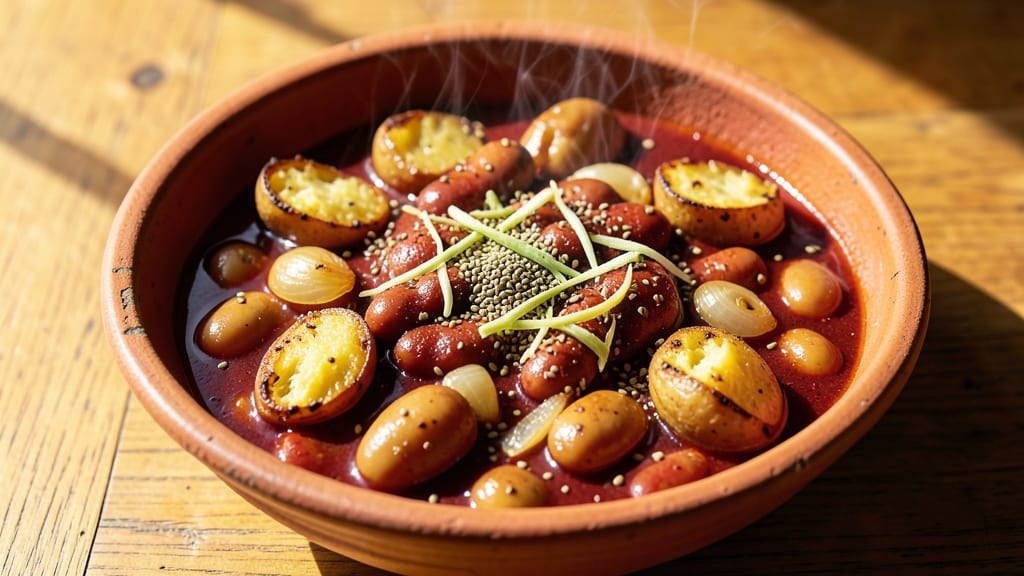
This beans potato curry Indian recipe transforms simple ingredients into a fragrant, golden-spiced one-pot wonder that captures the soul of home-style Indian cooking. The secret lies in layering spices through tempering (tadka) and letting them bloom in hot oil, creating an aromatic base that forms the heart of every bite.
I developed this recipe after years of perfecting the balance between earthy potatoes, tender beans, and the complex spice blend that makes it unforgettable.
The beauty of this curry is its simplicity—just one pot, minimal prep, and a method that builds flavor gradually as it simmers. We start with whole spices toasted until they release their essential oils, then build the sauce with tomatoes and coconut milk for richness.
The result is a dish that's creamy yet light, spicy but not overpowering, with potatoes that stay firm and beans that absorb the flavors without falling apart.
What you'll end up with is a vibrant, golden curry that smells like home and tastes even better. The spices create a symphony of warmth—cumin's earthiness, coriander's brightness, and garam masala's depth—while the potatoes and beans provide satisfying texture.
This is the kind of dish that pairs perfectly with steamed basmati rice or warm roti, making it ideal for both weeknight dinners and special occasions.
Perfect for meal prep too—it tastes even better the next day as the flavors meld further. The one-pot method means less cleanup, and the recipe scales easily whether you're feeding a family or just yourself. Let's create this flavorful centerpiece that brings a taste of India to your table.
Ingredients for beans potato curry indian
Golden spices, tender potatoes, and hearty beans create this fragrant Indian curry masterpiece.
| Ingredient | Amount | Notes |
|---|---|---|
| Yellow Onions 🧅 | 1 whole | Finely chopped, medium size |
| Garlic Cloves 🧄 | 6 cloves | Peeled, minced for tadka |
| Fresh Ginger Root 🌿 | 1 ½ tbsp | Grated, organic preferred |
| Cumin Seeds 🌶️ | 1 tbsp | Whole, toasted for aroma |
| Ground Coriander 🌿 | 1 tbsp | Freshly ground preferred |
| Turmeric Powder 🧂 | ½ tsp | Bright yellow, organic |
| Ground Cumin 🌶️ | 1 tbsp | For depth of flavor |
| Garam Masala 🌿 | 1 tbsp | Store-bought or homemade |
| Red Chili Powder 🔥 | ½ tsp | Adjust for heat preference |
| Tomato Puree 🍅 | 1 cup | Canned, no added salt |
| Yellow Potatoes 🥔 | 1 ½ lb | Medium, cubed evenly |
| Kidney Beans 🌱 | 1 cup | Dried, soaked overnight |
| Coconut Milk 🥥 | 1 can (13.5 oz) | Full-fat, no additives |
| Vegetable Oil 🫒 | ½ cup | Refined, high smoke point |
| Salt 🧂 | 1 tsp | Kosher or sea salt |
The spices are where this dish shines. Whole cumin seeds must be toasted until fragrant—don't skip this step. For garam masala, MDH or Everest are reliable brands you'll find at any Indian grocery or well-stocked supermarket. Fresh ginger and garlic make all the difference, so grab organic if possible. The yellow potatoes should be firm and free of sprouts—Russet or Yukon Gold work perfectly. Kidney beans? Soak them overnight for even cooking, or use canned for convenience (just drain well).
No garam masala? Mix 1 tsp each of cinnamon, cardamom, cloves, and black pepper for a close substitute. Running low on tomato puree? Fresh tomatoes blended work beautifully—just peel and seed them first. The coconut milk can be swapped for cashew cream (soaked cashews blended with water) if you prefer a lighter texture. For extra richness, add 1 tbsp of yogurt at the end of cooking. Chili powder too spicy? Reduce to 1/4 tsp or use mild paprika instead.
This curry tastes even better the next day as flavors meld. Store in an airtight container in the fridge for up to 5 days or freeze for 3 months. For meal prep, double the batch—it reheats beautifully. The one-pot method means minimal cleanup, and the leftovers pair perfectly with rice or naan. To serve, garnish with fresh cilantro if you have it—it brightens everything up.
Why You'll Love This Recipe
- One-Pot Magic: I swear by this recipe when I’m too tired to scrub pots—just chop onions, toss everything in one pot, and let it simmer. That’s it. The cumin seeds bloom into this warm, earthy aroma that fills the whole kitchen before the dish is even halfway done.
- Ginger-Garlic Punch: Between us, the fresh ginger and garlic here aren’t just garnish—they’re the stars. That raw, zesty kick from the ginger and the slow-cooked sweetness of the garlic? It’s the kind of flavor that makes you pause mid-bite, even when you’re starving.
- Lunchbox Hero: This curry plays nice with everything. Pack it in containers for work, serve it over rice with naan for dinner, or even dump it into wraps for a lazy Sunday. Honestly, I’ve fed it to my skeptical teen and my foodie friend—both ate seconds.
- Budget Stretch: A bag of beans, a few potatoes, and basic spices? This feeds four for under $5. And the best part? It tastes even better the next day—my freezer’s always stocked with leftovers because reheating it is just as easy as making it.
Step-by-step instructions for beans potato curry
This one-pot Indian curry delivers rich, aromatic flavors with minimal cleanup—just follow these precise steps.
Prepare the Spice Base
Heat the 0.5 cup vegetable oil in a heavy-bottomed pot over medium heat. Add the 1 tbsp cumin seeds and toast for 30 seconds until they begin to sizzle and release their aroma—this is when you'll smell their nutty fragrance. Immediately add the 1 whole yellow onions (finely chopped) and cook for 5 minutes until softened and translucent.
Next, add the 6 cloves garlic cloves (minced) and 1.5 tbsp fresh ginger root (grated). Stir for 2 minutes until the raw garlic smell disappears and the mixture turns golden. This step builds the flavor foundation—don't rush it. The spices should be fragrant but not browned.
Develop the Curry Paste
Lower the heat to medium-low and add 1 tbsp ground coriander, 0.5 tsp turmeric powder, 1 tbsp ground cumin, 0.5 tsp red chili powder, and 1 tbsp garam masala. Stir continuously for 1 minute to toast the spices and deepen their flavors. The mixture should become aromatic and slightly darker in color.
Pour in the 1 cup tomato puree and cook for 5 minutes until the oil separates from the tomatoes. This indicates the raw acidity has cooked off, leaving behind a smooth, flavorful base. The curry should be thickened but still pourable at this stage.
Add Potatoes and Simmer
Increase heat to medium-high and add the 1.5 lb yellow potatoes (cubed evenly) and 1 cup kidney beans (drained if previously soaked). Stir to coat the potatoes thoroughly in the spice mixture. Pour in 1 cup water and bring to a gentle boil, then reduce heat to medium-low and simmer uncovered for 15 minutes. Stir occasionally to prevent sticking.
After 15 minutes, the potatoes should begin to soften at the edges. This is when the starch releases and the curry starts to thicken naturally. If the mixture looks too dry, add ¼ cup water—just enough to maintain a loose consistency while allowing the potatoes to absorb flavor.
Finish with Coconut Milk
Stir in the 1 can (13.5 oz) coconut milk and 1 tsp salt, then increase heat to medium-high to bring the curry to a gentle boil. Reduce heat to low and simmer uncovered for 10-12 minutes until the potatoes are fork-tender and the curry has thickened to a rich, velvety consistency.
Taste and adjust seasoning—add more salt if needed or a pinch of red chili powder for heat. The curry should be well-balanced: sweet from the potatoes, earthy from the beans, and aromatic from the spices. Remove from heat and let it sit covered for 5 minutes to allow flavors to meld.
Pro Tips For Making Beans Potato Curry Indian
- SAUTÉ ONIONS LOW AND SLOW: I used to rush this step and end up with bitter, browned onions before the garlic even hits the pan. For this curry, keep the heat at medium-low and let those onions melt into a sweet, translucent base—about 8-10 minutes. The longer they cook, the deeper the flavor, and you’ll thank yourself when the spices hit.
- GRATE GINGER FINE (NO PULSE): Skip the food processor—freshly grated ginger makes all the difference. Use the small holes of a box grater for a fine, even texture that blends smoothly without clumps. (Yes, even if you’re impatient like me—just don’t rush it.)
- ADD POTATOES IN TWO BATCHES: Crowding the pan steams the potatoes instead of browning them, and that’s a flavor killer. Fry half first until golden, then push them aside and cook the second batch in the same oil. The first batch will soak up extra flavor while the second cooks.
- BLOOM SPICES IN HOT OIL: Toss those cumin seeds into the pan only when the oil is shimmering hot—if you wait, they’ll just sit there and burn. Let them sizzle for 20 seconds until fragrant before adding anything else. This step guarantees the spices wake up and infuse the whole dish.
Essential equipment for great beans potato curry indian
Heavy-Bottomed Pot
Your heavy-bottomed pot is the workhorse of this recipe—I swear by my Calphalon 3.5-quart stainless steel pot for even heat distribution. The thick base prevents hot spots that can burn your spices, especially when toasting cumin seeds.
If you don’t have one, a 5-6 quart Dutch oven works perfectly too. Just make sure it’s large enough to hold all ingredients without overcrowding.
Spice Toasting Tools
For precise spice toasting, I recommend a small cast iron skillet (like a Lodge 8-inch) to bloom your cumin seeds first. This isolates the seeds so they toast evenly without burning.
If you’re short on time, a spice grinder (like the Magic Mill) helps you quickly grind whole spices into powder after toasting. Just don’t skip toasting—it’s what unlocks the deep, nutty flavors.
Wooden Spoon
A wooden spoon is essential for stirring this curry without scratching your pot. I use a 12-inch silicone-coated wooden spoon—it’s heat-resistant and gentle on nonstick surfaces. Avoid metal utensils when stirring the coconut milk stage, as they can scorch the delicate sauce.
Pro tip: Keep your spoon nearby while prepping ingredients to avoid last-minute scrambling.
Fine-Mesh Strainer
If you’re using dried kidney beans, a fine-mesh strainer (like the OXO Good Grips) is a game-changer for rinsing them after soaking. It removes debris and excess starch that can make your curry gummy.
For canned beans, skip this step, but drain them thoroughly to avoid a watery curry. I also use the strainer to catch any stray spices if I need to adjust the consistency later.
Instant-Read Thermometer
While not strictly necessary, an instant-read thermometer (like the Thermoworks Thermapen) helps ensure your potatoes reach 205°F for perfect tenderness. Insert it into the thickest potato cube—if it’s not tender enough, simmer uncovered for another 5 minutes.
This step is especially useful if you’re meal prepping, as it guarantees consistent results every time.
Air-Tight Storage Containers
For leftovers, I rely on glass Pyrex storage containers with airtight lids. They preserve the curry’s flavors for up to 5 days in the fridge or 3 months in the freezer.
Mason jars also work, but their wide mouths make reheating easier. Label your containers with the date—trust me, you’ll thank yourself when you pull out a perfectly preserved batch for lunch.
Nutrition facts
Frequently asked questions
Can I use canned beans instead of dried for this recipe?
Yes! Canned kidney beans work perfectly—just drain and rinse them thoroughly to remove excess sodium. Use 1.5 cups of drained canned beans to replace the 1 cup dried beans. For best texture, add them during the final 10 minutes of simmering so they absorb the flavors without getting mushy.
How do I adjust the spice level for kids or sensitive stomachs?
Reduce the red chili powder to ¼ teaspoon or omit it completely. For extra mildness, add ½ cup plain yogurt at the end to cool the spices. The garam masala can also be reduced by half—it contains mild warmth that complements the dish without heat.
Why did my curry turn out too watery?
This usually happens when potatoes release too much starch or coconut milk wasn't reduced enough. Simmer uncovered for 5-10 extra minutes to thicken naturally. If needed, mix 1 tbsp cornstarch with 2 tbsp water, stir in, and cook for 2 minutes until thickened.
What's the best way to reheat leftovers?
Gently reheat on the stovetop over low heat with 2 tbsp water to prevent drying. Stir frequently and add more water if needed. Microwave reheating works too—cover with a damp paper towel and heat in 30-second intervals until hot.
Can I make this curry without coconut milk?
Replace it with ½ cup heavy cream or 1 cup cashew cream (blend soaked cashews with water). For a dairy-free option, use ¼ cup tomato paste plus ½ cup water to maintain richness. The texture will be slightly lighter but still flavorful.