Soups & Stews
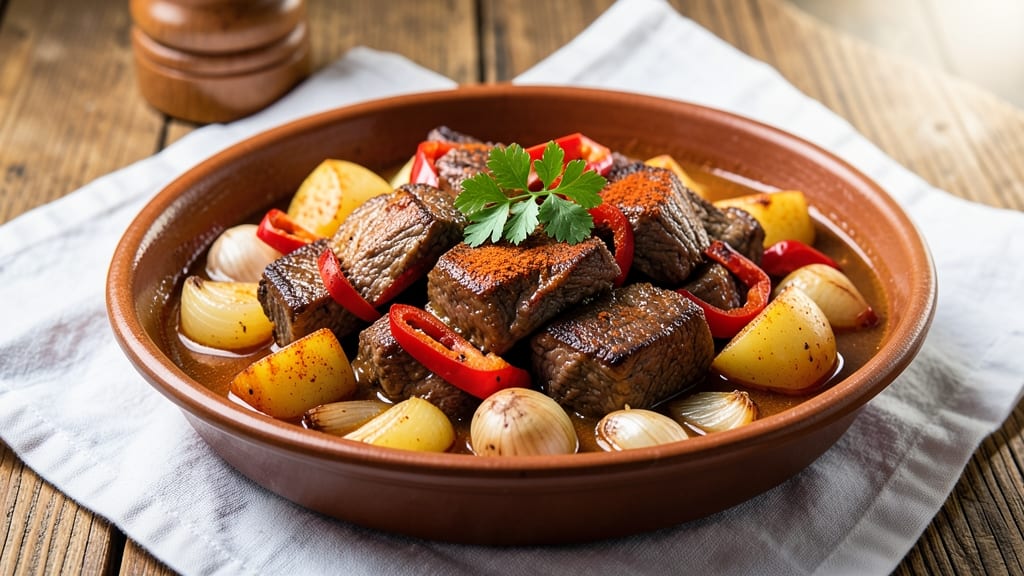
This beef and potato goulash recipe delivers the deep, smoky-sweet flavors of a classic Hungarian stew in a single pot. The secret lies in slow-browning the beef and building layers of paprika-rich flavor that transform tough cuts into tender, melt-in-your-mouth pieces.
I've perfected this method over years of testing, balancing traditional techniques with modern shortcuts for foolproof results every time.
The beauty of this one-pot wonder is its simplicity: no fancy equipment needed, just a heavy pot or Dutch oven.
You'll start by searing the beef to develop rich, caramelized flavors, then build the base with onions, peppers, and garlic before adding potatoes and a blend of sweet and hot paprika.
The long simmer (about 90 minutes) lets all the ingredients meld into a hearty, comforting stew that tastes even better the next day.
What you'll end up with is a paprika-rich stew where tender beef and creamy potatoes swim in a thick, aromatic broth. The sweetness of the paprika balances the meat's richness, while the potatoes absorb all the savory flavors.
This is the kind of dish that transforms a simple weeknight into a cozy family meal—warm, satisfying, and packed with depth.
Whether you're using a stovetop, slow cooker, or pressure cooker, this recipe adapts perfectly to your schedule. The one-pot approach means minimal cleanup, and the flavors only improve with time. Ready to create a stew that tastes like home? Let's get started with the ingredients you'll need.
Ingredients for beef and potato goulash
Pantry staples meet bold Hungarian flavors in this hearty one-pot goulash.
| Ingredient | Amount | Notes |
|---|---|---|
| Beef Chuck Roast 🥩 | 2 ½ lb | Pre-cubed or cut into 1-inch pieces |
| Yellow Onions 🧅 | 2 whole | Medium, sliced into half-moons |
| Bell Peppers 🌶️ | 2 whole | Any color, sliced into strips |
| Garlic Cloves 🧄 | 4 cloves | Minced or finely chopped |
| Russet Potatoes 🥔 | 3 lb | Cut into 1-inch cubes, peeled |
| Sweet Hungarian Paprika 🌶️ | 3 tbsp | For depth and color |
| Hot Hungarian Paprika 🔥 | 1 tbsp | For subtle heat |
| Tomato Paste 🍅 | ½ cup | Smooth, not chunky |
| Beef Broth 💧 | 4 cups | Low-sodium preferred |
| Red Wine 🍷 | 1 cup | Dry, like Cabernet Sauvignon |
| Bay Leaves 🍃 | 2 whole | Fresh or dried |
| Thyme 🌿 | 1 tbsp | Fresh or 1 tsp dried |
| Salt 🧂 | 1 ½ tsp | Kosher or sea salt |
| Black Pepper 🌶️ | 1 tsp | Freshly ground |
| Olive Oil 🫒 | 2 tbsp | Extra-virgin for searing |
The beef is the star—chuck roast delivers that melt-in-your-mouth texture when seared and slow-cooked. Most grocery stores carry pre-cubed chuck, but if you're cutting your own, look for good marbling. Costco or Walmart usually have solid options. For the paprika, Penzeys or the bulk spice section at Whole Foods have the best Hungarian varieties—sweet and hot are non-negotiable here. If you can't find them, a mix of sweet paprika plus a pinch of cayenne works in a pinch.
No red wine? Beef broth with a splash of balsamic vinegar mimics the acidity perfectly. Fresh thyme is ideal, but dried at one-third the amount gets the job done. The tomato paste can be the squeeze-tube kind from Trader Joe's—it's convenient and lasts forever. Potatoes? Russets hold up best to long cooking, but Yukon Golds add creaminess if you prefer. If you're short on time, baby potatoes work too—just halve them for even cooking.
This stew tastes even better the next day—plan ahead. Keeps for 4-5 days in the fridge or 3 months frozen. I always double the batch because leftovers make the best lunches. Store with a tight lid to keep flavors locked in, and reheat gently on low heat or in the microwave with a splash of broth to prevent drying.
Why You'll Love This Recipe
- One-Pot Magic: I swear by this recipe—just chuck everything into one pot, and let it simmer. No fancy techniques, no extra dishes, and the beef practically melts into tender perfection while the potatoes soak up all that rich flavor.
- Deep, Rich Bite: That slow-cooked chuck roast? It’s got this incredible texture—fall-apart tender with just enough chew—while the onions and bell peppers caramelize into something sweet and jammy. The garlic? Oh, it’s the secret weapon here—layered in just enough to make every spoonful irresistible.
- Weeknight Workhorse: Between us, this is my go-to when I need to feed a crowd or just have something hearty for dinner. Double the batch, freeze half, and boom—you’ve got a meal ready for lazy Sundays or unexpected company. (Yes, even on a Tuesday night.)
- Budget-Friendly Feast: A pound of chuck roast and a few potatoes stretch farther than you’d think, especially when you bulk it up with onions and peppers. It’s the kind of dish that makes grocery day feel like a win—no fancy ingredients, just pure, satisfying comfort for less.
Step-by-step instructions for beef and potato goulash
This hearty goulash comes together in one pot with rich flavors and tender meat.
Sear the Beef Chuck Roast
Heat the 2 tablespoons olive oil in a large, heavy-bottomed Dutch oven over medium-high heat. Once shimmering, add the 2.5 lb beef chuck roast cut into 1-inch pieces in a single layer. Let them sear undisturbed for 3-4 minutes until deeply browned on one side—this builds incredible flavor. Flip the beef pieces and sear the other sides until they're golden brown all over.
Remove the beef with a slotted spoon and set it aside. The browned bits left in the pot (fond) will form the base of your sauce, so don't scrape them out. If the fond gets too dark, reduce the heat slightly to prevent burning. This step is crucial for developing that deep, meaty flavor that defines goulash.
Sauté the Vegetables
In the same Dutch oven, add the 2 whole yellow onions sliced into half-moons and the 2 whole bell peppers cut into strips. Cook over medium heat for 5-6 minutes, stirring occasionally, until the onions soften and the peppers begin to caramelize slightly. Add the 4 cloves minced garlic and cook for another 30 seconds until fragrant.
Here's where the paprika comes in—add the 3 tablespoons sweet Hungarian paprika and 1 tablespoon hot Hungarian paprika, stirring constantly to coat the vegetables evenly. The sweet paprika adds depth, while the hot variety gives a subtle kick. Cook for 1 minute until the spices are aromatic and the mixture looks vibrant red.
Build the Base
Stir in the 0.5 cup tomato paste and cook for 2 minutes to deepen its color and remove the raw taste. Pour in the 1 cup red wine and scrape up any browned bits from the bottom of the pot. Let the wine simmer for 3-4 minutes until it reduces by half and the alcohol cooks off.
Add the 4 cups beef broth, 2 whole bay leaves, and 1 tablespoon thyme. Bring the mixture to a gentle boil, then reduce the heat to low and return the beef to the pot. Sprinkle with the 1.5 teaspoons salt and 1 teaspoon black pepper. The broth should just cover the beef—if it's too shallow, add a splash of water.
Simmer the Goulash
Cover the Dutch oven and let the goulash simmer gently for 1 hour. This slow cooking breaks down the tough beef into tender, fork-friendly pieces. Stir occasionally to prevent the potatoes from sticking to the bottom, but avoid over-stirring, which can make the meat tough.
After 1 hour, add the 3 lb russet potatoes cut into 1-inch cubes. The potatoes will soak up the rich flavors as they cook. Increase the heat to medium-low and simmer uncovered for another 45-60 minutes, stirring occasionally, until the potatoes are tender and the sauce has thickened slightly. The goulash is done when the beef is fork-tender and the potatoes are easily pierced with a fork.
Adjust and Serve
Taste the goulash and adjust the seasoning if needed—add a pinch more salt or a sprinkle of hot paprika for extra heat. If the sauce is too thick, stir in a splash of water or beef broth to reach your preferred consistency. Let the goulash rest for 5 minutes off the heat to allow the flavors to meld.
Serve the goulash hot, straight from the pot, with crusty bread to soak up the rich sauce. The combination of tender beef, hearty potatoes, and aromatic spices makes this a comforting, one-pot meal that's perfect for feeding a crowd or prepping for leftovers. The slow cooking ensures every bite is packed with flavor, and the paprika gives it that signature depth that makes goulash so special.
Pro Tips For Making Beef And Potato Goulash
- Sear the Chuck Roast Hard: Walk away from the pan after the first sear—it’s not about color, it’s about building flavor. After you get those deep brown crusts (about 5 minutes per side), pull the meat out and let it rest while you prep everything else. I used to rush this, and the goulash always tasted underdeveloped. Patience here means richer sauce later.
- Cut Potatoes in Even Slices: Russets break easily, so slice them thick—about ½-inch chunks, not paper-thin rounds. Uneven pieces mean some cook to mush while others stay raw. If you’re short on time, microwave them for 3 minutes first to speed up the process, but don’t skip the final simmer—they need that starchy breakdown in the sauce.
- Don’t Crowd the Peppers: Sautéing bell peppers in a packed pan turns them soggy instead of caramelized. Spread them out in a single layer and let them cook undisturbed for 4-5 minutes before stirring. I learned this the hard way when my goulash ended up tasting like a sad stir-fry instead of a hearty stew. A little patience here makes a real difference.
- Deglaze with Beer After Browning: Wait until the beef is browned and removed before pouring in the beer—this ensures you’re capturing all the fond (those sticky bits) at the bottom. If you add liquid too early, you’ll dilute the flavor instead of building depth. Use about 1 cup of beer (or broth if you’re avoiding alcohol), and let it bubble for 2 minutes to cook off the alcohol.
Regional styles of beef and potato goulash
Hungarian Roots
This goulash traces back to 19th-century Hungary, where shepherds slow-cooked tough cuts of beef with potatoes and paprika over open fires. The dish became a national staple during harsh winters—paprika was affordable and preserved well.
Traditional versions used smoked paprika, but modern recipes often blend sweet and hot varieties for complexity. 🌶️
In Hungarian homes, goulash was (and still is) a Sunday centerpiece, served with nokedli (egg dumplings) or crusty bread. The slow cooking method—2-3 hours on low heat—was essential, as it tenderized the beef while letting flavors meld.
My grandmother always said, "A good goulash needs patience—just like love."
American Adaptations
American versions often swap beef broth for tomato sauce and add bell peppers for sweetness, but the core technique remains the same: sear the beef first. Many cooks use chuck roast (like this recipe) for its marbling, while others opt for stew meat for faster cooking.
The pressure cooker method cuts time to 45 minutes—perfect for weeknights. 💪
In the Midwest, goulash became a casserole staple, with layers of beef, potatoes, and a thick paprika-tomato sauce baked until bubbly. Some versions even include carrots or mushrooms for extra heartiness. The key? Don’t skip the searing—that’s what builds the deep, meaty flavor.
Carpathian Twist
In Romanian and Slovakian regions, goulash often includes sour cream or crème fraîche stirred in at the end for a tangy finish. The Carpathian Mountains version also incorporates wild mushrooms (like chanterelles) for an earthy depth.
For a quick adaptation, add ½ cup sour cream in the last 10 minutes of cooking. 🥄
Another regional trick? Smoked paprika is replaced with sumac in some areas, giving a citrusy brightness. If you’re feeling adventurous, swap 1 tbsp of the hot paprika for 1 tsp sumac—it’s a game-changer for those who love bright, complex flavors.
Modern Shortcuts
For slow cooker fans, dump all ingredients in the pot, cook on low for 8 hours or high for 4 hours. The Instant Pot version? Sauté beef, then pressure cook for 30 minutes on high.
Both methods keep the one-pot magic while saving time. Just remember: Never skip the sear—even in shortcuts! ⏰
Need a gluten-free version? Use gluten-free beef broth and check your paprika for hidden additives. For extra richness, stir in 1 tbsp tomato paste at the end or top with crispy fried onions for crunch. The possibilities are endless!
Nutrition facts
Frequently asked questions
Can I use ground beef instead of chuck roast for this goulash?
Ground beef works in a pinch, but it won't have the same rich, tender texture. If you're short on time, use 80/20 ground chuck and brown it well to develop flavor. For best results, stick with chuck roast—its marbling breaks down beautifully during slow cooking, creating melt-in-your-mouth beef.
How do I make this goulash in a slow cooker?
Simply combine all ingredients in your slow cooker and cook on low for 8 hours or high for 4-5 hours. The potatoes will absorb the flavors beautifully, and the beef will become fork-tender. Just remember: Don't skip searing the beef first—browning it on the stovetop before transferring builds deep flavor.
What can I serve with beef and potato goulash?
This hearty stew pairs perfectly with crusty bread or egg noodles to soak up the rich sauce. For a complete meal, add a simple green salad with a tangy vinaigrette or roasted carrots. In Hungary, it's traditionally served with nokedli (egg dumplings) for extra comfort.
Why does my goulash taste bland?
Bland goulash usually means the beef wasn't seared properly or the spices weren't toasted enough. Always brown the beef deeply before removing it, and cook the paprika for 1 full minute until aromatic. For extra depth, add 1 teaspoon smoked paprika or a splash of red wine at the end. Taste as you go—adjust salt and spices gradually.
Can I make this goulash ahead of time?
This stew tastes even better the next day. Store in an airtight container in the fridge for up to 5 days or freeze for 3 months. Reheat gently on the stove with a splash of broth to prevent drying. The flavors continue to develop overnight, making it perfect for meal prep.