Side Dishes
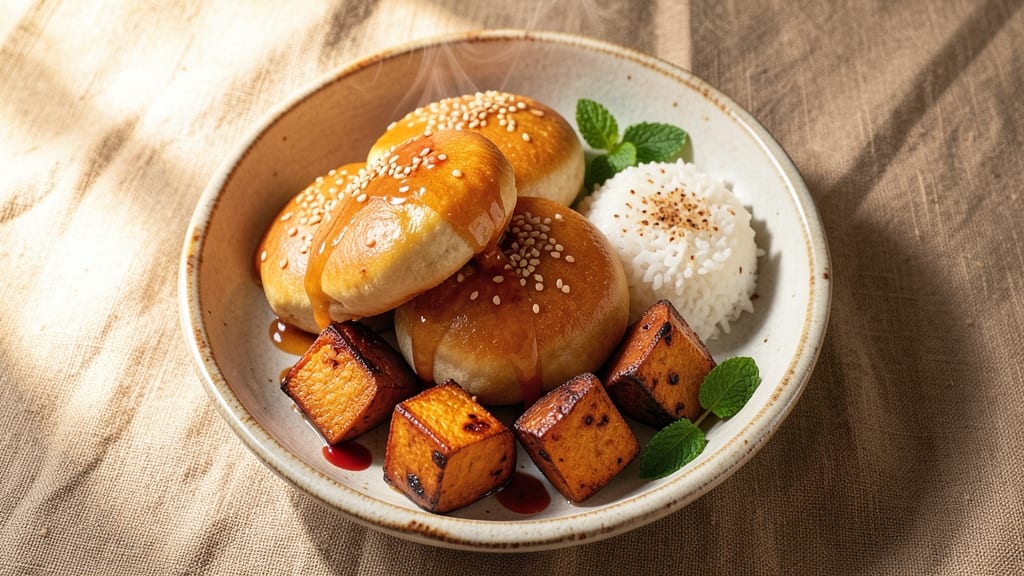
This sweet potato bao recipe delivers the perfect balance of pillowy dough and caramelized sweet potato filling—a vegetarian steamed bun that’s both comforting and impressive.
The secret lies in a simple yet precise dough formula with just flour, yeast, and water, resting for the right amount of time to achieve that signature soft texture. Meanwhile, the filling transforms roasted sweet potatoes into a sweet, spiced purée that stays moist and flavorful.
The process is straightforward but requires patience—kneading the dough until smooth, letting it rise twice, and shaping the bao carefully to ensure even steaming. A light egg wash adds a golden sheen, while steaming for 12–15 minutes creates that signature fluffy exterior and tender interior.
The result? A steamed bun that’s crisp at the edges, soft in the middle, and packed with warm, spiced sweet potato goodness.
What makes this recipe stand out is its versatility—you can adjust the filling’s sweetness or add a pinch of cinnamon for warmth, and the bao can be served as a snack, breakfast, or even a side dish.
The aroma alone will draw everyone to the table, and the first bite delivers that perfect harmony of textures and flavors.
Whether you’re a beginner or an experienced baker, this recipe is designed to be foolproof—just follow the steps, and you’ll end up with bao that taste like they came from a dim sum cart. Let’s get started!
Ingredients for sweet potato bao
Twelve ingredients transform into twelve perfect bao with crisp edges and tender centers.
| Ingredient | Amount | Notes |
|---|---|---|
| All-Purpose Flour 🌾 | 4 cups | Plus 2 tbsp for dusting |
| Active Dry Yeast 🍞 | ¼ oz | Or 2¼ tsp packets |
| Granulated Sugar 🍚 | ½ cup | For yeast activation |
| Warm Water 💧 | 1 ¼ cups | 110°F (43°C) ideal |
| Large Sweet Potatoes 🍠 | 3 whole | About 3 lbs total |
| Coconut Oil 🫒 | 2 tbsp | For roasting |
| Brown Sugar 🍚 | ¼ cup | Packed for filling |
| Ground Cinnamon 🌿 | 1 tsp | Adjust to taste |
| Ground Ginger 🌿 | ½ tsp | Fresh or powdered |
| Salt 🧂 | ½ tsp | Kosher or sea salt |
| Large Eggs 🥚 | 1 whole | For egg wash |
| Vegetable Oil 🫒 | 1 tbsp | For greasing bowl |
| Cornstarch 🌾 | 1 tbsp | For dusting steamer |
The flour and yeast form the foundation of your bao. King Arthur or Bob's Red Mill are my go-tos for consistent results—they activate quickly and create that signature pillowy texture. For the yeast, Fleischmann's or Saf-Instant work best. Store-bought yeast loses potency fast, so check the expiration date. The sweet potatoes? Orange-fleshed varieties like Jewel or Beauregard roast best—avoid the purple-skinned ones. Roast them until tender but not mushy; you want that caramelized sweetness to shine in the filling.
No coconut oil? Olive oil or butter works in a pinch, though coconut adds that subtle sweetness. The spices—cinnamon and ginger—can be swapped for cardamom or nutmeg if you prefer a different warmth. For the egg wash, egg whites only give a shinier finish, but whole eggs add richness. If you're avoiding eggs entirely, a light brush of water or plant-based milk works. The cornstarch is key for the steamer—it prevents sticking and ensures even cooking. If you don't have a bamboo steamer, a metal colander over boiling water works just as well.
Store the dough in an airtight container for up to 24 hours in the fridge, but bring it to room temperature before shaping. The filling keeps well for 3 days in the fridge, though it's best used fresh. For the bao themselves, steam them fresh or refrigerate for up to 2 days. Reheat in the steamer for 3-5 minutes to restore that fluffy texture. Freezing? Shape the bao, freeze on a tray, then transfer to a bag for up to 1 month. Steam directly from frozen, adding 2 minutes to cooking time.
Why You'll Love This Recipe
- Pantry-Friendly Magic: I swear by this recipe because it uses ingredients I always have—flour, yeast, sugar—and turns them into something special. No fancy pantry trips, no last-minute store runs. Just mix, steam, and serve.
- Sweet & Savory Crunch: That crispy bao shell with the tender, slightly sweet potato filling? It’s the kind of combo that makes you pause mid-bite. The sugar in the dough caramelizes just enough to give it a subtle sweetness that pairs perfectly with savory fillings.
- Weeknight & Weekend Star: Make a batch on Sunday, and you’ve got breakfast, lunch, or dinner covered all week. Stuff them with eggs and cheese for a quick scramble, or pack them for lunch—no reheating needed. Honestly, I’ve even served them at brunch when I was too tired to bake.
- Budget Breakthrough: Sweet potatoes are cheap, filling, and versatile—this recipe stretches them into something restaurant-worthy without breaking the bank. Plus, the dough freezes beautifully, so I can make a big batch and pull out bao whenever I need a fast, satisfying meal.
Step-by-step instructions for sweet potato bao
Master the art of pillowy bao dough and caramelized sweet potato filling for buns that balance soft texture with rich flavor.
Prepare the Sweet Potato Filling
Preheat your oven to 400°F. Pierce the 3 whole large sweet potatoes with a fork and rub the skin with 2 tablespoons coconut oil to prevent sticking. Roast on a baking sheet for 45-50 minutes until tender when pierced with a knife.
Once cooled enough to handle, scoop out the flesh and transfer it to a food processor. Add ½ cup brown sugar, 1 teaspoon ground cinnamon, ½ teaspoon ground ginger, and ½ teaspoon salt. Pulse until the mixture reaches a smooth, caramel-like consistency—it should hold its shape when pressed but still be spreadable. This filling should be sweet, aromatic, and slightly sticky; if it's too dry, add 1 teaspoon warm water at a time until it reaches the right texture.
Make the Bao Dough
In a small bowl, dissolve ½ cup granulated sugar in 1¼ cups warm water (around 110°F) and sprinkle the ¼ ounce active dry yeast over the top. Let it sit for 5-10 minutes until foamy. This step activates the yeast—if it doesn't foam, your yeast is likely inactive, and you'll need to start over.
In a large bowl, combine 4 cups all-purpose flour and ½ teaspoon salt. Pour in the yeast mixture and mix with a wooden spoon until a shaggy dough forms. Gradually knead the dough on a lightly floured surface for 8-10 minutes until smooth and elastic. The dough should be slightly tacky but not sticky—add 2 tablespoons flour if needed. Place the dough in a lightly oiled bowl, cover with a damp towel, and let it rise in a warm place for 1-2 hours or until doubled in size. A good test is to poke the dough gently—it should spring back slowly rather than immediately.
Shape and Steam the Bao
Once the dough has risen, punch it down to release air and divide it into 12 equal pieces (about 2 ounces each). Roll each piece into a smooth ball, then flatten it slightly into a disc about ½-inch thick. Place a generous spoonful of the sweet potato filling in the center of each disc, then gently pinch the edges together to seal, leaving a small opening at the top. Roll the sealed edges between your palms to create a smooth, rounded bao shape.
Line a steamer basket with parchment paper and dust lightly with 1 tablespoon cornstarch to prevent sticking. Arrange the bao in a single layer, leaving ½ inch between each. Bring water to a boil in the steamer, then place the basket inside and cover. Steam over medium-high heat for 12-15 minutes until the bao are puffed and the filling is caramelized. Be careful not to overcrowd the steamer—steam in batches if necessary. The bao should be light and airy, with a slight crack at the top revealing the caramelized filling inside.
Finish with Egg Wash (Optional)
For an extra touch, beat the 1 whole large egg with 1 tablespoon water in a small bowl. Brush the egg wash lightly over the tops of the steamed bao just before serving. This creates a delicate golden sheen and adds a subtle richness to the texture. Serve immediately while still warm—these bao are best enjoyed fresh from the steamer, with the filling still gooey and the dough perfectly pillowy.
If you're making these ahead, steam them just until they're fully cooked but not fully puffed, then store in an airtight container. Re-steam for 2-3 minutes before serving to restore their fluffy texture.
Pro Tips For Making Sweet Potato Bao
- STEAM THE POTATOES UNTIL SOFT: I learned this the hard way—roasting or microwaving leaves you with uneven texture. Pierce the sweet potatoes first, then steam them for 45-60 minutes until a fork slides in like butter. Overcooked? They’ll turn to mush when mashed. Undercooked? Your bao filling will feel like chewing on a tire.
- USE A THERMOMETER FOR DOUGH: Your kitchen’s "warm water" guesswork is unreliable. Yeast thrives at 105-110°F (40-43°C)—any cooler and it’ll take hours to rise; hotter and you’ll kill it. A cheap instant-read thermometer solves this. Pro tip: If your water’s too hot, let it cool for 5 minutes before mixing.
- SKIP THE SUGAR IN THE DOUGH: That granulated sugar in the recipe? It’s not necessary. Sweet potatoes already bring natural sweetness, and extra sugar can make the dough gummy. Save the sugar for the filling or a drizzle of honey after baking. Your bao will be lighter, and the flavor will shine.
- REST THE DOUGH BEFORE SHAPING: I know, you’re eager to roll and fill. But resist. Let the dough rest for at least 30 minutes after the first rise—this relaxes the gluten so it doesn’t spring back when you shape it. Your bao will hold its form better, and the texture will be tender, not chewy. (Yes, even if you’re impatient like me.)
Dietary considerations for this recipe
Vegetarian-Friendly
This recipe is naturally vegetarian—the sweet potato filling and bao dough contain no animal products. The filling relies on roasted sweet potatoes, coconut oil, and spices for flavor, while the dough uses just flour, yeast, sugar, and water.
For extra richness, I sometimes add a touch of vegan butter to the egg wash, but it's completely optional. 🌱
Gluten-Free Adaptation
To make these gluten-free, replace the all-purpose flour with a 1:1 gluten-free baking flour blend like Bob's Red Mill or King Arthur. You may need to add ½ teaspoon xanthan gum to improve elasticity.
The dough will be slightly stickier, so dust your work surface with extra cornstarch. Keep in mind that gluten-free bao won’t be as pillowy, but they’ll still be delicious and hold their shape during steaming.
Vegan Modifications
For a vegan version, skip the egg wash entirely or substitute it with 1 tablespoon water or plant-based milk brushed lightly on top.
The filling remains the same, but you can enhance its depth by adding 1 teaspoon maple syrup or vanilla extract to the sweet potato purée. The texture will be just as tender—just slightly less shiny on top. ✨
Low-Sugar Options
If you're watching sugar intake, reduce the brown sugar in the filling to ¼ cup and add ½ teaspoon cinnamon to amplify sweetness naturally. You can also use monk fruit sweetener or erythritol in place of half the brown sugar.
The dough’s granulated sugar can be cut to ¼ cup if desired, though it helps activate the yeast and improves flavor.
Allergen Considerations
This recipe contains wheat (flour), eggs (optional), and coconut (oil). For egg-free versions, omit the egg wash entirely or use a plant-based alternative. If coconut allergies are a concern, substitute the coconut oil with avocado oil or neutral vegetable oil for roasting.
Always double-check ingredient labels for cross-contamination warnings if allergies are severe. 💡
Nutrition facts
Frequently asked questions
Can I make sweet potato bao without a bamboo steamer?
Use a metal colander or heatproof bowl that fits over a pot of boiling water. Line it with parchment paper to prevent sticking, and steam for 12-15 minutes until the bao are puffed. Just make sure the water doesn't touch the bao—keep them elevated with a rack or folded paper towels.
Why is my bao dough too sticky?
Sticky dough usually means you need more flour. Gradually add 1 tablespoon at a time while kneading until it becomes smooth but still slightly tacky. If it's too dry, add 1 teaspoon warm water at a time. The dough should feel soft but not gluey to the touch.
How do I prevent the filling from leaking out?
Seal the bao tightly by pinching the edges firmly together, leaving just a tiny opening at the top. Roll the sealed edges between your palms to create a smooth, airtight seal. For extra security, chill the shaped bao in the fridge for 15 minutes before steaming—the colder dough holds its shape better.
Can I use mashed sweet potatoes instead of roasted?
Mashed sweet potatoes will work, but roasting enhances the natural sweetness and caramelization. If using mashed, add 1 extra tablespoon brown sugar and ½ teaspoon cinnamon to compensate. For best results, boil peeled sweet potatoes until tender, then mash and mix with spices.
How long can I store leftover bao?
Store steamed bao in an airtight container at room temperature for 1-2 days. Reheat in the steamer for 2-3 minutes to restore fluffiness. For longer storage, freeze shaped (unsteamed) bao for up to 1 month. Steam directly from frozen, adding 2 extra minutes to cooking time.