
Desserts
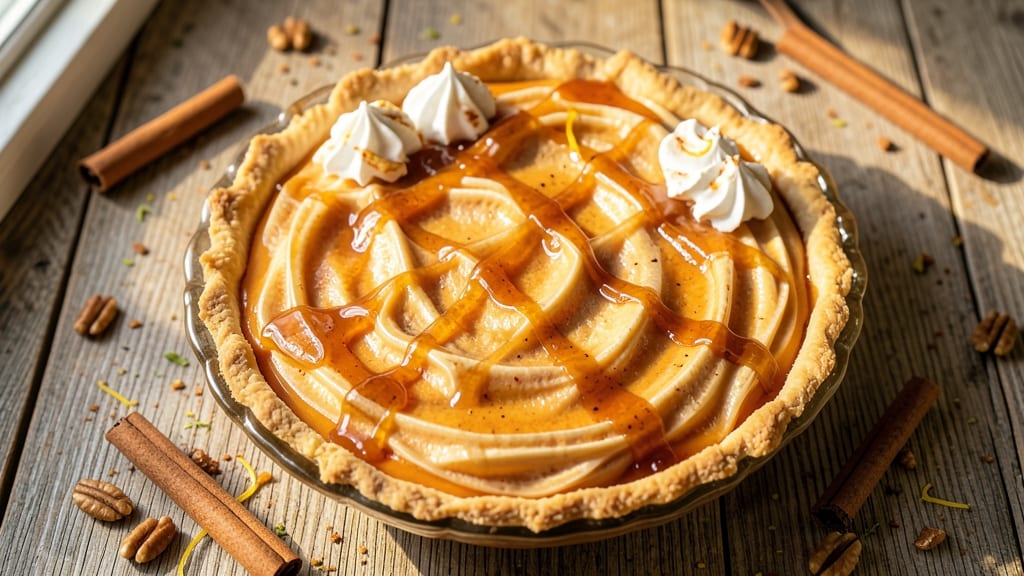
This sweet potato chiffon pie recipe transforms humble sweet potatoes into a dessert that’s silky, spiced, and effortlessly elegant—no fuss, just flavor. The secret lies in blending roasted sweet potatoes until perfectly smooth, then folding them into a light, airy custard that bakes into a cloud-like texture.
I’ve perfected this recipe over years of holiday baking, ensuring every slice delivers that perfect balance of sweetness and warm spices without tasting like pumpkin pie’s heavier cousin.
The beauty of this recipe is its simplicity: a one-crust (or no-crust option for low-carb versions) holds a filling that’s rich in flavor but light enough to feel indulgent, not dense.
Roasting the sweet potatoes first deepens their natural sweetness and caramelizes their edges, while a touch of cinnamon, nutmeg, and vanilla elevates the spice profile. The custard folds together seamlessly, creating that signature chiffon texture—tender, jiggly, and impossible to resist—that sets it apart from traditional pies.
What you’ll end up with is a dessert that’s restaurant-worthy but homemade, perfect for holiday gatherings, potlucks, or even a cozy weeknight treat.
The crust stays crisp, the filling holds its shape when sliced, and the aroma of cinnamon and vanilla will fill your kitchen long before the pie comes out of the oven. Best of all?
It’s a crowd-pleaser that doesn’t require hours of baking or complicated techniques—just patience and a few key steps.
Whether you’re serving it warm with whipped cream or chilled for a lighter dessert, this pie is a game-changer for anyone who loves sweet potato flavor but wants something lighter than classic pie. Let’s get started—your taste buds (and your guests) will thank you.
Ingredients for sweet potato chiffon pie
Sweet potatoes, eggs, and spices—just 12 ingredients for a pie that feels luxurious yet effortless.
| Ingredient | Amount | Notes |
|---|---|---|
| Large Sweet Potatoes 🍠 | 2 lbs | Organic preferred, skin-on |
| Large Egg Whites 🥚 | 8 whole | Room temperature for best volume |
| Granulated Sugar 🍚 | 1 ½ cups | White sugar preferred |
| Unsalted Butter 🧈 | ½ cup | Cold, cubed for crust |
| All-Purpose Flour 🌾 | 1 ½ cups | Plus 1 tbsp for dusting |
| Ground Cinnamon 🌿 | 2 tsp | Freshly ground preferred |
| Ground Nutmeg 🌿 | ½ tsp | Freshly grated for depth |
| Pure Vanilla Extract 🍯 | 1 tbsp | High-quality preferred |
| Salt 🧂 | ½ tsp | Fine sea salt |
| Heavy Whipping Cream 🥛 | 1 cup | Cold for folding |
| Brown Sugar 🍚 | ¼ cup | Packed for crust |
| Evaporated Milk 🥛 | ½ cup | For custard richness |
Sweet potatoes are the star here, so pick firm, vibrant orange ones—the deeper the color, the sweeter the flavor. Trader Joe's or Whole Foods usually carry the best organic varieties. Roast them whole at 400°F until tender (about 45 minutes), then blend until completely smooth—no lumps, or the texture will suffer. I always double-check the skin is fully cooked, as any resistance means more blending time. For the crust, cold butter is non-negotiable—it creates flaky layers. Cut it into small cubes and handle it as little as possible.
No vanilla extract? Vanilla bean paste works too, but skip the imitation stuff—it ruins the flavor. Running short on egg whites? Use aquafaba (chickpea brine) at a 1:1 ratio, but whip it longer for volume. The custard needs to be silky, so strain it through a fine-mesh sieve if you're worried about any grit. For the crust, almond flour can replace half the flour if you're avoiding gluten, but the texture will be slightly crumbly. And trust me, brown sugar in the crust is worth the extra minute—it caramelizes beautifully during baking.
This pie keeps beautifully—3 days in the fridge or 2 months in the freezer. For serving, let it sit at room temperature for 10 minutes first (the filling sets up when cold). I always make a double batch—one for immediate serving, one to freeze for last-minute gatherings. Store the crust separately if making ahead, then assemble just before baking. The aroma alone will have your guests waiting at the table!
Why You'll Love This Recipe
- No Fuss Baking: I swear, this pie doesn’t need a stand mixer or fancy techniques—just whisk those egg whites until they’re glossy and fold in the sweet potato purée. The chiffon texture happens all by itself, and honestly? It’s the kind of dessert that makes me feel like a baking genius without any of the stress.
- Caramelized Edge Magic: That crispy, buttery crust at the edges? It’s what makes this pie irresistible. The sugar and butter work together to create this perfect contrast—creamy filling with a golden, almost candy-like rim. Once you try it, you’ll understand why people fight over seconds.
- Holiday Table Star: Between us, this is my go-to for Thanksgiving and Christmas—it’s fancy enough for company but still feels cozy and familiar. The sweet potatoes add that warm, autumnal vibe, and the chiffon texture makes it feel lighter than your usual pies. (Yes, even on a Tuesday night.)
- Budget-Friendly Luxury: Sweet potatoes and eggs are cheap staples, but this pie tastes like you spent hours slaving over it. I’ve made it for potlucks where everyone assumed I’d brought something store-bought—until they tasted it. The flour and butter stretch just enough to fill a big dish without breaking the bank.
Step-by-step instructions for sweet potato chiffon pie
Here's how to create that signature silky texture without the fuss—just follow these simple steps.
Roast and Mash the Sweet Potatoes
Preheat your oven to 400°F and line a baking sheet with parchment paper. Pierce the 2 lbs of large sweet potatoes with a fork in several places, then place them directly on the baking sheet. Roast for 45-50 minutes until the skin is tender and a knife slides in easily.
Let the potatoes cool slightly, then peel off the skin and transfer the flesh to a large mixing bowl. Mash until completely smooth—no lumps allowed. While still warm, stir in 1.5 cups of granulated sugar, 1 tbsp of pure vanilla extract, and 0.5 tsp of salt. This warm mixture will help dissolve the sugar completely and infuse the flavor. Let it cool to room temperature before moving to the next step.
Prepare the Crust Mixture
In a medium bowl, combine 1.5 cups of all-purpose flour, 0.25 cup of packed brown sugar, 2 tsp of ground cinnamon, and 0.5 tsp of ground nutmeg. Cut in 0.5 cup of cold, cubed unsalted butter using a pastry cutter or your fingers until the mixture resembles coarse crumbs with pea-sized butter pieces. This texture is key for a flaky crust.
Press about half of this mixture into a 9-inch pie dish, creating an even layer. Chill in the refrigerator while you prepare the filling. The crust needs to stay cold so it doesn't melt when you add the hot filling later. If you're worried about it shrinking, press a piece of parchment paper over it and weigh it down with a can of tomatoes.
Whip the Egg Whites to Stiff Peaks
Place the 8 whole large egg whites in a spotlessly clean, grease-free bowl. Using a stand mixer fitted with the whisk attachment, beat on low speed until frothy. Gradually increase to medium-high speed and whip for 5-7 minutes until stiff peaks form when you lift the whisk.
Here's the thing—your bowl must be completely dry and free of any grease. Even a tiny bit of fat will prevent the egg whites from whipping properly. If they don't hold their shape, start over with fresh egg whites. The meringue is the secret to that signature chiffon texture, so don't rush this step.
Fold in the Filling Components
In a separate bowl, gently fold together the cooled sweet potato mixture, 0.5 cup of evaporated milk, and 1 cup of cold heavy whipping cream until just combined. The cream should be cold so it doesn't melt the egg whites when you fold them in.
With a spatula, carefully fold one-third of the whipped egg whites into the sweet potato mixture to lighten it. Then gently fold in the remaining egg whites until no white streaks remain. This process should be done in three additions to maintain maximum airiness. Be gentle—overmixing will deflate the meringue and ruin that silky texture we're after.
Assemble and Bake the Pie
Pour the filling over the chilled crust in the pie dish. Smooth the top with a spatula, then bake at 350°F for 50-55 minutes until the filling is set and the top is golden brown. The center should still jiggle slightly when the pie is done—it will continue to set as it cools.
Let the pie cool completely at room temperature before refrigerating for at least 4 hours or overnight. This resting period allows the flavors to meld and the texture to become perfectly silky. Serve chilled with a dollop of whipped cream if desired. The pie will keep well in the refrigerator for up to 3 days, though I doubt it will last that long!
Pro Tips For Making Sweet Potato Chiffon Pie
- STEAM THE POTATOES FIRST: Boil whole sweet potatoes until you can pierce them with a fork—then steam them 10 minutes covered. I learned this the hard way: boiling alone leaves them gummy, but the steam finish makes them silky smooth and easy to mash. No lumps, no fight.
- WHISK EGGS WHILE WARM: Mix egg whites into the sweet potato filling while it’s still warm (not hot, but not cold). The residual heat helps them fold in better and gives that signature light, airy texture. I used to wait until everything cooled, and my pies always turned dense—don’t make that mistake.
- SIFT THE FLOUR DRY: Add all-purpose flour to the butter-sugar mix after creaming, then sift it directly over the bowl while stirring. This prevents clumps and ensures even distribution—no need to pulse in a food processor. My grandmother swore by this, and she was right: the crust stays tender, not gritty.
- BAKE LOW AND SLOW: Preheat the oven to 325°F (not 350°F) and bake the pie on the lower rack. The chiffon layer needs time to set properly, and high heat risks a rubbery texture. I was skeptical until I tried it—now it’s non-negotiable for that perfect, jiggly center.
Common mistakes when making great sweet potato chiffon pie
Overmixing the Egg Whites
This is the #1 mistake that wrecks that signature silky texture. When you whip egg whites to stiff peaks, stop immediately—they should hold their shape when you lift the whisk but still be glossy, not dry or grainy.
I’ve ruined more chiffon pies than I care to admit by overbeating, which causes the meringue to deflate and turn rubbery. Use a stand mixer with a whisk attachment and watch closely after 5-7 minutes—if you see dry strands forming, you’ve gone too far. 🥚
Skipping the Cooling Step
Rushing the cooling process is a fast track to a collapsed pie. The sweet potato mixture must cool to room temperature before folding in the egg whites, or the heat will melt the fat in the whites and prevent them from whipping properly.
I learned this the hard way when I tried to speed up the process—my pie ended up dense and flat. Let the mixture sit for at least 30 minutes (or up to 2 hours) before proceeding. Patience here is key!
Uneven Crust Distribution
Pressing the crust unevenly leads to thin spots that burn or soggy sections that absorb filling moisture. Use a pie dish with a removable bottom (like Ceramic Pie Dishes from Pyrex) to make assembly easier. Press the crust firmly but evenly, then chill it before adding filling.
If you’re nervous about shrinkage, weigh it down with a canned good wrapped in parchment paper. A thick, even crust is non-negotiable for holding that light filling.
Underbaking or Overbaking
The filling should be set but still slightly jiggly when done—this ensures that silky texture. Baking at 350°F for 50-55 minutes gives the perfect balance, but ovens vary. Start checking at 45 minutes with a toothpick—it should come out clean but slightly moist.
Overbaking dries out the custard, while underbaking leaves it too soft. The center should hold its shape when gently shaken, but still have a slight wobble. 🌡️
Not Resting the Pie
Cutting into the pie immediately after baking is a surefire way to end up with a runny, uneven slice. The filling needs time to fully set and firm up as it cools.
Let the pie rest at room temperature for 1-2 hours, then refrigerate for at least 4 hours (overnight is ideal). This resting period allows the custard to thicken and the flavors to meld, giving you that perfect, creamy slice every time.
Using Warm Cream or Milk
Cold heavy cream and evaporated milk are critical for maintaining the meringue’s structure. If either is warm, it will melt the fat in the egg whites, causing them to deflate during folding. Always use cold components straight from the fridge.
I keep mine in the freezer for 10-15 minutes before using to ensure they’re properly chilled. This small step makes a world of difference in texture! ❄️
Nutrition facts
Frequently asked questions
Can I make this pie without a crust?
For a no-crust version, simply pour the filling into a 9-inch springform pan or individual ramekins. Bake at 350°F for 40-45 minutes until set. The texture will still be silky, but the filling will hold its shape better in a pan. Serve with whipped cream or a drizzle of caramel for extra indulgence.
Why does my sweet potato chiffon pie turn out dense instead of light?
This usually happens when egg whites aren't whipped properly or the sweet potato mixture is too hot when folded. Always chill the sweet potato mixture completely before folding in egg whites, and whip egg whites to stiff peaks (not dry or grainy). Fold gently in three additions to maintain airiness.
How can I make this pie ahead of time?
This pie actually tastes better the next day! Assemble it completely, then refrigerate for 4-6 hours before baking. For make-ahead storage, bake the pie and let it cool completely. Store in an airtight container in the fridge for up to 3 days or freeze for 2 months. Thaw overnight in the fridge before serving.
What's the best way to serve sweet potato chiffon pie?
Serve it chilled with a dollop of whipped cream, a sprinkle of toasted pecans, or a drizzle of salted caramel sauce. For a festive touch, garnish with a dusting of cinnamon or a few fresh cranberries. The contrast of warm spices with cool cream makes each bite magical!
Can I substitute regular potatoes for sweet potatoes?
Not recommended! Sweet potatoes have a natural sweetness and creamier texture that works perfectly for this recipe. Regular potatoes would make the pie taste starchy and less flavorful. If you must use them, roast until very tender and blend with 1 extra tablespoon of sugar to compensate for the lack of sweetness.