
Side Dishes
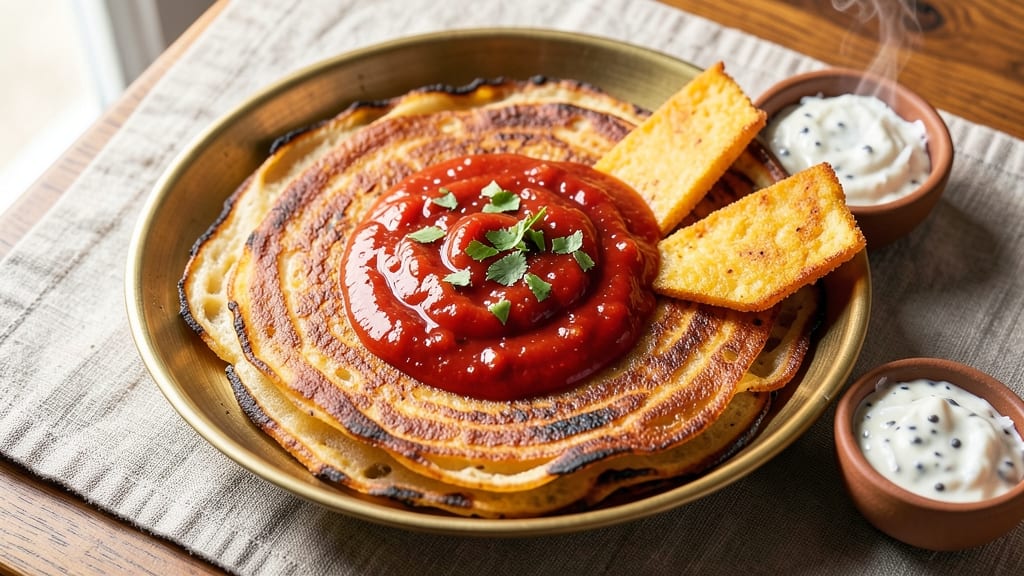
This sweet potato dosa recipe transforms traditional South Indian dosas into crispy, golden layers with a naturally sweet, earthy depth—no artificial flavors needed. The secret lies in fermenting the batter with grated sweet potato, which adds natural sweetness while keeping the dosas vegan and packed with texture.
I developed this version after years of perfecting fermentation times to ensure the crispy edges and tender centers that make every bite satisfying.
What sets this recipe apart is the balance of flavors: the sweet potato batter pairs beautifully with classic dosa fillings like spiced potatoes, onions, or paneer, creating a harmonious sweet-savory contrast. The fermentation process isn’t just about fluffiness—it also enhances digestibility and deepens the dosa’s natural aroma.
With just 8-10 hours of fermentation and 15 minutes of cooking per batch, you’ll have restaurant-quality results at home.
The key to achieving those signature crispy layers lies in the right pan temperature and oil application. A well-heated tawa (or non-stick skillet) ensures even browning, while a light brush of oil prevents sticking without making the dosas greasy.
The sweet potato adds a subtle caramelized sweetness when cooked, making these dosas irresistible even on their own.
Perfect for breakfast, brunch, or as a side with coconut chutney and sambar, this recipe scales effortlessly for gatherings. The batter keeps well in the fridge for 2 days, so you can prep ahead and enjoy freshly cooked dosas whenever you’re ready.
Let’s get started on creating these crispy, flavorful layers!
Ingredients for sweet potato dosa
Fermented batter meets crispy layers—just these 13 ingredients transform ordinary dosas into something extraordinary.
| Ingredient | Amount | Notes |
|---|---|---|
| Medium Sweet Potatoes 🍠 | 2 whole | Organic preferred, peeled and grated |
| Rice (White Basmati) 🌾 | 1 cup | Soaked for 4 hours minimum |
| Urad Dal (Black Gram) 🌱 | ½ cup | Split dal, rinsed thoroughly |
| Fresh Fenugreek Leaves 🌿 | ¼ cup | Chopped, or 1 tbsp dried methi |
| Asafoetida (Hing) 🌶️ | ⅛ tsp | Pure, high-quality powder |
| Salt 🧂 | 1 ½ tsp | Diamond Crystal preferred |
| Medium Yellow Onions 🧅 | 1 whole | Thinly sliced for filling |
| Medium Potatoes 🥔 | 2 whole | Boiled and mashed for filling |
| Green Chilies 🌶️ | 2 whole | Slit lengthwise for filling |
| Coriander Seeds 🌿 | ½ tsp | Toasted for filling seasoning |
| Mustard Seeds 🌱 | ¼ tsp | For filling tempering |
| Coconut Oil 🫒 | ¼ cup | For cooking and brushing |
| Lemon Juice 🍋 | 1 tbsp | Freshly squeezed for batter |
Sweet potatoes are the star here. Organic varieties have richer flavor, but any firm, orange-fleshed potato works. Grate them fresh—pre-grated loses moisture fast. The urad dal is non-negotiable for that signature dosa texture, but Trader Joe's or Indian grocery stores carry the best quality. For fenugreek, fresh leaves add depth, but dried methi (soaked in warm water) works in a pinch. The rice should be basmati—long grains stay separate during fermentation. Soak it overnight for extra fluffiness, but 4 hours minimum gets you there.
No urad dal? Idli rice and chana dal at a 2:1 ratio mimics the texture, though fermentation takes longer. Swapping sweet potatoes for regular? Use 1.5 cups grated regular potato plus 0.5 cup grated carrot to maintain moisture. For the filling, potatoes can be instant mashed if you're short on time—just add a splash of coconut milk for creaminess. Green chilies too spicy? Substitute with mild capsicum or extra coriander. The asafoetida might be tricky to find—Penzeys Spices sells it online, or skip it entirely if you can't find it (the flavor won't disappear, just mellow).
Fermented batter stays fresh for 2 days in the fridge—cover tightly with plastic wrap pressed directly on the surface. For longer storage, freeze portions in ice cube trays for perfect single-serving dosas. The filling mix keeps 3 days in the fridge, but the spices lose potency after that. Coconut oil solidifies when cold—microwave it for 20 seconds to soften before using. These dosas reheat beautifully: wrap in foil and warm in a dry skillet for 2 minutes per side, or microwave for 30 seconds with a damp paper towel covering.
Why You'll Love This Recipe
- No-Stress Fermentation: I soak the rice and dal overnight, then blend it all—sweet potato, fenugreek, and a pinch of hing—into a batter that rests for just 4 hours. No waiting days, no fussy adjustments. Honestly, that’s the magic: wake up, mix, cook. Done.
- Sweet & Savory Magic: The roasted sweet potato gives it a caramelized depth, while the urad dal keeps it tangy and crisp. Between us, that first bite—when the edges crackle and the center stays soft—is exactly what I crave after a long day.
- Breakfast or Dinner Hero: Pack these for lunch the next day—they reheat beautifully with a drizzle of coconut oil. Or serve them steaming hot for brunch with a side of sambar. I’ll be real: my kids ask for them more than plain dosa, and that’s saying something.
- Budget-Friendly Staple: Sweet potatoes stay fresh forever, and urad dal is a pantry workhorse. One batch feeds four, and leftovers? I freeze them flat like pancakes. Not the prettiest, but the taste makes up for it—and my wallet thanks me.
Step-by-step instructions for sweet potato dosa
Here's how to craft crispy, golden layers with a fermented sweet potato batter—no shortcuts, just perfect technique.
Grate and Ferment the Sweet Potato Batter
Peel the 2 whole medium sweet potatoes and grate them using a box grater or food processor. I like to squeeze out excess moisture with a clean kitchen towel—this keeps the batter from becoming too watery. In a large bowl, combine the grated sweet potatoes with the 1 cup soaked rice (white basmati) and 0.5 cup urad dal (black gram). Add 0.25 cup chopped fresh fenugreek leaves, 0.125 tsp asafoetida (hing), and 1.5 tsp salt, mixing well until fully incorporated.
Let the batter sit covered at room temperature for 8 hours or overnight. You'll know it's ready when it develops a slightly tangy aroma and bubbles form around the edges. The fermentation process is what gives dosa its signature crispiness and lightness—don't skip this step, even if it's tempting to rush it.
Prepare the Savory Filling
Heat 0.25 cup coconut oil in a pan over medium heat. Add 0.5 tsp toasted coriander seeds and 0.25 tsp mustard seeds, letting them sizzle for 30 seconds until fragrant. Add the 1 whole medium yellow onion (thinly sliced) and 2 whole green chilies (slit lengthwise), cooking until softened and golden—about 5 minutes. Stir in 2 whole boiled and mashed medium potatoes and cook for another 2 minutes to combine.
Remove from heat and let cool completely. The filling should be slightly warm but not hot when you add it to the dosa—this prevents the batter from cooking too quickly during assembly. Taste and adjust seasoning if needed, though the fermented batter already adds significant flavor.
Cook the Crispy Dosa Layers
Heat a non-stick skillet over medium-high heat and lightly grease with a bit of coconut oil. Pour a ladleful of the fermented batter into the center of the pan, quickly spreading it into a thin, even circle by tilting and rotating the pan. The batter should sizzle immediately—this is your signal to work fast.
When the edges start to crisp and lift slightly (about 30 seconds), carefully place 1-2 tablespoons of filling in the center. Fold one side of the dosa over the filling, then the opposite side, creating a neat half-moon shape. Press gently to seal the edges. Cook for another 1-2 minutes until the underside is deep golden brown and crispy all over.
Serve Immediately for Maximum Crispiness
Transfer the dosa to a plate and repeat with the remaining batter and filling. Serve each dosa hot, drizzled with a squeeze of 1 tbsp freshly squeezed lemon juice to brighten the flavors. The crispy layers should hold their shape while still being tender inside—this is the hallmark of a well-made dosa.
For extra authenticity, pair with coconut chutney or mint-coriander sauce. The contrast between the crispy exterior and soft filling, combined with the tangy lemon, makes every bite irresistible. And remember—these are best eaten fresh while the layers are still perfectly crisp!
Pro Tips For Making Sweet Potato Dosa
- PEEL AND GRATE COLD: Sweet potatoes release starch like crazy when warm. Pop them in the fridge for 30 minutes after peeling, then grate—this keeps the batter from turning gummy later. (Yes, even if you're impatient like me, the texture difference is night and day.)
- SOAK DAL 8 HOURS MINIMUM: I used to rush the urad dal soaking, thinking overnight was overkill. Wrong. Soak it for at least 8 hours (or overnight) until it’s plump and split—this ensures the batter stays smooth and doesn’t turn gluey. No blender can save you if you skip this.
- PRESS OUT ALL LIQUID: After blending, let the batter rest 10 minutes, then press it through a fine-mesh sieve or muslin cloth to remove excess water. This is the thing that matters most for crispy dosas—wet batter = soggy crepes. (Your future self will thank you.)
- CRISP ON MEDIUM-LOW: High heat makes dosas burn before they crisp. Start on medium-low, then adjust—you want the edges to set in 20 seconds before gently increasing heat. (Sounds weird, but it works: the center cooks through without charring.)
Wine and beer pairings for this sweet potato dosa
Sweet-Savory Wine Pairings
The natural sweetness of sweet potato dosas pairs wonderfully with dry, crisp whites that cut through the richness. I recommend a Chenin Blanc from South Africa—its bright acidity and subtle honey notes complement the caramelized sweet potato while balancing the savory filling.
Look for a Sauvignon Blanc from New Zealand if you prefer more citrus punch; the grapefruit undertones will refresh your palate between bites. 🍷
Spiced Red Options
For a bolder contrast, try a Gewürztraminer with its lychee and spice notes—this aromatic white stands up to the dosa’s complexity. If you prefer reds, a Pinot Noir from Oregon offers enough fruitiness to match the sweet potato while its earthy undertones echo the urad dal’s nuttiness.
Avoid heavy Cabernets; they’ll overpower the delicate crispiness.
Craft Beer Contrasts
A Belgian Witbier like Hoegaarden brings refreshing citrus and coriander notes that cleanse your palate between bites. For something heartier, try a German Helles Lager—its malty sweetness mirrors the sweet potato while the crisp finish balances the filling’s richness.
Avoid hoppy IPAs; their bitterness clashes with the dosa’s natural sweetness. 🍺
Non-Alcoholic Refreshers
For a mocktail, mix sparkling limeade with a splash of ginger beer—the effervescence cuts through the richness while the ginger’s spice echoes the green chilies in the filling. A mango lassi (blended yogurt drink) with cardamom adds creamy contrast to the crispy layers. Serve chilled for maximum refreshment.
Regional Pairing Tips
In South India, dosas are traditionally served with filter coffee—its bold, malty notes stand up to the sweetness. For a modern twist, try a chai latte with cinnamon and cardamom to enhance the dosa’s aromatic spices.
If you’re serving at a brunch, a sparkling rosé with its berry undertones bridges the breakfast-to-lunch transition beautifully.
Nutrition facts
Frequently asked questions
Can I make sweet potato dosas without fermentation?
Fermentation is key for that signature crispy texture and lightness! Without it, your dosas will be denser and less flavorful. If you're short on time, try a 4-hour quick fermentation in a warm oven (with the light on) or use a pinch of baking soda (0.25 tsp) to lighten the batter—but expect slightly different results. The sweet potato's natural sugars caramelize beautifully during fermentation, adding depth to each bite.
How do I prevent my dosas from tearing when adding filling?
Work quickly and spread the batter thinly—this creates strong structural layers. Use a well-heated pan (medium-high heat) so the edges crisp before adding filling. Place the filling in the center and fold gently but firmly, pressing the edges with your fingers to seal. If the batter feels too thick, add 1-2 tbsp water while mixing. The secret is patience: let the edges crisp for 30 seconds before handling.
What's the best way to store leftover sweet potato batter?
Store in an airtight container in the fridge for up to 2 days, pressing plastic wrap directly on the surface to prevent drying. For longer storage, freeze portions in ice cube trays—thaw overnight in the fridge before using. The sweet potato batter thickens when cold, so add 1 tbsp water per cup of batter when reheating. Never refreeze once thawed, as this affects texture.
Can I use regular potatoes instead of sweet potatoes?
Yes, but the flavor will be milder! Substitute with 1.5 cups grated regular potato plus 0.5 cup grated carrot to maintain moisture. Regular potatoes lack the natural sweetness, so boost flavor by adding 0.5 tsp cinnamon to the batter during fermentation. The texture will be similar, but the caramelized depth from sweet potatoes will be noticeably absent.
Why did my dosas turn out too thick instead of crispy?
Overmixing the batter or insufficient fermentation are the most common culprits. Check your batter: it should be slightly runny like pancake batter. If too thick, add 1 tbsp water at a time. Also ensure proper fermentation (8 hours minimum)—under-fermented batter lacks air pockets needed for crispiness. Finally, use a non-stick skillet and keep heat at medium-high to prevent uneven cooking.