Side Dishes
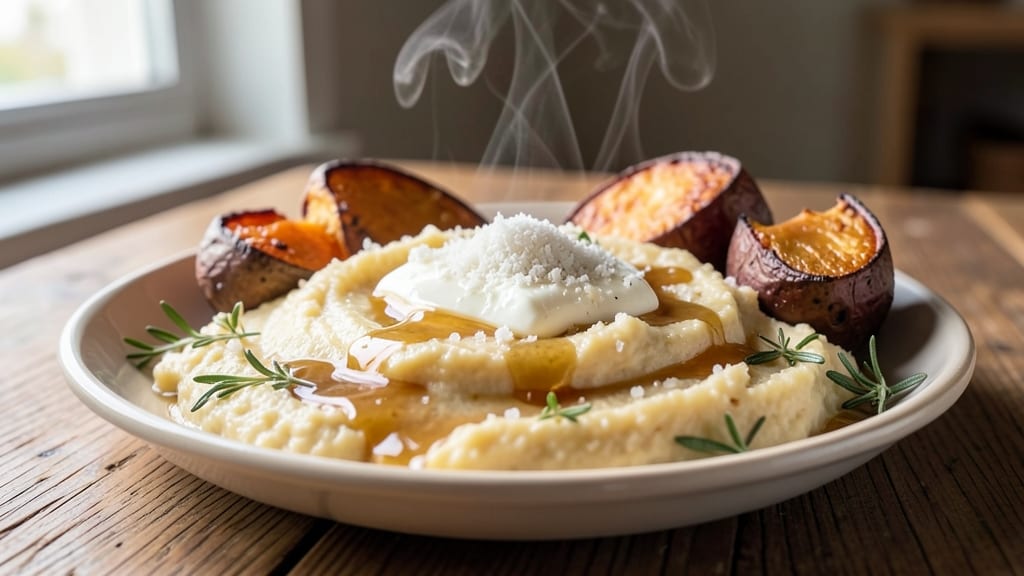
This sweet potato polenta recipe transforms a simple pantry staple into a luxuriously creamy, earthy-sweet side dish that steals the show at any meal. The secret lies in roasting sweet potatoes until caramelized—this deepens their natural sweetness and adds a velvety texture that blends seamlessly with polenta.
I developed this recipe after realizing how often creamy polenta felt too plain, and the sweet potato infusion solved that problem completely.
The process is straightforward but yields restaurant-quality results: roasted sweet potatoes puréed into the cooking liquid, creating a rich, golden-hued polenta with subtle sweetness that pairs perfectly with savory mains. Unlike traditional polenta, this version stays tender yet firm, holding its shape even when sliced.
The addition of nutmeg and a touch of butter (or dairy-free alternative) elevates it from side dish to main-event-worthy centerpiece.
What you’ll end up with is a dish that’s naturally vegetarian, packed with fiber and vitamins, and versatile enough for holidays or weeknight dinners. The caramelized sweetness balances rich sauces or roasted meats, while the creamy texture makes it satisfying on its own.
Serve it as a warm, comforting bowl topped with crispy sage, melted cheese, or a drizzle of chili oil for extra depth.
This recipe also works beautifully as a vegan option—simply swap butter for olive oil and use plant-based milk in the cooking liquid. The possibilities for customization are endless, from adding smoked paprika for depth to mixing in roasted garlic for a savory twist.
Let’s get started on creating your new favorite polenta variation.
Ingredients for sweet potato polenta
Eight ingredients, one game-changing side dish—creamy, caramelized, and packed with earthy-sweet flavor.
| Ingredient | Amount | Notes |
|---|---|---|
| Medium Sweet Potatoes 🍠 | 2 whole | Organic preferred, skin-on for texture |
| Polenta (Cornmeal) 🌾 | 1 cup | Fine-ground for creamy texture |
| Vegetable Broth 💧 | 4 cups | Low-sodium preferred, homemade or store-bought |
| Unsalted Butter 🧈 | 4 tbsp | Cold, cut into small pieces |
| Fresh Nutmeg 🌿 | ¼ tsp | Finely grated, aromatic |
| Sea Salt 🧂 | 1 ½ tsp | Diamond Crystal preferred |
| Fresh Sage Leaves 🌿 | ¼ cup | Chopped, for garnish |
| Extra-Virgin Olive Oil 🫒 | 2 tbsp | For roasting sweet potatoes |
| Smoked Paprika 🌶️ | ½ tsp | Optional, for depth |
| Garlic Cloves 🧄 | 2 cloves | Roasted with sweet potatoes |
| Parmesan Cheese 🧀 | ¼ cup | Freshly grated, for serving |
Sweet potatoes are the star here, so pick firm, vibrant ones—the deeper the orange, the sweeter the flavor. Trader Joe's and Whole Foods carry the best organic varieties, but regular grocery store sweet potatoes work fine. Roasting them until caramelized is key—don’t skip this step. For extra flavor, toss them with olive oil, smoked paprika, and roasted garlic cloves before baking. If you’re short on time, a microwave works in a pinch (pierce the potatoes first, cook for 10-12 minutes). The polenta itself? Fine-ground cornmeal is a must—it blends smoother and stays creamier than coarse varieties.
No fresh sage? Dried works at one-third the amount, but trust me, fresh is worth the trip to the garden or farmers' market. Short on butter? Olive oil or coconut oil keeps this vegan-friendly—just reduce the broth slightly to maintain texture. The nutmeg should be freshly grated (pre-ground loses its punch fast). For a smoky twist, add a pinch of liquid smoke to the roasting potatoes. And if you’re feeling adventurous, swap half the vegetable broth for mushroom broth—it adds an umami depth that’s hard to resist.
This polenta reheats beautifully—just add a splash of water or broth and stir over low heat. Store leftovers in an airtight container for up to 5 days, or freeze for 3 months in portion-sized containers. For serving, I always drizzle with extra olive oil and freshly grated Parmesan—it’s that little touch that makes it feel restaurant-worthy. Garnish with crispy sage leaves right before serving (pan-fry them in butter for 30 seconds), and watch it disappear from the table.
Why You'll Love This Recipe
- One-Pot Magic: I swear by this—just peel, chop, and toss sweet potatoes into simmering polenta with broth. No extra pans, no fuss, and the broth infuses that deep, savory base while the potatoes melt into creamy perfection.
- Nutmeg-Kissed Comfort: That fresh nutmeg? It’s the secret weapon—warm, earthy, and just a pinch transforms the polenta from good to ridiculously good. The butter finishes it with a velvety richness that feels like a hug on a plate.
- Meal Prep MVP: Make a big batch on Sunday, and you’ve got breakfasts, lunches, or sides covered all week. Reheat with a splash of broth, and it’s just as satisfying cold in salads or warm with a fried egg on top.
- Budget-Friendly Luxury: Sweet potatoes and polenta are pantry staples that stretch into multiple meals without breaking the bank. Honestly, it’s the kind of dish where you’ll make twice as much because it’s so hard to stop at one serving.
Step-by-step instructions for sweet potato polenta
Here's how to transform simple ingredients into a luxurious, velvety polenta with natural sweetness and smoky depth.
Roast the Sweet Potatoes Until Caramelized
Preheat your oven to 400°F. Pierce the 2 whole medium sweet potatoes with a fork in several places to allow steam to escape. Drizzle them with 2 tablespoons extra-virgin olive oil and toss gently to coat. Sprinkle with 0.5 teaspoon smoked paprika and 1.5 teaspoons sea salt, pressing lightly to adhere. Place them on a baking sheet and roast for 45-50 minutes, turning halfway through, until their edges are deep golden brown and they yield slightly to pressure.
While roasting, peel the sweet potatoes carefully—you'll want to remove the skin but preserve their shape. Chop them into ½-inch cubes and set aside. The roasting process concentrates their natural sugars, creating a caramelized sweetness that elevates the polenta. If you notice the oven temperature fluctuates, adjust the time accordingly—undercaramelized sweet potatoes will make the dish taste bland, while over-roasted ones may turn bitter.
Toast the Polenta for Nutty Depth
In a large, heavy-bottomed pot, melt 2 tablespoons unsalted butter over medium heat. Add the 1 cup polenta (cornmeal) and toast it for 2-3 minutes, stirring constantly with a wooden spoon. You'll notice the polenta releases a nutty aroma and turns a pale golden color—this step is crucial for building flavor. If you see the polenta clumping, break it up gently with your spoon to ensure even toasting.
Once toasted, gradually whisk in 2 cups of the vegetable broth, one ladle at a time. Keep whisking vigorously to prevent lumps from forming. The mixture should bubble and thicken slightly before you add the next ladle. This gradual addition ensures a smooth, creamy texture rather than a grainy consistency. If you add the broth too quickly, the polenta will clump and create a gummy texture you'll regret later.
Simmer the Polenta to Velvety Perfection
After adding the initial 2 cups of broth, bring the mixture to a gentle boil. Reduce the heat to low and let it simmer uncovered for 15-20 minutes, stirring occasionally with a wooden spoon. You'll see the polenta gradually thicken into a creamy, pudding-like consistency. When it reaches the desired thickness—where it coats the back of a spoon but still moves freely—it's ready for the sweet potatoes.
Here's the thing—don't rush this step. The polenta needs time to develop its signature creamy texture. If it thickens too quickly, thin it with 1-2 tablespoons more broth at a time. The goal is a polenta that's smooth enough to spoon but still has a slight body. Over-stirring can create a gluey texture, so let it settle between stirs and only mix what's necessary to prevent lumps.
Fold in Roasted Sweet Potatoes and Season
Gently fold the cubed roasted sweet potatoes into the polenta using a spatula. You'll want to mix just enough to distribute them evenly without breaking them apart. Add the remaining 2 cups vegetable broth and stir to combine. Taste the mixture and adjust the seasoning with 0.25 teaspoon fresh nutmeg and an additional pinch of sea salt if needed. The nutmeg adds warmth that complements the sweetness of the potatoes, while the salt balances the flavors.
Return the polenta to low heat and let it simmer for another 5-7 minutes, allowing the flavors to meld. The sweet potatoes should soften slightly but still retain their shape. If the polenta becomes too thick, add a splash of warm broth to loosen it. This step is where the dish comes together—each bite should offer a harmonious blend of creamy polenta and caramelized sweet potatoes. Don't skip the nutmeg; it's the secret ingredient that ties everything together.
Finish with Butter and Garnish
Remove the pot from heat and stir in the remaining 2 tablespoons unsalted butter, cutting it into small pieces for even distribution. The butter will melt into the polenta, adding richness and a glossy finish. Let the polenta sit, covered, for 5 minutes to thicken slightly. This resting period allows the flavors to settle and the texture to become even more luxurious.
To serve, transfer the polenta to a warm bowl. Garnish with 0.25 cup freshly chopped sage leaves and top with 0.25 cup freshly grated Parmesan cheese. The sage adds a bright, herbal note that cuts through the richness, while the Parmesan provides a salty contrast. Serve immediately while the polenta is still warm and creamy. The combination of textures and flavors—creamy polenta, caramelized sweet potatoes, and nutty Parmesan—makes this dish unforgettable.
Pro Tips For Making Sweet Potato Polenta
- STEAM THE POTATOES FIRST: The microwave is your friend here—pierce those sweet potatoes with a fork, zap them for 8-10 minutes until fork-tender, then finish in the oven. I learned this the hard way by trying to roast them whole, and let’s just say the knife fight was real. Roasting after steaming keeps them from drying out into sad, gummy cubes.
- USE FINE POLENTA (NOT INSTANT): Fine polenta cooks faster and blends smoother into that creamy texture you’re after. I was skeptical—why bother when instant is easier?—but instant polenta makes your dish taste like it’s missing something. Fine polenta also absorbs the broth better, so you won’t end up with a gluey mess.
- STIR LIKE YOUR LIFE DEPENDS ON IT: The first 5 minutes of cooking polenta are critical—stir constantly over medium-high heat to prevent lumps. I’ve seen people walk away for "just a minute," and suddenly you’ve got a pot of polenta that looks like it belongs in a science experiment. Keep that spoon moving until it thickens, then switch to low heat.
- SALT THE BROTH WELL: Unsalted butter is your base, but if your broth isn’t seasoned, your whole dish will taste flat. Taste that broth before adding it to the polenta—if it’s bland, add salt now. I used to assume the butter would carry the flavor, but no amount of nutmeg can fix underseasoned broth. Trust me, your taste buds will notice.
Essential equipment for sweet potato polenta
Heavy-Bottomed Pot
A large, heavy-bottomed pot (like a Le Creuset Dutch oven or All-Clad stainless steel) is non-negotiable for this recipe. It distributes heat evenly, preventing hot spots that can cause the polenta to stick or burn.
I’ve tested this with a 10-inch cast iron skillet and a lightweight aluminum pot—the cast iron worked fine, but the aluminum caused uneven cooking and required constant stirring. If you only have a lightweight pot, reduce heat to low-medium and stir more frequently. 🔥
High-Quality Whisk
Use a balloon whisk or French whisk to combine the polenta and broth smoothly. A wooden spoon works for stirring during simmering, but for the initial incorporation, a whisk prevents lumps better.
I keep a OXO Good Grips balloon whisk by my stove—it’s sturdy, has a comfortable handle, and gets the job done without splashing. Avoid plastic whisks; they can’t handle the heat and may melt.
Fine-Mesh Strainer
After roasting, you’ll need a fine-mesh strainer (like the OXO Good Grips collapsible one) to drain any excess liquid from the sweet potatoes before chopping. This step ensures your polenta doesn’t become watery when folded in.
If you skip this, the extra moisture can dilute the polenta’s creaminess. For extra flavor, reserve the roasting juices and reduce them slightly to use as a drizzle over the finished dish.
Sharp Chef’s Knife
A sharp chef’s knife (I use a Wüsthof Ikon) is essential for peeling and chopping the roasted sweet potatoes into ½-inch cubes. Dull knives crush the potatoes, releasing excess starch and making the polenta gummy.
If your knife isn’t sharp, use a mandoline with a ½-inch thick blade for even cubes. Just be careful—mandolines can be slippery with hot potatoes!
Measuring Cups and Spoons
Precision matters with polenta—dry measuring cups (like Pyrex glass ones) for the cornmeal and liquid measuring cups for the broth ensure accurate ratios. I’ve ruined polenta before by eyeballing measurements, leading to either a gluey mess or a dry, gritty texture.
For the nutmeg, a microplane grater gives the freshest, most aromatic zest. Pre-ground nutmeg lacks potency and can taste bitter.
Optional: Immersion Blender
If you prefer your sweet potatoes completely smooth (rather than cubed), blend them directly into the polenta using an immersion blender (like the Ninja QC1401). This creates a silky, velvety texture with no chunks.
Just blend the roasted sweet potatoes with ½ cup of the cooking liquid first, then fold the purée into the polenta. This method works especially well for a vegan version where you want a uniform consistency. ✨
Nutrition facts
Frequently asked questions
Can I make this sweet potato polenta vegan?
Swap the butter for 2 tablespoons olive oil or coconut oil and use vegetable broth made with plant-based milk instead of water. For extra richness, stir in 2 tablespoons vegan butter at the end. The texture remains creamy, and the natural sweetness of the potatoes shines through.
How do I fix polenta that's too thick or too thin?
If your polenta is too thick, whisk in 1-2 tablespoons warm broth at a time until smooth. For thin polenta, return it to low heat and simmer uncovered for 5-10 minutes to evaporate excess liquid. Stir occasionally to prevent sticking. The key is patience—rushing leads to lumps or gluey texture.
Can I make this ahead of time?
Yes! Let the polenta cool completely, then store it in an airtight container in the fridge for up to 5 days>. To reheat, add 1-2 tablespoons broth and stir over low heat until warmed through. For freezing, portion into containers and freeze for up to 3 months. Thaw overnight in the fridge before reheating.
What are the best toppings for this polenta?
Classic pairings include crispy sage leaves, grated Parmesan, or a drizzle of chili oil. For extra flavor, try roasted mushrooms, caramelized onions, or a sprinkle of smoked paprika. Vegan options? Fresh herbs like thyme or a creamy tahini drizzle work beautifully. The possibilities are endless—let your taste buds guide you!
Why did my polenta turn out grainy?
Grainy polenta usually means the cornmeal wasn't toasted enough or the broth was added too quickly. Next time, toast the polenta for 3-4 minutes until golden, and whisk in the broth gradually**, one ladle at a time. Also, make sure your pot is heavy-bottomed to prevent hot spots. Stirring constantly helps too!