
Side Dishes
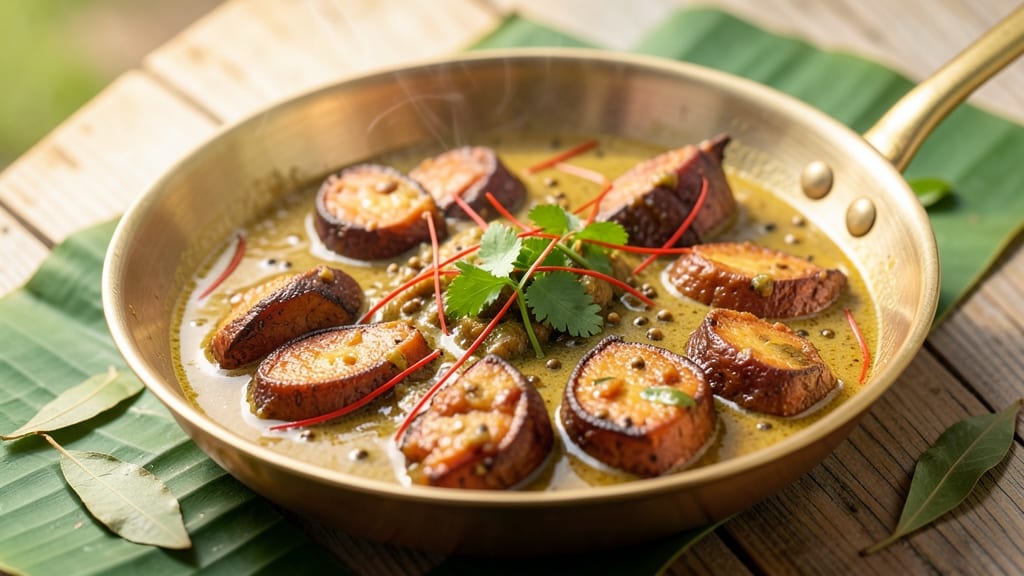
This South Indian sweet potato recipe transforms humble tubers into a fragrant, coconut-infused curry with a tangy tamarind twist—perfect for pairing with steamed rice or dosa.
The secret lies in slow-cooking sweet potatoes until they’re tender yet retain their shape, then simmering them in a rich coconut-tamarind gravy that balances sweet, sour, and spicy notes. It’s a dish that feels both comforting and celebratory, rooted in the vibrant flavors of Tamil Nadu’s vegetarian cuisine.
The recipe begins with a tempering of mustard seeds, curry leaves, and dried red chilies—a technique that infuses the oil with aromatic depth before the sweet potatoes are added. Coconut milk lends creaminess, while tamarind paste adds that signature South Indian tang that cuts through the richness.
The dish is naturally vegetarian, gluten-free, and packed with fiber, making it a wholesome choice for any meal.
What sets this curry apart is its versatility—serve it as a side with fluffy idli, alongside sambar for a complete meal, or even as a filling for wraps or sandwiches.
The sweet potatoes soften into a velvety texture while absorbing the fragrant spices, creating a dish that’s both hearty and elegant. The aroma alone will transport you to a bustling South Indian kitchen.
With just 15 minutes of active prep and 30 minutes of simmering, this recipe delivers restaurant-quality results without the fuss. The key is patience—letting the flavors meld slowly for that perfect balance of sweet, tangy, and spicy. Ready to bring a taste of South India to your table?
Ingredients for sweet potato south indian
Fifteen aromatic ingredients blend to create this vibrant South Indian sweet potato curry.
| Ingredient | Amount | Notes |
|---|---|---|
| Sweet Potatoes 🍠 | 2 lbs | Medium-sized, peeled and cubed |
| Coconut Milk 🥥 | 1 can (13.5 oz) | Full-fat for creaminess |
| Tamarind Paste 🍯 | 2 tbsp | Adjust for desired tang |
| Vegetable Oil 🫒 | ¼ cup | For tempering |
| Mustard Seeds 🌿 | 1 tsp | Lightly toasted |
| Curry Leaves 🌿 | ¼ cup | Fresh, packed |
| Dried Red Chilies 🌶️ | 3 whole | Broken slightly |
| Asafoetida (Hing) 🌿 | ⅛ tsp | Pinch for aroma |
| Cumin Seeds 🌿 | ½ tsp | Toasted lightly |
| Turmeric Powder 🌿 | ½ tsp | Freshly ground preferred |
| Coriander Powder 🌿 | 1 tsp | Freshly ground |
| Ginger 🧄 | 1 inch | Fresh, grated |
| Garlic Cloves 🧄 | 4 cloves | Peeled, minced |
| Salt 🧂 | 1 tsp | Adjust to taste |
| Sugar 🍚 | 1 tbsp | Balances tanginess |
The sweet potatoes are the foundation—choose vibrant orange-fleshed varieties for natural sweetness. Whole Foods or Indian specialty stores carry the best tubers, but any medium-sized sweet potatoes work. Peel and cube them evenly for consistent cooking. For the tamarind paste, Trader Joe's or Indian grocery stores offer the most authentic versions—avoid bottled versions with added sugar. The coconut milk should be full-fat for optimal creaminess; Aroy-D brand is a reliable choice if you can't find fresh.
No tamarind paste? Lemon juice with a pinch of sugar mimics the tang, though it won't replicate the complex depth. Substitute curry leaves with cilantro stems in a pinch, but the flavor will differ slightly. For dried red chilies, adjust the quantity based on heat preference—Kashmiri chilies add color without excessive heat. The asafoetida (hing) is non-negotiable for that signature South Indian aroma; if unavailable, garlic powder can substitute at half the amount, though it lacks the same depth. Toast your cumin seeds and mustard seeds until fragrant—this step is critical for developing the dish's aromatic base.
Store sweet potatoes in a cool, dark place for up to 2 weeks. The tempering spices lose potency after 1 week, so grind fresh turmeric and coriander if possible. This curry reheats beautifully—simmer gently for 5 minutes to restore creaminess. Portion into airtight containers for up to 5 days in the fridge or 3 months in the freezer. The flavors deepen overnight, making it even more rewarding the next day.
Why You'll Love This Recipe
- One-Pot Magic: I swear by this recipe when I’m too tired to dirty multiple pans. Just peel, chop, and toss—no chopping boards left in a mess. The sweet potatoes soften right in the coconut milk while the spices toast in the same pot. Honestly, it’s the kind of dish that makes me feel like I’ve earned my dinner.
- Tamarind Tang Twist: That first bite of tamarind paste? It’s the secret weapon—bright, tangy, and just sweet enough to balance the creamy coconut milk. The mustard seeds pop like fireworks, and the slow simmer lets all the flavors meld into something rich yet light. Not your usual sweet potato dish; this one’s got layers.
- Picnic to Potluck: Between us, this recipe is my go-to for anything. Pack it in a thermos for a hike, bring it to a potluck (it’s always the first to disappear), or serve it cold the next day with rice. The coconut milk keeps it creamy even when chilled, and the tamarind adds a zing that makes it feel special—no matter the occasion.
- Budget-Busting Leftovers: I make a big batch on Sundays because it’s cheap as dirt and tastes even better the next day. Sweet potatoes stretch far, coconut milk adds richness without breaking the bank, and the spices? A pinch goes a long way. Plus, reheating it just takes a minute—no sad, dry leftovers here. My wallet and my freezer thank me.
Step-by-step instructions for sweet potato South Indian curry
This method delivers a perfectly balanced curry with tender sweet potatoes and aromatic coconut-tamarind sauce.
Prepare the Spiced Base
Heat the 0.25 cup vegetable oil in a heavy-bottomed pot over medium heat. Add the 0.5 tsp cumin seeds and let them sizzle for 30 seconds until they begin to pop and release their aroma. Immediately add the 1 tsp mustard seeds and 3 whole dried red chilies, stirring constantly for 1 minute until the mustard seeds turn golden.
Next, add the 0.125 tsp asafoetida (hing) and 0.25 cup curry leaves, stirring for 20 seconds until the curry leaves turn vibrant green and fragrant. This quick tempering step forms the aromatic foundation of your curry. Remove the pot from heat momentarily to prevent burning the spices.
Build the Flavor Layers
Return the pot to medium heat and add the 1 inch grated ginger and 4 cloves minced garlic. Sauté for 2 minutes until the raw garlic aroma transforms into a rich, toasted fragrance. This is your signal to add the 0.5 tsp turmeric powder and 1 tsp coriander powder, stirring continuously for 1 minute until the spices bloom and fill your kitchen with warmth.
Now add the 2 lbs cubed sweet potatoes to the pot, coating them evenly with the spice mixture. Pour in 1 cup water and bring to a gentle simmer. Cover and cook for 12-15 minutes until the sweet potatoes are tender but not mushy, with just a slight resistance when pierced with a fork. The potatoes should absorb the spices while maintaining their shape.
Develop the Tamarind-Coconut Sauce
Once the sweet potatoes are tender, stir in the 2 tbsp tamarind paste and 1 tbsp sugar, dissolving them completely into the liquid. This creates the signature tangy-sweet balance that defines South Indian curries. Add the 1 can (13.5 oz) coconut milk and 1 tsp salt, then bring the mixture to a gentle simmer over medium-low heat.
Simmer uncovered for 10-12 minutes, stirring occasionally, until the sauce thickens to a velvety consistency that lightly coats the back of a spoon. The curry should have a glossy sheen and the potatoes should be fully coated in the rich, aromatic sauce. Taste and adjust seasoning - you may need to add a pinch more salt or sugar depending on your tamarind paste's intensity.
Final Tempering for Depth
For the final touch, heat the remaining 2 tablespoons vegetable oil in a small pan over medium heat. Add 1 tsp mustard seeds and let them pop, then quickly add 0.125 tsp asafoetida (hing) and 0.125 cup fresh curry leaves. Pour this tempering oil over the curry, stirring gently to incorporate. This last step adds an extra layer of complexity and aroma that elevates the dish.
Remove from heat and let the curry rest for 5 minutes before serving. This resting period allows the flavors to meld completely. Serve hot with steamed rice or warm appam for an authentic South Indian meal experience. The curry should have a perfect balance of sweet, tangy, creamy, and spiced notes with tender sweet potatoes that absorb all the flavors.
Pro Tips For Making Sweet Potato South Indian
- Boil Until Fork-Tender: I learned this the hard way—sweet potatoes in this dish need to be actually soft, not just slightly firm. Cut them into even 1-inch chunks and boil until they collapse under a fork (about 12-15 minutes). Overcooking? No such thing here—it’s what makes them velvety when they hit the tamarind-coconut sauce.
- Toast Mustard Seeds Low: Mustard seeds burn faster than you think, especially when mixed with oil. Start them on low heat, then gradually increase as they pop—this keeps their flavor nutty, not bitter. (Yes, even if you’re impatient like me.)
- Soak Tamarind Paste: Tamarind paste is a sticky beast, and clumps in the sauce ruin texture. Mix it with twice the water (about 2 tbsp per 1 tbsp paste) and let it sit for 5 minutes before adding to the coconut milk. Smooth every time.
- Use Full-Fat Coconut Milk: Skip the light version—it won’t coat the sweet potatoes the same way. Full-fat (400ml can) gives that rich, creamy finish you crave, especially when the dish sits for 10 minutes off heat. (Your future self will notice.)
Best sauces and condiments for these flavors
Coconut-Tamarind Gravy
This curry’s signature sauce combines 2 tbsp tamarind paste and 1 can (13.5 oz) coconut milk for a velvety, tangy base. The tamarind adds that signature South Indian sourness, while coconut milk provides rich creaminess.
For extra depth, I like to add 1 tbsp sugar to balance the tang—adjust based on your tamarind’s intensity. 🍯
If you can’t find tamarind paste, a mix of 2 tbsp lemon juice + ½ tsp sugar works in a pinch, though it won’t replicate the complex depth. For a smoother texture, blend the cooked sauce briefly with an immersion blender—just enough to emulsify without making it too thin.
Spiced Tempering Oil
The tempering (or tadka) of mustard seeds, curry leaves, and dried red chilies is non-negotiable for authentic flavor. Toast the 1 tsp mustard seeds until they pop, then add 0.25 cup curry leaves and 3 whole dried chilies for a fragrant aroma.
This step should take 1-2 minutes—don’t rush it! For a smoky twist, add ½ tsp black peppercorns to the tempering.
Pro tip: Save a small batch of tempering oil separately and drizzle it over rice or dosa before serving. It’s a game-changer for adding depth to any South Indian meal. Store extra tempering oil in an airtight container for up to 2 weeks.
Coconut Milk Variations
For a lighter version, replace half the coconut milk with 1 cup vegetable broth—it keeps the dish creamy while reducing richness. If you prefer a richer texture, add 1 tbsp coconut cream at the end for extra decadence.
For a vegan option, ensure your coconut milk is unsweetened and check that tamarind paste has no additives. 🥥
Coconut milk brands vary in thickness—Aroy-D is my go-to for consistency. If using fresh coconut milk, strain it through a fine-mesh sieve to remove excess water for a thicker sauce. For a nutty flavor, toast 2 tbsp desiccated coconut and sprinkle it on top before serving.
Sweet-Spicy Balance
The 1 tbsp sugar in the sauce isn’t just for sweetness—it rounds out the tamarind’s acidity and enhances the sweetness of the potatoes. If your tamarind paste is overly sour, add ½ tsp more sugar or a pinch of baking soda (just a tiny amount!) to neutralize it.
For heat, adjust the dried red chilies—Kashmiri chilies add color without heat, while Bird’s Eye chilies bring serious spice.
To serve, garnish with fresh cilantro and a squeeze of lemon juice for brightness. For extra crunch, top with toasted coconut flakes or crispy fried shallots. The contrast of textures makes every bite exciting! 🌶️
Nutrition facts
Frequently asked questions
Can I substitute regular potatoes for sweet potatoes in this recipe?
While you can technically use regular potatoes, the flavor and texture will differ significantly. Sweet potatoes have a natural sweetness and creamier texture that works perfectly with the tamarind-coconut sauce. Regular potatoes will absorb more liquid and may become watery. If you must substitute, use orange-fleshed potatoes and reduce the sugar by ½ tsp to balance the flavor.
How do I adjust the spice level for kids or sensitive palates?
For milder heat, reduce the dried red chilies to just 1-2 whole chilies (or remove them entirely) and omit the final tempering with chilies. Add a pinch of sugar (¼ tsp extra) to compensate for the reduced acidity. For extra mildness, blend the cooked sauce briefly with an immersion blender to soften the spices.
Can I make this curry ahead of time or freeze it?
This curry actually tastes better the next day as the flavors meld! Store in an airtight container in the fridge for up to 5 days. For freezing, portion into single-serving containers and freeze for up to 3 months. Thaw overnight in the fridge, then reheat gently on low heat with a splash of water to restore creaminess. Avoid microwaving to prevent a watery texture.
What are the best sides to serve with this sweet potato curry?
This dish pairs beautifully with classic South Indian accompaniments like steamed basmati rice, appam (coconut rice pancakes), or mixed vegetable dosa. For a complete meal, serve with sambar (lentil stew) and coconut chutney. The creamy curry also works well with roti or paratha for a heartier plate.
Why did my curry turn out too thin or too thick?
Thin curry often happens when sweet potatoes release too much moisture—reduce cooking time by 2-3 minutes next time and drain excess water. For thickness, simmer uncovered for 5-10 extra minutes or blend briefly with an immersion blender. If using coconut milk with water, strain it through a cheesecloth for thicker consistency. The sauce should coat the back of a spoon but remain spoonable.