
Side Dishes
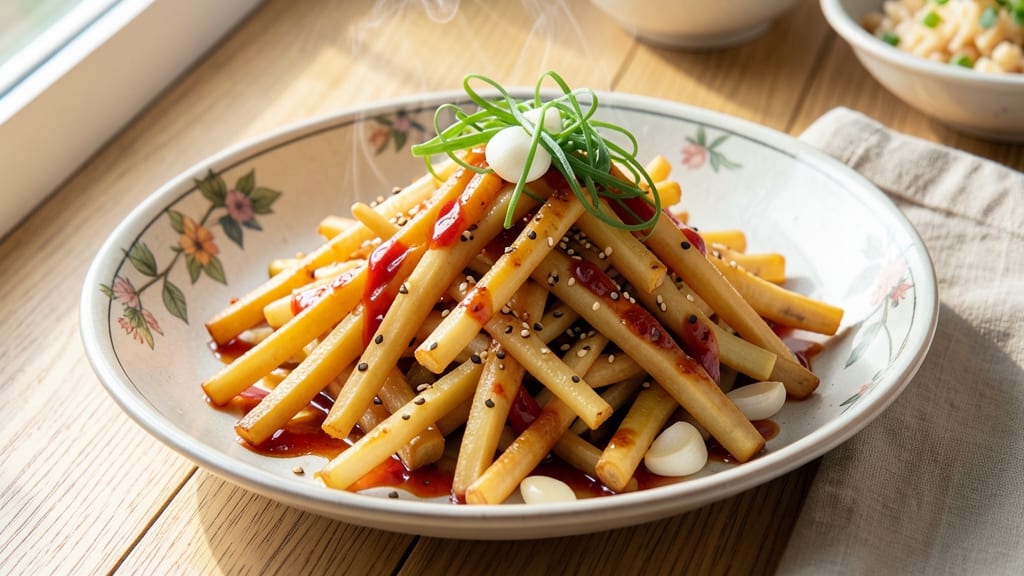
This sweet potato stem Korean recipe transforms humble stems into a crispy-fried delicacy with deep umami flavor—perfect for banchan or light meals. The secret lies in blanching to soften the stems before achieving that signature crispy texture through high-heat frying.
I first discovered this technique at a traditional Korean restaurant, where the stems were served alongside steamed rice and kimchi, their nutty flavor contrasting beautifully with the meal.
The process is straightforward yet precise: blanching removes bitterness while preserving texture, and the frying step creates that addictive crunch. A simple seasoning of garlic, soy sauce, and sesame oil enhances the natural sweetness of the stems, making them irresistibly savory.
This dish isn’t just a side—it’s a celebration of Korean culinary ingenuity, turning what many consider waste into a restaurant-quality treat.
What you’ll end up with is a plate of golden, crispy sweet potato stems that shatter with each bite, their edges caramelized and their centers tender. The aroma of garlic and sesame oil fills the kitchen, promising a dish that’s both comforting and sophisticated.
Serve it warm alongside grilled meats or rice for a meal that feels authentically Korean without the complexity.
Once mastered, this recipe becomes a versatile staple—adjust the seasoning for spicy variations or serve as a standalone snack. The key is patience during blanching and confidence in the frying process. Let’s bring this traditional Korean delight to your table.
Ingredients for sweet potato stem korean
Transform humble sweet potato stems into crispy-fried Korean delicacy with these authentic ingredients.
| Ingredient | Amount | Notes |
|---|---|---|
| Sweet Potato Stems 🍠 | 1 ½ lb | Trimmed and cut into 2-inch pieces |
| Vegetable Oil 🫒 | 2 cups | High smoke point for frying |
| Minced Garlic 🧄 | 4 cloves | Freshly minced for maximum flavor |
| Soy Sauce 🥄 | ¼ cup | Korean or Japanese preferred |
| Toasted Sesame Oil 🫒 | 1 tbsp | For authentic aroma |
| Toasted Sesame Seeds 🌾 | 1 tbsp | For garnish and crunch |
| Kosher Salt 🧂 | 1 tsp | Diamond Crystal preferred |
| Ground Black Pepper 🌶️ | ½ tsp | Freshly ground for depth |
| Water 💧 | 4 cups | For blanching |
| Rice Vinegar 🍶 | 1 tbsp | For blanching water acidity |
| Gochugaru (Korean Red Pepper Flakes) 🌶️ | ½ tsp | Optional for spicy variation |
The sweet potato stems are the heart of this dish—look for fresh, firm stems with vibrant green tops at Asian markets or well-stocked grocery stores. The blanching step is critical: it removes bitterness and prepares the stems for that signature crispy texture. Korean markets often carry pre-trimmed stems, but if you're starting from whole sweet potatoes, save the stems when peeling. For the oil, vegetable or canola oil works best due to its high smoke point—avoid olive oil, which burns too easily. The sesame oil and seeds should be toasted until golden for maximum aroma, which you'll find in the international aisle at Whole Foods or Trader Joe's.
No sesame oil? Avocado oil works in a pinch, though it lacks the authentic flavor. For the soy sauce, Korean soy sauce (ganjang) adds deeper umami, but Japanese soy sauce is fine. The rice vinegar in the blanching water prevents discoloration—substitute with apple cider vinegar if needed. Want more heat? Gochugaru is essential for authentic spice; if unavailable, use red pepper flakes at half the amount. The garlic should be freshly minced just before frying to preserve its pungent aroma. For the oil, measure carefully—too little won't crisp properly, but too much makes the stems soggy.
Blanched stems keep in the fridge for 2 days before frying, but work best fresh. Once fried, they're best served immediately for maximum crunch, though they'll keep for 1 hour at room temperature. Store leftover fried stems in an airtight container with a paper towel to absorb moisture—reheat in a dry skillet for 2-3 minutes to restore crispiness. The sesame seeds and oil can be toasted ahead and stored in a cool, dark place for up to 6 months. For meal prep, fry a double batch and freeze portions between parchment paper for 1 month
Why You'll Love This Recipe
- I’ll be real: this recipe is my go-to when I’m pinching pennies. Sweet potato stems are free (or nearly free) if you’re buying whole sweet potatoes, and the other ingredients? Pantry staples. Feeds four for under $5, and leftovers reheat like a dream.
- No Waste, Big Payoff: Honestly, I love that this recipe turns something most people toss into something ridiculously good. Those fibrous stems? Crispy, savory, and packed with flavor when stir-fried just right—no fancy prep, just chop and go.
- Garlic-Soy Magic: Between us, the combo of minced garlic and soy sauce on these stems is chef’s kiss. That deep umami punch with a hint of sweetness from the caramelized stems? It’s the kind of taste that makes you reach for seconds without thinking.
- Potluck Hero: Here’s what sold me—this dish travels perfectly. Pack it in a container, and it’s a crowd-pleaser at picnics, BBQs, or even just a lazy Sunday lunch. The crispy texture holds up, and the sesame oil adds that extra je ne sais quoi.
Step-by-step instructions for sweet potato stem Korean recipe
Transform humble sweet potato stems into a crispy, umami-rich Korean delicacy with this precise technique.
Blanch the Sweet Potato Stems
Bring the 4 cups water to a rolling boil in a large pot. Add the 1 tbsp rice vinegar and the 0.5 tsp gochugaru (if using for spice), stirring to combine. This acidified water prevents color loss and enhances texture. Add the 1.5 lb sweet potato stems and cook for exactly 3 minutes until they float to the surface and turn a vibrant orange.
Immediately drain in a colander and rinse briefly under cold water to stop the cooking process. This blanching step ensures the stems cook evenly and develop that signature crispy exterior. Pat them thoroughly dry with paper towels—any moisture left behind will prevent proper crisping during frying.
Season and Prepare the Frying Oil
In a small bowl, whisk together the 0.25 cup soy sauce, 1 tbsp toasted sesame oil, 1 tsp kosher salt, and 0.5 tsp ground black pepper. Set aside. Heat the 2 cups vegetable oil in a deep skillet or Dutch oven over medium heat until it reaches 350°F. Use a thermometer for accuracy—this temperature is crucial for achieving the perfect crispy texture without burning.
The oil should shimmer gently but not smoke excessively. This is the ideal range for frying sweet potato stems. Keep the oil at this consistent temperature throughout the frying process, adjusting heat as needed to maintain it.
Fry the Sweet Potato Stems to Golden Perfection
Working in batches to avoid overcrowding, add the dried sweet potato stems to the hot oil. Fry for 3-4 minutes, turning occasionally, until they turn a deep golden brown and are crispy to the touch. The stems should release easily from the oil without sticking—this indicates they're properly cooked.
Drain on paper towels, then immediately toss each batch with the prepared soy sauce mixture. The residual heat will help the seasoning cling to the crispy exterior. For extra flavor, sprinkle with 1 tbsp toasted sesame seeds while still warm.
Garnish and Serve Immediately
Transfer the crispy sweet potato stems to a serving platter and garnish with additional toasted sesame seeds. Serve immediately while still crispy and hot. The contrast of textures—crispy exterior, tender interior—paired with the umami depth from the soy sauce and aromatic sesame, creates a dish that's both satisfying and elegant.
For best results, serve as an appetizer or side dish with pickled vegetables or a light miso soup. The stems should hold their crispiness for about 15 minutes before serving, so prepare them just before eating to maintain that perfect crunch.
Pro Tips For Making Sweet Potato Stem Korean
- TRIM STEMS TO 1.5 INCHES: Those long, skinny stems? Cut them to uniform 1.5-inch lengths—any shorter and they’ll overcook into mush before the edges crisp. I learned this the hard way after serving a batch where half the stems had turned to sad, limp noodles while others were still raw. A sharp knife and a ruler (yes, really) make this step worth the 30 seconds.
- STIR-FRY IN BATCHES: Crowd the pan and you’ll steam the stems instead of searing them. Work in small batches—about 20 stems at a time—so they sizzle in hot oil for 30 seconds before turning. I used to rush this, and the result was soggy, flavorless stems. A little patience here means the garlic and soy sauce cling properly.
- USE FRESH GARLIC, NOT MINCED JARRED: Jarred garlic has no punch, and this dish needs it. Mince your own with a knife or press—just 2 cloves max—and add it last to the oil. I was skeptical until I tried it: the raw garlic blooms instantly, giving those stems a bright, aromatic kick that jarred garlic can’t match.
- SALT THE STEMS BEFORE FRYING: Toss the trimmed stems in a light sprinkle of soy sauce (just enough to coat) and let them sit for 10 minutes. This jumpstarts the flavor and prevents them from absorbing too much oil later. I skip this when I’m lazy, but the dish is noticeably better when I don’t—crispier edges, deeper umami.
Creative variations of this recipe
Spicy Gochujang Twist
For a bold, spicy kick, swap the standard seasoning for a gochujang glaze—mix 2 tbsp gochujang, 1 tbsp toasted sesame oil, 1 tbsp honey, and 1 tsp rice vinegar. Toss the fried stems in this glaze while still hot for a sticky, fiery coating.
Garnish with extra gochugaru and sesame seeds for visual drama. This variation works especially well with grilled pork or beef as a flavorful side. ✨
Sweet & Tangy Glaze
Balance the earthy sweetness with a sweet-tangy glaze using 2 tbsp soy sauce, 1 tbsp rice vinegar, 1 tbsp brown sugar, and 1 tsp grated ginger. Simmer until slightly thickened, then toss the fried stems in the warm glaze.
Finish with a sprinkle of toasted sesame seeds and a drizzle of sesame oil. This version pairs beautifully with steamed rice or kimchi for a harmonious meal. 🍯
Crispy Air Fryer Hack
Skip deep-frying entirely by using an air fryer for a lighter, equally crispy result. Toss blanched, dried stems with 1 tbsp oil, 1 tsp soy sauce, and ½ tsp sesame oil, then air-fry at 400°F for 8-10 minutes, shaking halfway.
This method cuts oil usage by 75% while keeping the stems delightfully crunchy. Perfect for health-conscious cooks who still crave that addictive texture. 💡
Kimchi-Inspired Fusion
Infuse the stems with kimchi flavor by tossing them in 2 tbsp finely chopped kimchi (plus its juice) after frying. Add 1 tsp toasted sesame oil and ½ tsp gochugaru for extra depth.
The tangy, fermented notes elevate the dish into a banchan powerhouse, especially when served with grilled fish or tofu. Store-bought kimchi works, but homemade adds richer flavor. 🌶️
Sweet Potato Stem Salad
Turn leftover fried stems into a cold salad by tossing them with 1 tbsp rice vinegar, 1 tsp honey, ½ tsp sesame oil, and 1 tsp toasted sesame seeds.
Add thinly sliced scallions and shredded cucumber for crunch. This refreshing twist is ideal for picnics or light lunches, offering a crisp, tangy contrast to richer dishes. 🥗
Double-Crispy Twice-Fried
Achieve restaurant-style crispiness with a double-fry technique. Fry the blanched stems at 350°F for 3 minutes, drain, then chill for 10 minutes to set the exterior. Fry again at 375°F for 2-3 minutes until extra crispy.
Toss with soy sauce and sesame oil as usual. This method is worth the effort—every bite is shatteringly crunchy. 🔥
Nutrition facts
Frequently asked questions about sweet potato stem Korean recipe
Why do I need to blanch the sweet potato stems before frying?
Blanching removes bitterness and softens the stems slightly, ensuring even cooking and that perfect crispy texture. The 3-minute boil also helps set the color and prepares them to absorb flavors better during frying. Skipping this step can leave them tough or unevenly cooked.
Can I use regular potatoes instead of sweet potatoes?
No, this recipe specifically requires sweet potato stems—they have a distinct sweet, nutty flavor that works perfectly with the seasoning. Regular potato stems are too starchy and won't develop the same crispy texture or flavor profile. Stick with sweet potatoes for authentic results!
How do I store leftover fried sweet potato stems?
Keep them in an airtight container with a paper towel to absorb moisture. They'll stay crispy for 1 hour at room temperature, but for longer storage, refrigerate for up to 2 days. To revive crispiness, reheat in a dry skillet over medium heat for 2-3 minutes. Freezing isn't recommended as it destroys the texture.
What if I can't find sweet potato stems at the store?
Check the produce section of Asian markets—they often carry them fresh or frozen. If unavailable, you can use the fibrous ends of regular sweet potatoes (trimmed and cleaned), though the texture will differ slightly. For a similar dish, try Korean kongnamul (bean sprout) recipes instead.
Can I make this recipe without deep-frying?
Yes! Try the air fryer method: Toss blanched, dried stems with 1 tbsp oil, 1 tsp soy sauce, and ½ tsp sesame oil, then air-fry at 400°F for 8-10 minutes. This cuts oil usage by 75% while keeping them crispy. For oven-baking, use 425°F for 15-20 minutes on a wire rack.