
Side Dishes
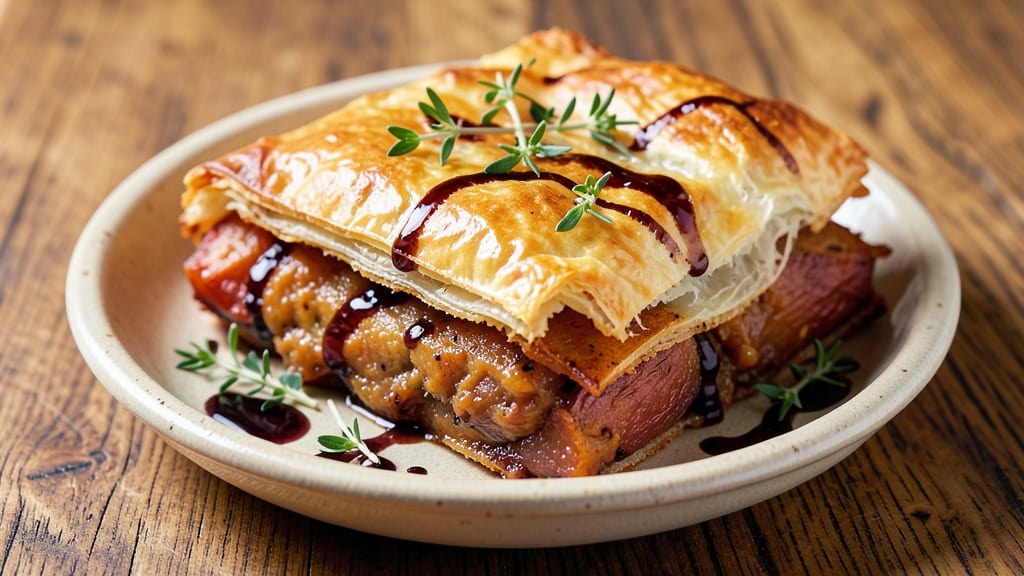
This sweet potato Wellington recipe transforms humble sweet potatoes into an elegant, showstopping side dish with layers of spiced filling wrapped in golden puff pastry.
The secret lies in roasting the sweet potatoes until tender and caramelized, then blending them into a smooth, flavorful filling that pairs perfectly with savory herbs and warm spices. Every bite delivers a balance of creamy texture and aromatic depth that elevates any holiday table.
What makes this Wellington special is the flaky pastry—light, crisp layers that encase the spiced filling while baking to a golden brown. Unlike traditional meat Wellington, this vegetarian version proves just as impressive, with a filling rich in cinnamon, nutmeg, and brown sugar that caramelizes beautifully.
The assembly process is straightforward, but the result is restaurant-worthy, perfect for impressing guests without the complexity.
By the time it emerges from the oven, your Wellington will have a crisp, golden exterior that contrasts with the velvety sweet potato filling inside. The aroma of warm spices fills the kitchen, signaling a dish that’s both comforting and sophisticated.
This recipe is designed to be foolproof, ensuring even home cooks achieve professional results with minimal effort.
Serve it alongside roasted meats, gravy, or as a standalone vegetarian centerpiece. The combination of textures—crisp pastry, creamy filling, and caramelized edges—makes it a standout dish that’s as delicious as it is visually appealing. Here’s how to make it perfectly every time.
Ingredients for sweet potato wellington
Transform humble sweet potatoes into an elegant Wellington with these carefully selected ingredients.
| Ingredient | Amount | Notes |
|---|---|---|
| Sweet Potatoes 🍠 | 2 lbs | Organic preferred, peeled and cubed |
| Unsalted Butter 🧈 | ½ cup | Cold, cut into small pieces |
| Brown Sugar 🍚 | ½ cup | Packed, light or dark variety |
| Ground Cinnamon 🌿 | 1 ½ tbsp | Freshly ground preferred |
| Ground Nutmeg 🌿 | ½ tsp | Freshly grated for depth |
| Fresh Thyme Leaves 🌿 | ¼ cup | Stems removed, finely chopped |
| Fresh Sage Leaves 🌿 | ¼ cup | Stems removed, chopped |
| Vegetable Stock 💧 | ¼ cup | Low-sodium preferred |
| Puff Pastry Sheets 🥧 | 2 whole | Store-bought or homemade, thawed |
| Large Egg 🥚 | 1 whole | Beaten for egg wash |
| Diamond Crystal Kosher Salt 🧂 | 1 ½ tsp | For seasoning and pastry |
| Ground Black Pepper 🌶️ | ½ tsp | Freshly cracked |
| Extra-Virgin Olive Oil 🫒 | 1 tbsp | For brushing pastry |
The sweet potatoes are the foundation—organic varieties like Beauregard develop the deepest caramelized sweetness when roasted. Whole Foods or local farmers' markets often carry the best quality, with vibrant orange flesh and smooth skins. If using conventional produce, scrub well to remove any dirt. For the spices, Penzeys or bulk sections at specialty stores offer freshly ground cinnamon and nutmeg, which elevate the filling's aromatic complexity. Fresh herbs like thyme and sage should be bright green with no wilting—Trader Joe's typically carries excellent quality at reasonable prices.
No organic sweet potatoes? Conventional varieties work just fine, though you may want to peel them more thoroughly. Substituting brown sugar for white yields a richer caramelization, but regular granulated sugar works in a pinch. For the herbs, dried thyme and sage at one-third the amount can replace fresh, though the texture will differ slightly. If you're short on puff pastry, homemade shortcrust pastry provides a sturdy alternative, though it won't achieve the same flakiness. The vegetable stock can be swapped for low-sodium chicken stock if you prefer, though it will slightly alter the vegetarian profile.
Roasted sweet potatoes keep well in the refrigerator for 3 days before blending, though they're best used immediately for peak flavor. Fresh herbs should be stored in damp paper towels within sealed bags for up to 5 days. Assembled Wellington can be refrigerated for 12 hours before baking to allow flavors to meld, though it's best baked fresh. Leftover baked Wellington reheats beautifully in a 350°F oven for 10-15 minutes, wrapped in foil to retain moisture. For make-ahead convenience, prepare the filling and pastry components separately and assemble just before baking.
Why You'll Love This Recipe
- One-Pan Magic: I swear by this recipe when I’m too tired to wash dishes—just roast the sweet potatoes with butter, sugar, and spices until they’re caramelized and tender. No extra pans, no fuss, just that golden, sticky perfection waiting for you.
- Spice-Perfect Balance: That first bite of crispy edges and buttery-sweet flesh? It’s like dessert and dinner had a baby. The cinnamon and nutmeg turn ordinary sweet potatoes into something ridiculously good—no one ever guesses it’s just a sheet pan recipe.
- Weeknight & Holiday Hero: Between us, this is my go-to for game day snacks or when company drops by unexpectedly. It’s hearty enough for a main but easy enough to make while scrolling through emails—plus, the leftovers reheat like a dream.
- Budget-Friendly Comfort: Sweet potatoes and pantry spices? This recipe costs next to nothing but tastes like you slaved over it. Honestly, I make it twice a month just because it’s so satisfying—and my wallet thanks me for it.
Step-by-step instructions for sweet potato Wellington
Here's the method for achieving that perfect balance of tender filling and golden, flaky pastry.
Roast Sweet Potatoes Until Tender
Preheat your oven to 400°F and line a baking sheet with parchment paper. Toss the 2 lbs sweet potatoes (peeled and cut into 1-inch cubes) with 1 tablespoon extra-virgin olive oil, 0.75 teaspoon diamond crystal kosher salt, and 0.25 teaspoon ground black pepper. Spread them in a single layer on the prepared baking sheet.
Roast for 25-30 minutes until the sweet potatoes are fork-tender with slightly caramelized edges. You'll know they're ready when they collapse easily under gentle pressure but still have a slight bite in the center. This roasting method develops deep, caramelized flavors that form the base of your filling.
Create the Spiced Filling
Transfer the roasted sweet potatoes to a large mixing bowl. In a separate small saucepan, melt the 0.5 cup unsalted butter over medium-low heat. Once melted, remove from heat and whisk in the 0.5 cup packed brown sugar, 1.5 tablespoons ground cinnamon, and 0.5 teaspoon ground nutmeg until fully combined and smooth.
Pour this spiced butter mixture over the warm sweet potatoes and gently fold everything together. Stir in the 0.25 cup chopped fresh thyme leaves and 0.25 cup chopped fresh sage leaves, then add the 0.25 cup vegetable stock. The mixture should be moist but not soupy—if it's too dry, add a splash more stock. Let this filling cool completely before assembling.
Prepare the Puff Pastry
While the filling cools, preheat your oven to 375°F. Unfold the 2 whole puff pastry sheets on a lightly floured surface. Brush each sheet generously with the beaten large egg, leaving a ½-inch border uncoated along all edges. This egg wash will create that signature golden, flaky crust.
Roll out each sheet to approximately 12x10 inches to create two identical rectangles. The pastry should be about ⅛-inch thick—don't press too hard or you'll compress the layers. Sprinkle each sheet lightly with 0.75 teaspoon diamond crystal kosher salt for seasoning.
Assemble the Wellington
Place one pastry sheet on a parchment-lined baking sheet. Spoon the cooled sweet potato filling onto the center of the pastry, spreading it into an even rectangle about 10x8 inches. Leave a 1-inch border around the edges—this ensures the pastry fully encloses the filling.
Brush the exposed edges of the pastry with more beaten egg, then carefully fold the second pastry sheet over the top. Press the edges firmly to seal, then trim any excess pastry. Use a sharp knife to score decorative slits on the top if desired—this allows steam to escape and prevents puffing. Brush the entire top with additional beaten egg for a glossy finish.
Bake Until Golden and Flaky
Bake the Wellington for 35-40 minutes until the pastry is deep golden brown and the internal temperature reaches 190°F. The filling should be heated through but still moist—don't overbake or the sweet potatoes will dry out. If the pastry browns too quickly, loosely cover with foil.
Remove from the oven and let rest for 10 minutes before slicing. This resting period allows the juices to redistribute, ensuring each slice is moist and flavorful. Serve warm with a dollop of whipped cream or a simple green salad to complement the rich, spiced filling.
Pro Tips For Making Sweet Potato Wellington
- Boil Until Fork-Tender: Sweet potatoes should give just slightly when pierced with a fork—no mushy centers, no hard cores. I learned this the hard way: undercooked slices turn to gluey paste when baked, while overcooked ones collapse into sad, watery pulp. Aim for 15–20 minutes in salted boiling water, then drain and pat very dry before assembling.
- Toast the Spices First: Brown sugar burns faster than you’d expect, so toast the cinnamon and nutmeg in a dry pan for 30 seconds until fragrant. This deepens their flavor and prevents that bitter, scorched taste when the butter melts. (Yes, even if you’re impatient like me—just set a timer.)
- Press the Butter In: Don’t just dollop the butter on top—press it between the sweet potato layers with your fingers or a spoon. This ensures every slice gets that buttery, caramelized goodness, not just the top. The sugar will melt into the butter, creating a sticky, golden crust instead of a dry, crumbly mess.
- Bake at 375°F, Not Higher: Sweet potatoes caramelize at their own pace, and 400°F+ will burn the sugar before the edges soften. Stick to 375°F and tent with foil for the first 20 minutes to trap steam, then uncover for the last 10–15 to let the sugar turn glossy. (Your future self will thank you—trust the oven.)
Troubleshooting your sweet potato wellington
Pastry Too Tough
If your puff pastry turns out dense and chewy instead of flaky, the issue is likely overworking the dough. I’ve found that gently rolling the pastry to ⅛-inch thickness and avoiding excessive handling prevents tough layers.
Also, make sure your pastry sheets are fully thawed before using—frozen pastry can’t achieve the same delicate texture. 🥧
Another common mistake is brushing too much egg wash on the edges, which can create a hard crust. Stick to a light coat and leave that ½-inch border uncoated. For extra flakiness, chill the assembled Wellington in the fridge for 20-30 minutes before baking to help the layers separate properly.
Filling Too Dry
Dry filling happens when the sweet potatoes lose too much moisture during roasting. To prevent this, I recommend roasting at 400°F for 25-30 minutes—any longer and they’ll start to dry out.
If your filling seems too thick after blending, add 1-2 tablespoons vegetable stock to restore moisture. The mixture should hold its shape when spooned but still be spreadable. 🍠
For extra insurance, I sometimes blend in 1 tablespoon unsalted butter with the filling after it cools. This adds richness and helps maintain moisture during baking. If you’re worried about dryness, don’t overbake—remove the Wellington when the pastry is golden and the internal temp hits 190°F.
Pastry Not Browning
Uneven browning usually means the egg wash wasn’t applied evenly or the oven wasn’t hot enough. Preheat your oven to 375°F and use a high-quality egg wash—just 1 beaten egg thinned with 1 teaspoon water works perfectly.
Brush the pastry generously but avoid pooling liquid, which can create soggy spots. 🔥
If your oven runs hot or cold, try placing a baking sheet on the lower rack to create a hotter environment. For extra color, broil the Wellington for 1-2 minutes at the end of baking, watching closely to avoid burning.
A toothpick inserted into the center should come out clean, indicating the filling is heated through.
Filling Leaking
Leaky fillings happen when the pastry isn’t properly sealed or the filling is too wet. To fix this, press the edges of the pastry firmly together with your fingers or a fork to create a tight seal.
Trim any excess pastry that might interfere with the seal. If your filling is still too loose, chill it for 10 minutes before assembling to help it firm up slightly. ❄️
Another trick is to brush the edges of the pastry with a thin layer of egg wash before folding, which acts as a glue.
If you notice filling oozing during baking, reduce the oven temperature by 25°F to slow down the cooking process and give the pastry time to set properly.
Nutrition facts
Frequently asked questions
Can I make this Wellington ahead of time?
Yes! Assemble the Wellington and refrigerate it (unbaked) for up to 12 hours before baking. This lets flavors meld beautifully. For the best results, bake it straight from the fridge—no need to thaw. If you're short on time, you can also prepare the filling and pastry separately, then assemble just before baking.
What's the best way to reheat leftovers?
Wrap slices in foil and reheat in a 350°F oven for 10-15 minutes until warm through. Microwaving can make the pastry soggy, so oven reheating preserves that perfect flaky texture. For extra crispiness, broil for 1-2 minutes at the end while watching closely.
Can I substitute regular potatoes?
Not recommended! Sweet potatoes provide that perfect balance of natural sweetness and creaminess that works so well with the spices. Regular potatoes would make the filling too starchy and less flavorful. If you absolutely must substitute, try orange-fleshed yams, but they'll have a slightly different texture.
How do I make it vegetarian?
This recipe is already vegetarian! The filling contains no meat products—just sweet potatoes, butter, brown sugar, and herbs. For extra protein, consider adding 1 cup cooked lentils or ½ cup walnuts to the filling before baking. The dish remains rich and satisfying while keeping all vegetarian benefits.
What's the secret to perfect flaky pastry?
Three keys:
- Don't overwork the dough—handle it as little as possible,
- Keep it cold by chilling the assembled Wellington for 20-30 minutes before baking, and
- Use a light egg wash (just beaten egg, no extra water). The 375°F oven temperature is also crucial for achieving that signature flakiness.