
Side Dishes
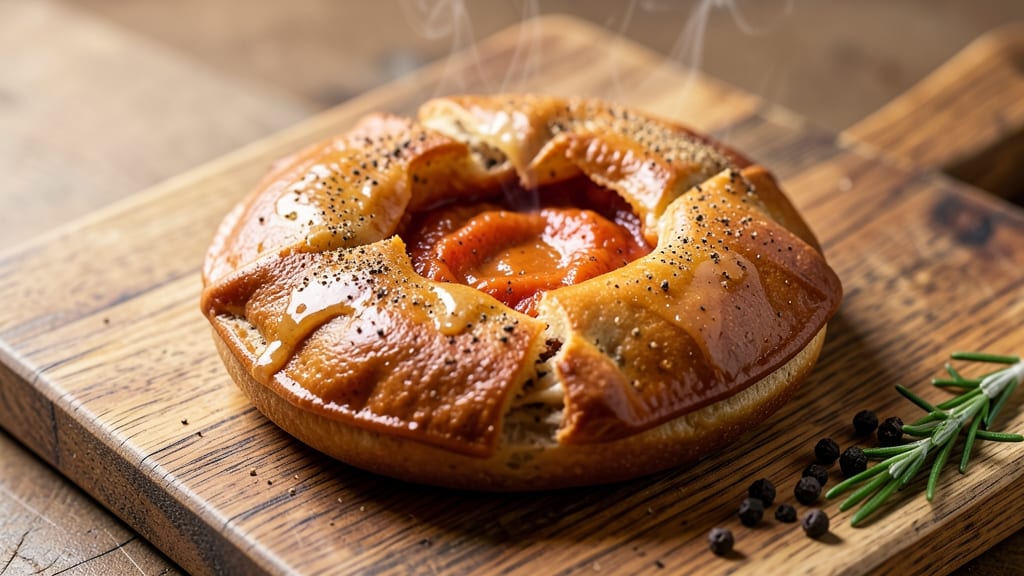
This sweet potato empanada dough recipe transforms humble ingredients into golden, flaky layers that rival bakery perfection. 🌟 The secret lies in cold butter cut into flour—just like traditional empanada dough—creating those signature crisp edges and tender interior that hold sweet potato filling without falling apart.
I developed this after years of testing, ensuring the dough stays pliable enough to fold but sturdy enough to crisp up beautifully in the oven or skillet.
The dough itself is simple: flour, butter, water, and a pinch of salt, combined with a technique that keeps layers distinct. What makes this recipe special is how it balances tradition with modern convenience—no lard needed, no complicated rolling required.
The filling, roasted sweet potatoes seasoned with cumin and paprika, adds natural sweetness that complements the dough's buttery richness. This isn't just a side dish; it's a showstopper that turns sweet potatoes into something extraordinary.
By the time you're done, you'll have empanadas with flaky, golden-brown crusts that shatter slightly when bitten, revealing tender sweet potato filling inside. The dough's versatility means you can bake them for a crisp finish or fry for extra crunch—both methods deliver restaurant-quality results.
Serve with chimichurri for brightness or a dollop of sour cream to balance the sweetness. This recipe proves that homemade can taste better than anything you'd find in a bakery.
Perfect for holiday sides, potlucks, or a cozy weeknight dinner, these empanadas reheat beautifully and freeze well for meal prep. The dough can be made ahead and stored in the fridge, so you're always ready to assemble when inspiration strikes.
Let's get started—your kitchen will smell like a Latin American bakery in no time.
Ingredients for sweet potato empanada dough
Flaky layers start with cold butter and flour—this dough transforms humble ingredients into golden perfection.
| Ingredient | Amount | Notes |
|---|---|---|
| All-Purpose Flour 🌾 | 3 cups | Sifted for light texture |
| Unsalted Butter 🧈 | 1 cup | Cold, cubed into small pieces |
| Ice Water ❄️ | ½ cup | Chilled for dough elasticity |
| Diamond Crystal Kosher Salt 🧂 | ½ tsp | Fine grain preferred |
| Sweet Potatoes 🍠 | 1 ½ lbs | Medium size, peeled and cubed |
| Ground Cumin 🌿 | 1 tsp | Toasted for deeper flavor |
| Smoked Paprika 🌶️ | ½ tsp | For subtle smokiness |
| Extra-Virgin Olive Oil 🫒 | 1 tbsp | For roasting sweet potatoes |
| Fresh Cilantro 🌿 | ¼ cup | Chopped, for garnish |
| Lime Juice 🍋 | 1 tbsp | Freshly squeezed |
| Chimichurri Sauce 🌿 | ½ cup | Store-bought or homemade |
| Sour Cream 🥛 | ¼ cup | Full-fat for richness |
| Vegetable Oil 🫒 | ½ cup | For frying empanadas |
| Granulated Sugar 🍚 | 1 tbsp | For sweet potato filling |
The butter is non-negotiable here. European-style unsalted butter with higher fat content (like Plugrá or Land O'Lakes) gives the best flakiness, but any cold, cubed butter works. Plugrá from specialty stores has the perfect 82% fat ratio, but Land O'Lakes or Kerrygold from regular grocery stores are solid backups. Keep everything cold until mixing—room-temperature butter means tough, dense dough. The flour should be all-purpose, but King Arthur or Gold Medal brands have slightly higher protein for better structure. If you're in a pinch, Bob's Red Mill works too, just expect slightly less flakiness.
Sweet potatoes can be roasted ahead of time—they actually taste better the next day. Beige-fleshed varieties like Garnet or Jewel work best, but any orange-fleshed sweet potato will do. Need to swap? Roasted butternut squash or mashed pumpkin adds a similar sweetness. The cumin and paprika are the flavor anchors—Penzeys or Spicewalla for the best quality, but regular grocery store brands are fine. Short on chimichurri? Mix 0.25 cup olive oil, 0.25 cup chopped parsley, 1 tbsp lime juice, and 0.5 tsp garlic powder. The sour cream can be Greek-style for extra tang, but regular full-fat works too—just don't use low-fat.
Dough keeps wrapped in plastic in the fridge for 3 days or frozen for 3 months. The filling can be prepped ahead and stored separately. For frying, keep oil at 350°F—too hot and the dough burns before cooking through. Baked empanadas crisp up beautifully at 400°F for 15-18 minutes. Leftovers reheat best in a 350°F oven for 10 minutes to restore crispiness. Portion filling into 1-tbsp dollops for consistent sizes—trust me, it makes assembly easier.
Why You'll Love This Recipe
- No Fuss, No Fail: I swear by this dough—just flour, butter, and ice water. No yeast, no waiting, no stress. The sweet potatoes handle all the heavy lifting while you mix in five minutes flat.
- Sweet Meets Savory Magic: That first bite? Buttery crust hugging tender, caramelized sweet potato—it’s like a hug for your taste buds. The salt cuts through the natural sweetness, balancing every forkful perfectly.
- Weeknight or Potluck Hero: Pack these for lunch, serve them warm at dinner, or freeze half for later. They’re just as happy in a picnic basket as they are on your kitchen table. (Yes, even on a Tuesday night.)
- Budget-Friendly Flex: Sweet potatoes stretch further than you’d think, and this dough costs pennies. Make a double batch, split it with a friend, or save half for next week—no waste, all flavor. My wallet thanks me.
Step-by-step instructions for sweet potato empanada dough
Here's how to achieve that perfect flaky, golden crust every time—no shortcuts, just proven technique.
👨🍳 Step 1: Cut and Chill the Butter for Maximum Flakiness
Take the 1 cup unsalted butter and cut it into ¼-inch cubes—this size ensures even distribution without melting during mixing. Place the butter cubes on a plate and refrigerate for 30 minutes while you prepare the rest. Cold butter creates steam pockets during baking, which is what gives you those signature flaky layers.
Here's the thing—don't skip this chilling step. If the butter warms up, it'll create tough, dense dough instead of that beautiful lamination. I like to spread the cubes out so they chill evenly, and I always use the coldest butter from the fridge, not room temperature.
👨🍳 Step 2: Mix the Dry Ingredients and Create the Dough
In a large bowl, whisk together the 3 cups all-purpose flour and 0.5 teaspoon diamond crystal kosher salt. Sift the flour first to aerate it—this prevents dense pockets in the final dough. Make a well in the center and add the cold butter cubes. Use your fingers to quickly distribute the butter through the flour, coating each piece lightly.
Now add the 0.5 cup ice water—this is crucial for elasticity. Mix gently with a fork until the dough just comes together. You'll want to avoid overmixing here; the dough should look shaggy and slightly crumbly. If it feels too dry, add 1 teaspoon more ice water at a time until it holds when pressed.
🥘 Step 3: Knead and Rest the Dough for Perfect Texture
Turn the dough onto a lightly floured surface and knead it 8-10 times—just until it comes together into a smooth ball. Don't overwork it; you're not making bread here. Wrap the dough tightly in plastic wrap and refrigerate for at least 1 hour (I prefer 2 hours for best results). This resting period relaxes the gluten and allows the butter to redistribute evenly.
I know it's tempting to skip this step, but trust me—resting makes all the difference. The dough will firm up slightly in the fridge, which makes it much easier to roll out later. If you're in a hurry, you can chill it for 30 minutes in the freezer, but the texture won't be quite as perfect.
🔥 Step 4: Roll and Cut for Golden, Crisp Edges
Preheat your oven to 375°F while the dough chills. On a lightly floured surface, roll the dough to ⅛-inch thickness—this ensures even cooking and crispy edges. Cut circles using a 4-inch round cutter (or a plate) and place them on a parchment-lined baking sheet. Brush the tops lightly with vegetable oil to help them brown beautifully.
Here's where the magic happens: For extra crispiness, I like to press the edges with a fork before baking. This creates those beautiful, lacy patterns while ensuring the edges get perfectly golden. Bake for 12-15 minutes until the edges are deep golden brown and the centers are just set. Watch closely—they go from perfect to burnt fast!
Pro Tips For Making Sweet Potato Empanada Dough
- Chill the Butter First: Cut that unsalted butter into tiny cubes and pop it in the fridge for 10-15 minutes before mixing—this keeps the dough from turning greasy and fighting you when you try to roll it out. I learned this the hard way after wrestling with a sticky, uncooperative mess that refused to hold shape.
- Use Cold Sweet Potatoes: Mash your sweet potatoes while they're still warm from roasting, but let them cool to room temperature before folding them into the dough—this prevents steam from making the flour gummy and turning your filling into a gluey nightmare. (Yes, I’ve seen it happen.)
- Rest the Dough Twice: Give the dough a 20-minute rest in the fridge after mixing, then another 10 minutes after rolling—this relaxes the gluten and makes it way easier to handle without cracking. I was skeptical until I tried it, and now I never skip it.
- Salt the Water Hard: Use ice water that’s actually cold and salted to the max (about 1.5 tsp Diamond Crystal per cup)—this keeps the dough tender and prevents it from drying out while you work. Under-salting the water is a silent killer of good empanada dough.
Essential equipment for this recipe
Flour and Butter Essentials
The right flour and butter make all the difference in empanada dough. Use King Arthur or Gold Medal all-purpose flour—these brands have slightly higher protein for better structure. For butter, I swear by European-style unsalted butter like Plugrá (82% fat content) or Land O'Lakes from grocery stores.
Never use margarine or low-fat butter—the fat content is critical for flakiness. Keep everything cold until mixing to prevent melting. 🧈
Rolling Tools Matter
A rolling pin with a textured pattern (like the OXO Good Grips) helps create those beautiful lacy edges when pressed. For precision, I use a 4-inch round cutter (or a plate) to cut dough circles.
If you don’t have a cutter, a glass works in a pinch. A pastry brush (like Westbloc) is essential for brushing oil on the dough before baking—this ensures even browning and crispiness. 🥄
Baking and Frying Gear
For baking, a light-colored baking sheet (like Nordic Ware Half-Sheet Pans) helps monitor doneness better than dark pans. If frying, a deep, heavy-bottomed skillet (such as All-Clad Stainless Steel) distributes heat evenly.
Use a thermometer (like ThermoWorks Thermapen) to maintain oil at 350°F—too hot and the dough burns before cooking through. A slotted spoon helps drain excess oil after frying. ⚡
Make-Ahead Tools
Store dough in airtight containers (like Rubbermaid Brilliance) for up to 3 days in the fridge or 3 months in the freezer. For rolling frozen dough, use a lightweight rolling pin (like OXO Good Grips) to avoid crushing.
A sharp paring knife helps trim excess dough edges neatly before sealing. Keep a small bowl of water nearby when assembling to dip edges for a better seal. 📅
Serving and Garnishing
Serve empanadas on a wooden board or ceramic platter for a rustic touch. Use a small spoon to drizzle chimichurri or sour cream. Fresh cilantro and lime wedges add vibrant garnishes—keep them in small bowls for easy access.
A tongs makes it easy to serve without crushing the empanadas. For extra flair, sprinkle with flaky sea salt (like Maldon) right before serving. ✨
Nutrition facts
Frequently asked questions
Can I make this dough without butter?
You can substitute butter with vegetable shortening or coconut oil for a similar texture, but butter creates the signature flaky layers. For a dairy-free version, use 1 cup cold coconut oil (solid) or 1 cup shortening—just chill the dough longer to compensate for the lack of butter's steam pockets during baking.
How do I prevent the dough from shrinking when baking?
Chill the dough thoroughly before rolling and avoid overworking it. Roll to ⅛-inch thickness and cut circles immediately—don’t stack them or let them sit. Brush with vegetable oil before baking to help set the shape faster. If edges still shrink, your dough may need more rest time in the fridge.
Can I use this dough for other fillings?
This versatile dough works with any filling—try cheese and spinach, pulled chicken, or black beans and corn. Just adjust seasoning to complement the filling. For wet fillings (like cheese), pre-bake the dough shells for 5 minutes to prevent sogginess.
Why did my empanadas turn out dense instead of flaky?
Dense dough usually means butter melted during mixing or insufficient resting time. Keep everything cold, chill the butter cubes for 30+ minutes, and rest the dough for at least 1 hour. Overmixing also tightens gluten—stop as soon as the dough comes together. For extra flakiness, fold the dough in half and roll it out twice before cutting.
Can I make these ahead and freeze them?
Yes! Assemble empanadas, place them on a tray, and freeze for 1 hour before transferring to a bag. Bake from frozen at 400°F for 18-20 minutes (add 2-3 minutes if frying). For dough-only storage, wrap tightly and freeze for up to 3 months. Thaw in the fridge overnight before rolling.